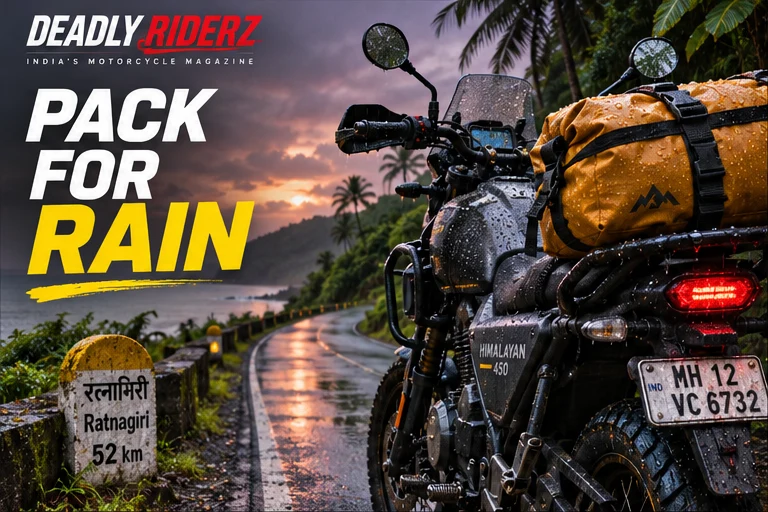

Halfway to the coast, the rain starts and your waterproof trousers are at the bottom of the tailbag. The spare shirt is still dry. Getting to the trousers, however, means opening that dry space to the weather. It is an expensive way to discover that a waterproof bag and a useful wet-weather packing arrangement are two different purchases.
Highlights
- Ask which compartment carries the waterproof claim. A handy zipped pocket may have a different construction.
- Bring your actual overnight kit to the shop. The opening needs room to close correctly after the last item goes in.
- Separate the things you reach for in rain from the things you need dry at bedtime.
Follow the path of a raindrop
Start with the bag open on the counter. Put one hand where your spare clothes would sit and trace a path from there to the outside. Does that path cross a removable liner, a sewn seam, a roll-top opening or an ordinary zip? That tells you more about what you are buying than the word “waterproof” printed on a hangtag. Do the same exercise with the pocket where you plan to keep your wallet. The answers can differ on the very same bag.
On Kriega India’s 20-litre US-20, the maker identifies the roll-top main compartment as waterproof and describes a removable taped-seam liner inside. It also lists a side pocket, a mesh pocket and water-resistant zips. That is a good reason to put a dry change of clothes inside the main compartment and reserve the mesh for something already able to get wet. It would be a mistake to extend the main compartment’s claim to every external opening.
What the cover buys you
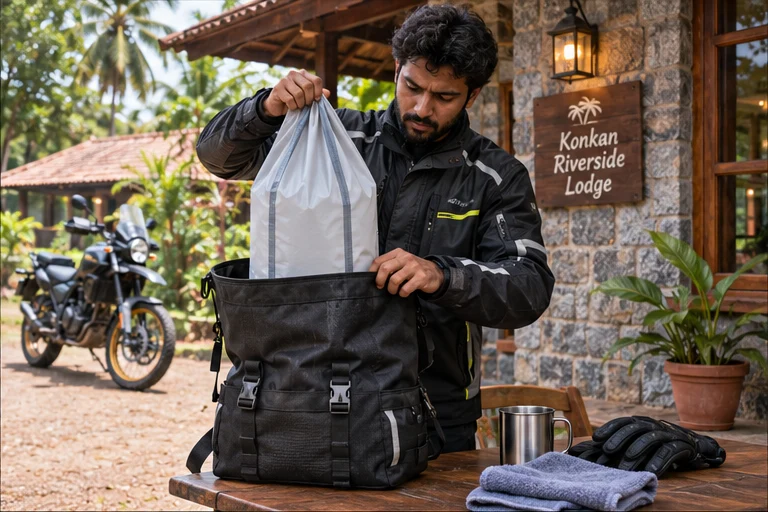
An outer raincover goes over the packed bag. Its appeal is easy to understand after a slushy highway stop. Peel off the dirty outer layer at the lodge and there is less road spray to bring through reception. The catch is that a cover has an opening where it fits around the luggage. Look at how that opening sits once the bag is strapped down and what happens when you need something halfway through the day.
ViaTerra’s 72-litre Claw makes a useful contrast. The manufacturer lists both a seam-sealed inner liner and an external raincover, along with a roll-top opening. Each piece has a job. If a used Claw comes with a cover, open the bag and check that the correct liner is also inside. ViaTerra lists a replacement specifically for the 72-litre Claw. Check the generation and fit with the maker before pricing a second-hand bargain against a complete new bag.
Pack for the first roadside stop
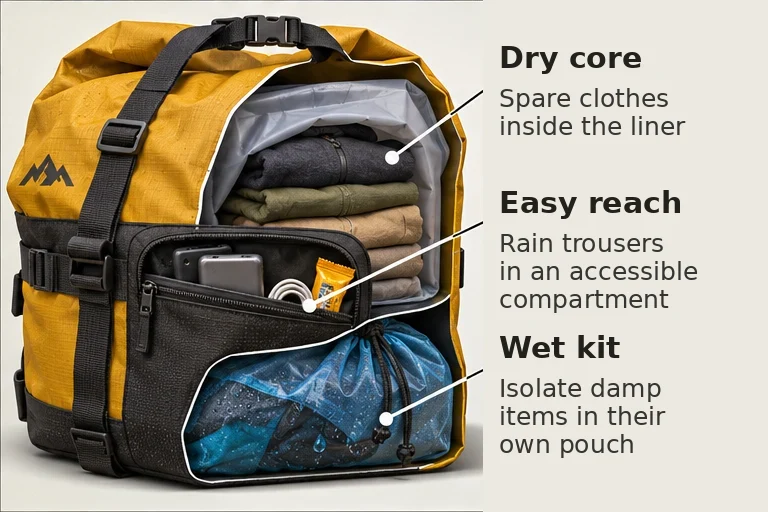
Try an overnight rehearsal with a shirt, socks, sleepwear, rain trousers, a damp cloth and the things you usually carry in your pockets. Put the first three inside the dry compartment. Decide where the trousers can go so you can take them out while standing beside a parked bike without unloading the clothes. Give the damp cloth its own pouch. Waterproof fabric cannot protect a shirt from water you put inside with it.
Now imagine checking in at a guesthouse while it is raining. Where will the wet cover go? Can the clothes come into the room in their liner, or does removing the main bag work better? A removable liner helps only if its opening is accessible with your particular load. Anyone who travels with a pillion should do this rehearsal with both people’s kit. The second pair of shoes is often the item that changes the answer.
Leave room for the closure
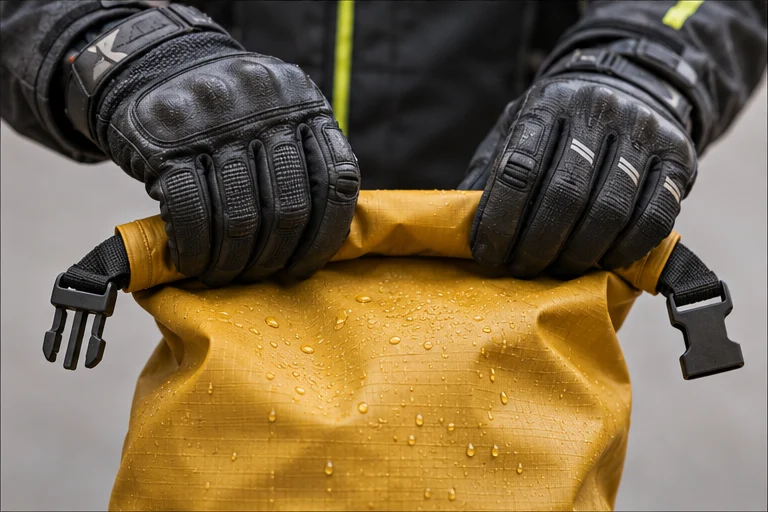
Fill the bag the way you intend to ride and close it according to that model’s instructions. Pay attention to whether a stiff item pushes into the fold or a sleeve trails out of the mouth. A pack that closes easily on the showroom floor can be awkward around one rigid shoe box. Change the arrangement before assuming you need more capacity. Avoid a universal roll count since the closure design and maker’s instructions govern the bag in your hands.
The smaller of these two examples is 20 litres and the larger is 72. Neither figure tells you how much room is available on your motorcycle, whether a passenger has space or what weight a rack can carry. Check the motorcycle and mounting equipment limits separately. With the bike stationary, confirm the bag cannot interfere with the wheel, exhaust, lights or passenger position; if the mounting points are uncertain, use the bag maker’s fitting guide for your bike before riding.
Check what you can replace
Look inside an empty bag in good light. Inspect the lining, the closure edges and the attachment points. If a liner is removable, ask to see how it comes out and which way it goes back. A removable liner is particularly useful if one corner wears through: you can investigate replacing that piece without immediately replacing the entire bag. A replacement listed for a different size is no assurance of compatibility.
For a weekend rider, the buying decision can be made at the counter. If your existing bag fits securely and the only problem is keeping spare clothing dry, first price a correctly sized waterproof inner bag. If you also need easier mounting, a quicker departure in the rain or separate access to wet gear, take those requirements to the shop. Choose the setup you can open at a roadside stop and still arrive with dry clothes. That is the result worth paying for.
Watch the opening in use
In ViaTerra’s September 2023 Claw demonstration, watch how much of the opening is accessible when the pack is full. Compare that action with reaching for your own rain trousers with the luggage mounted.
Watch the ViaTerra tailbag demonstration on YouTube
Sources and related reading
Kriega India’s US-20 compartment and liner specifications
ViaTerra’s Claw construction and capacity


