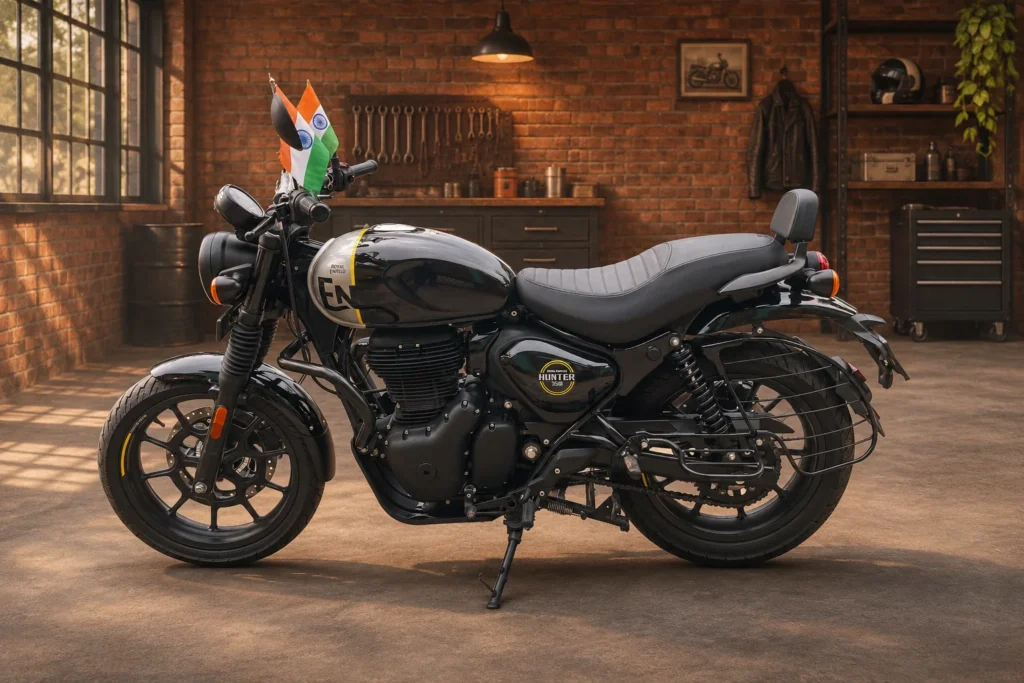

The two Royal Enfield Hunter 350 manuals linked below agree on 29 psi front and 32 psi rear when riding solo. They do not agree on the rear pressure with a pillion: the spoke-wheel single-channel ABS manual lists 33 psi, while the alloy-wheel dual-channel manual lists 36 psi. Both list 29 psi at the front with a pillion. Check these figures cold, and use the manual supplied with your motorcycle rather than taking a screenshot of someone else’s row.
Which manual are you holding?
Royal Enfield’s single-channel Hunter 350 manual identifies the example it covers as having spoke wheels and tube-type tyres. Its technical specifications list 100/80-17 front and 120/80-17 rear. The other English manual describes a dual-channel ABS bike with alloy wheels and tubeless tyres, 110/70-17 front and 140/70-17 rear. Those details are useful for recognising which manual you opened; they are not replacement-tyre advice for every year or trim.
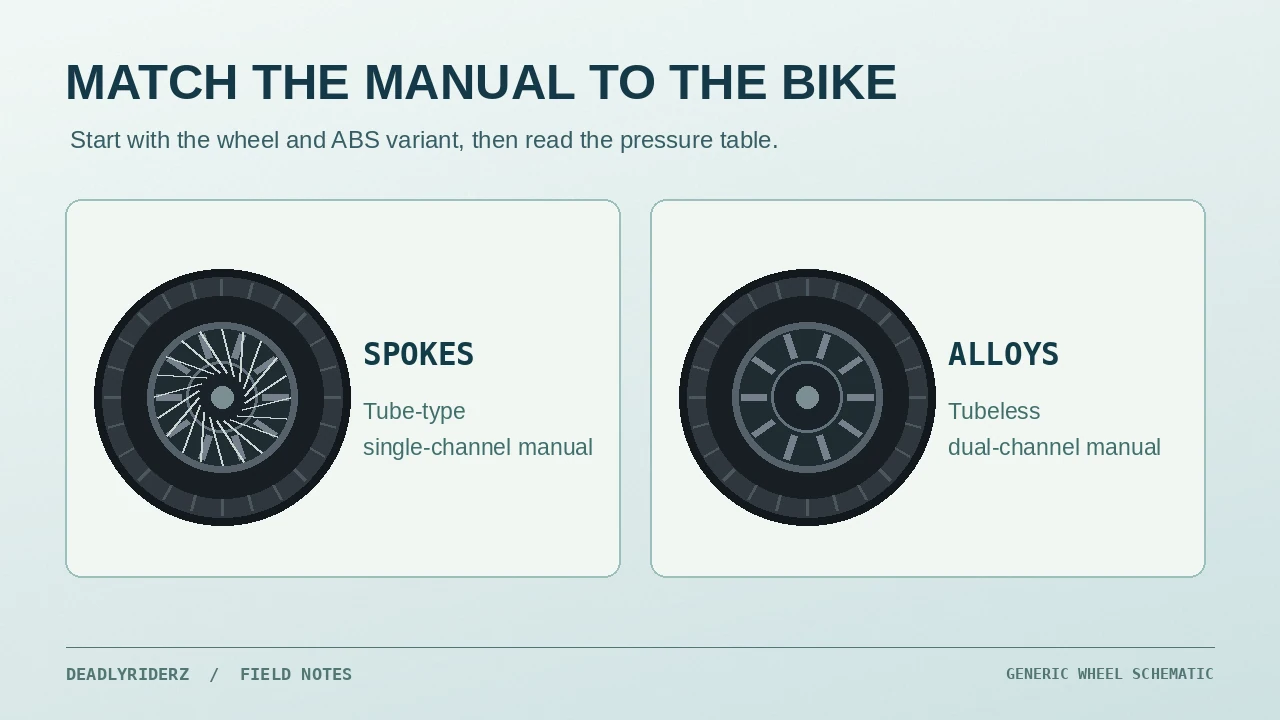
The current India model page also tells riders to confirm the variant-specific pressure in their own manual because tyres differ between Base and higher variants. If you bought the bike used, changed wheels, or cannot match the booklet to the bike, ask a Royal Enfield workshop to confirm the applicable guidance. Do not average the two figures or assume a current trim name identifies an older manual.
What goes in the front and rear columns?
The figures below are a cross-check for the two document versions, not an instruction to override a different plate or manual on the bike.
| Hunter 350 document | Solo, front/rear | With pillion, front/rear |
|---|---|---|
| Spoke wheel, single-channel ABS | 29 / 32 psi | 29 / 33 psi |
| Alloy wheel, dual-channel ABS | 29 / 32 psi | 29 / 36 psi |

Check pressure before the ride, not at the first hot stop
Michelin’s pressure guide recommends a reliable gauge and a check before riding, or after the bike has been stationary long enough for the tyres to cool. The riding surface, load and use heat the tyre, so a high reading at a fuel stop does not by itself mean that it was overinflated cold. Do not bleed air out of a hot tyre just to match the printed cold figure.
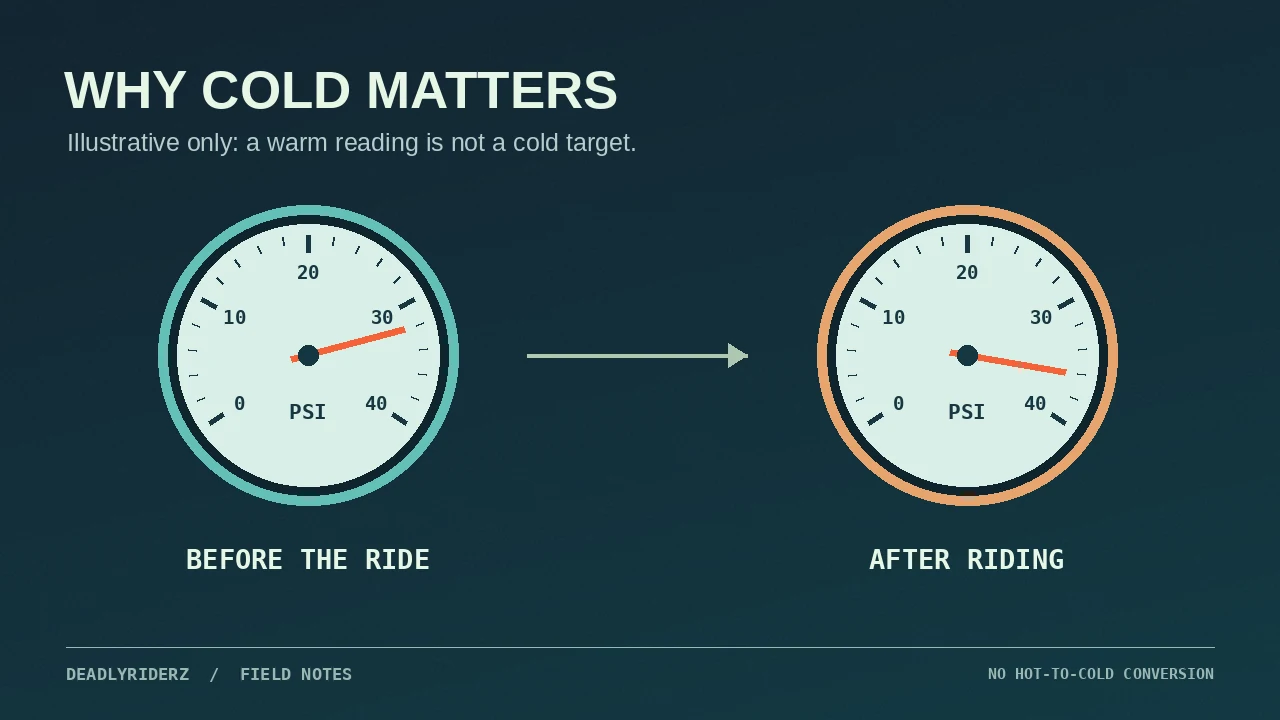
If you ride solo all week and take a passenger on Sunday, make the two checks separate. Before departure, set the applicable cold pillion pressure and check the bike’s loading and preload guidance. When you return to solo use, let the tyres cool and recheck against the solo line. Preload and air pressure are separate adjustments; neither allows overloading. A tyre that repeatedly loses pressure needs inspection, not an upward correction every few days.
Save the right reference
Keep a photo of the applicable manual table on your phone, labelled with your wheel and ABS version. Record your next cold front and rear readings together, and put both valve caps back on. Avoid using the sidewall maximum as a road target. For another owner check specific to this motorcycle, see the Hunter 350 chain-slack guide.
Cover: Hunter 350 photograph by Pintu dasaundhi, CC BY-SA 4.0. Background adapted.


