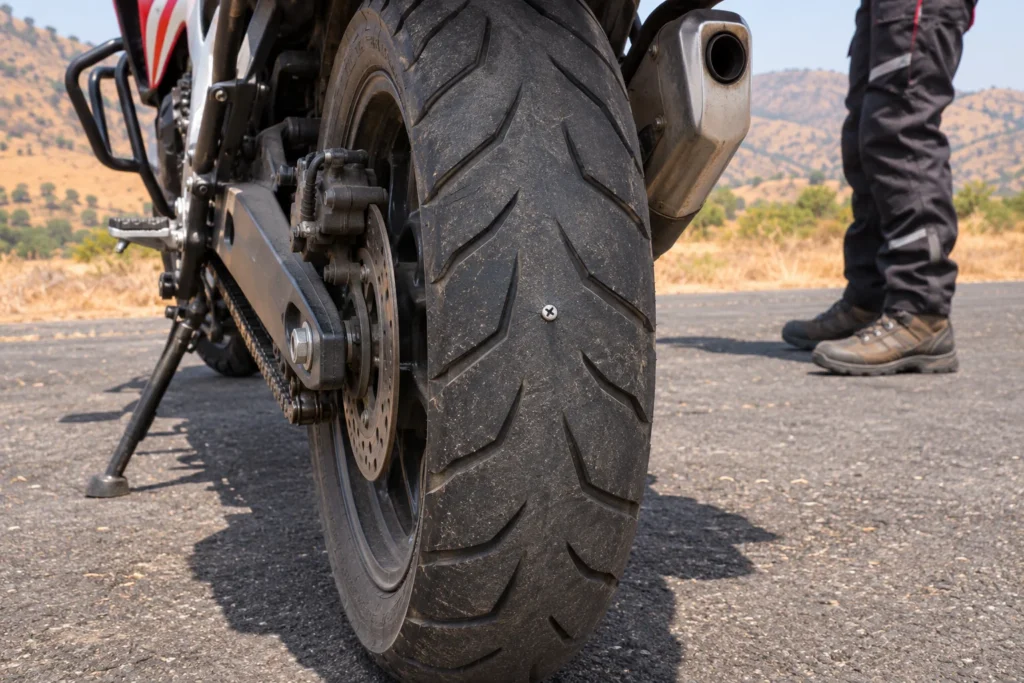

A roadside plug is not a permanent fix for a motorcycle tyre. It is an emergency option for a suitable puncture on a compatible tubeless tyre, when the kit instructions allow it and the tyre can hold the specified pressure. If the tyre has come off the bead seat, there is a sidewall cut, it will not hold pressure or you are not sure what failed, arrange recovery rather than riding on it.
Stop and establish what actually failed
Get out of traffic and stop somewhere you can inspect the bike without standing in a live lane. Treat a pressure warning or a change in steering as a reason to find a safe stopping point, not as proof of a nail. Look at the tread, the sidewalls and the visible rim edge. A valve problem, wheel damage or an unseated tyre may also let air out, and a plug in the tread cannot address them. If there is no safe place to make those checks, prioritise recovery.
Do not assume a tyre stamped “tubeless” means the wheel is running without a tube. The assembly matters. If you do not know how it is set up, see our tube-type versus tubeless wheel check. An external kit intended to seal a hole in tubeless casing will not repair a punctured inner tube.

Decide whether to plug or arrange recovery
Michelin India’s repair guidance treats an external wick as a temporary way to reach the nearest tyre professional. It excludes the tread edge and sidewall from its repairable zone and advises towing if the bead comes out of the rim. Whether a repair is suitable also depends on the tyre, the damage and prior repairs. Do not apply one maker’s limits to a different tyre.
If it is a compatible tubeless assembly with an identifiable small central hole and no sign of additional damage, read the kit instructions before touching the object. A kit that cannot restore pressure, a tyre that continues to lose pressure, or any doubts over clearance or fit mean recovery. If the temporary repair does hold, go directly to the nearest competent tyre workshop and follow the kit’s restrictions; do not continue the planned trip as if nothing happened.

What the fitter can see that you cannot
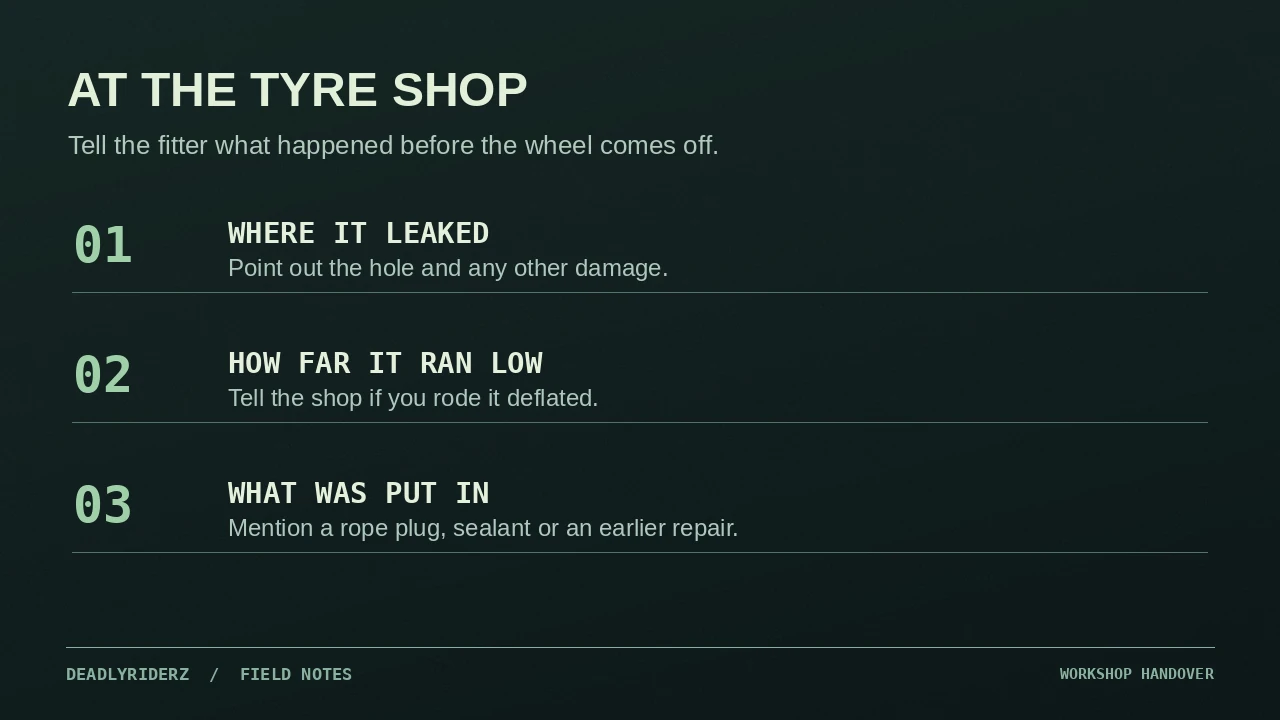
A plug that stops a hiss does not establish whether the tyre was damaged internally while underinflated. Tell the fitter where it leaked, approximately how far it ran soft and whether you used a plug or a liquid sealant. Ask for an internal inspection and for a repair or replacement recommendation under the rules for the specific tyre. Michelin describes an internal combined stem-and-patch repair where permitted; it is not the same thing as leaving the temporary wick in place.
Pack for the trip before the puncture happens
Before you leave for a less populated route, confirm which tyres run tubeless, how you will restore and measure pressure, where the next tyre shop is, and how to contact your assistance provider. Check whether the policy covers motorcycle transport on your route rather than assuming every breakdown can be handled roadside. Save the local tyre shop number and the recovery contact before you lose reception. Buying another tyre instead? Read the tyre date and condition guide before accepting shop stock.
Cover: Editorial illustration of a roadside puncture.


Pingback: Hero Xtreme 125R Stealth TFT vs regular ABS: Buying guide
Pingback: Himalayan 450 Tubeless Wheels: Check Before Buying