
Put two packed bags on a scale before you put them on a Himalayan 450. Then weigh the kit that holds them on the bike. That second number is easy to forget because the rack or pannier frames look like part of the motorcycle once you bolt them on. By the time you add a pillion in riding gear, a lock, a couple of bottles and the parts carrying the bags, the payload can be different from the number you guessed when you booked the trip.
Highlights
- Check the gross weight in the owner’s manual for your exact bike and weigh the people, riding gear, mounts and bags you will carry.
- Check each rack, case or plate’s individual limit as well as the bike’s overall limit.
- Pack for access as well as weight. Review the relevant manufacturer instructions for tyre pressures and suspension setup under load.
Start with gross weight and the bike you own
In Royal Enfield’s Himalayan 450 US owner’s manual, the technical section lists 198 kg kerb weight with 90% fuel and oil and a 394 kg gross vehicle weight. The difference is 196 kg using that document’s figures. It is an example of the arithmetic. Use your Indian owner’s manual or dealer-confirmed specification for the actual limit on your version, accounting for your fuel level and whatever has already been fitted or added.
There is a second calculation with a smaller number on it. Find the guidance on the case, carrier or mounting plate you will use. A rack has to carry the load you put on that particular point. Read how the accessory maker defines its limit, including whether it counts the box itself. The total available payload on the motorcycle gives you no reason to exceed the capacity of an individual carrier.
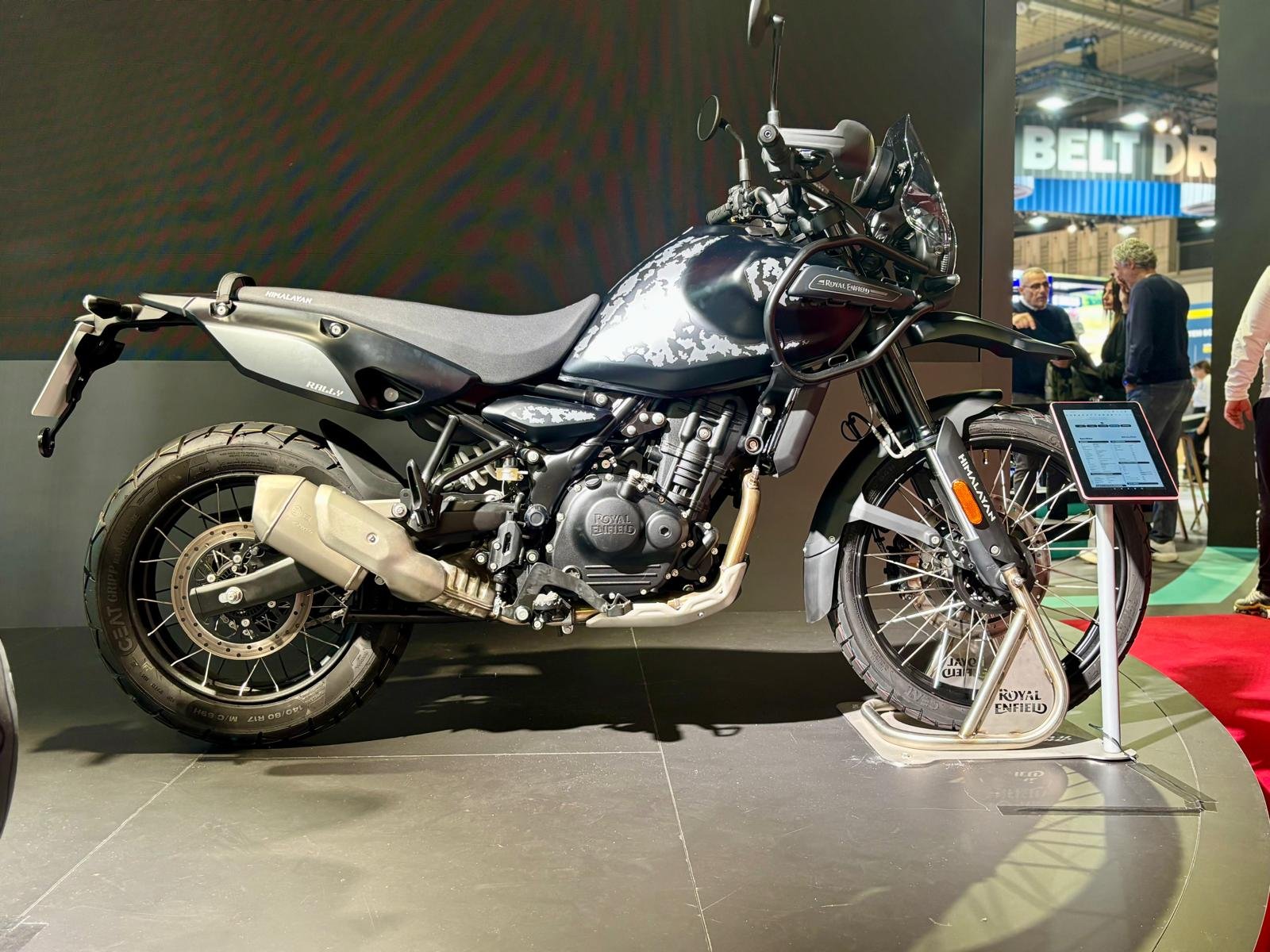
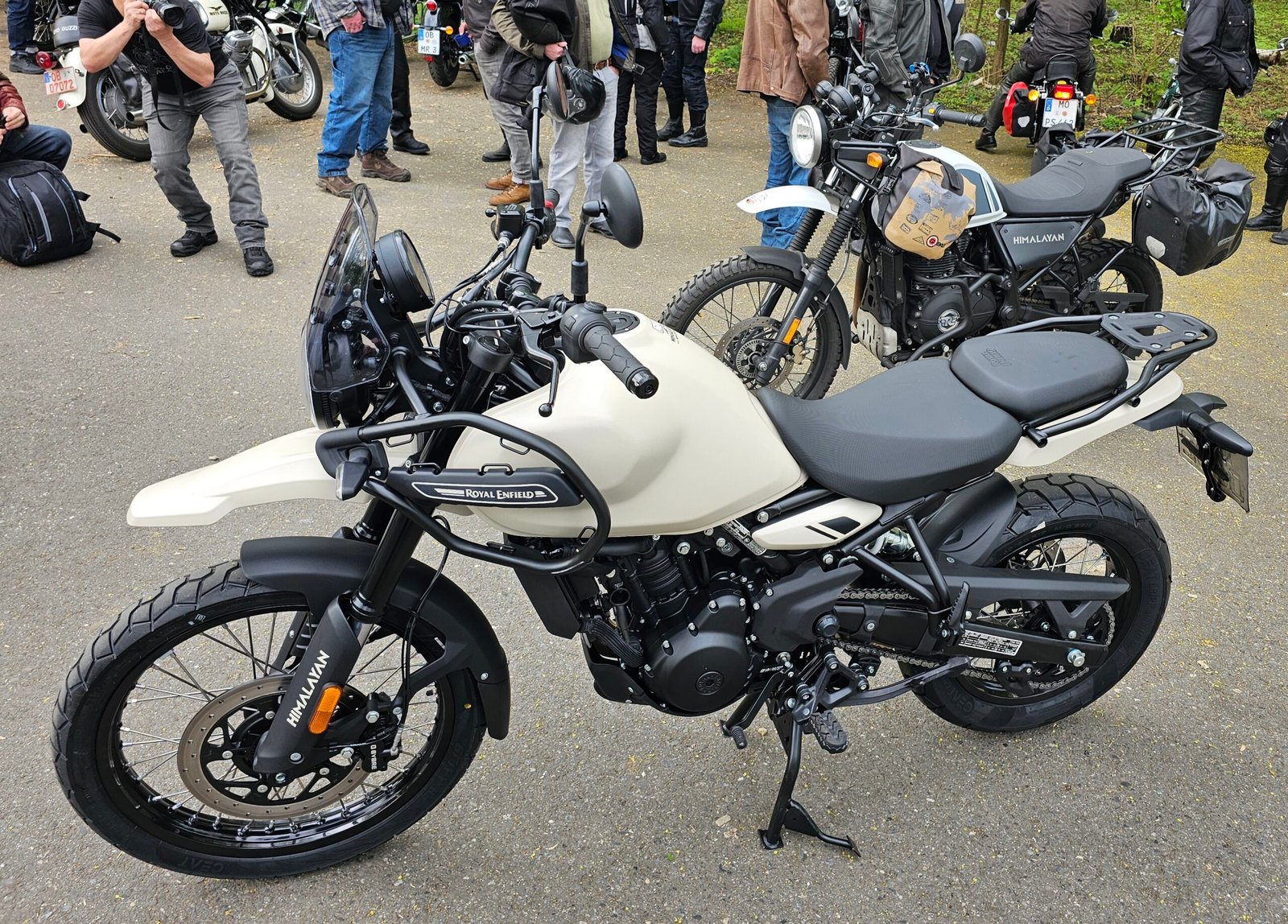
Photo credits: MotorideSA (Mana Black) and Rouv1505 (side view), both CC BY-SA 4.0.
Work through a realistic packing example
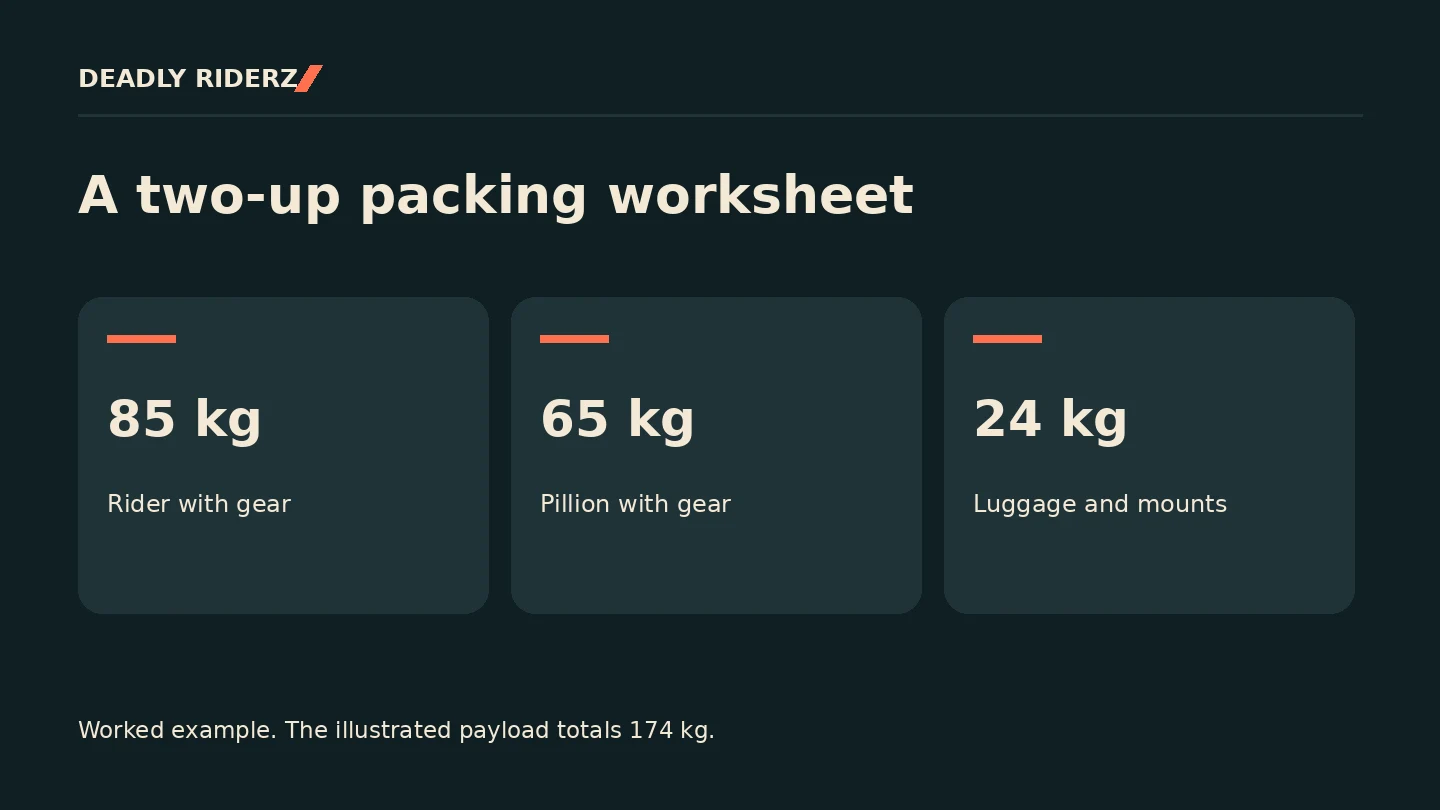
Take two people who weigh 85 kg and 65 kg in their gear. Add 24 kg for a set of luggage with the mounts and contents counted together. The load comes to 174 kg before anything else goes on. Using the example calculation above gives 22 kg of headroom against that manual’s figures. Optional items already installed, extra fuel where permitted and any measurement uncertainty still belong in the exercise. The meaningful answer comes from adding real weights and then checking what is allowed on your specific motorcycle.
Give each rider a place to put the items they need at the next stop. Paperwork and a layer for rain are easier to retrieve when you can reach them without unloading the other bag. Put a dense item somewhere low and secure in accordance with the luggage instructions, and check the side-to-side weights on a bathroom scale. Move anything that gets too close to the exhaust, wheel or suspension movement. The relevant accessory mounting instructions should be available during installation, particularly where a plate or bag has more than one fitting position.
Ask for a loaded setup at handover
Use the motorcycle’s recommended laden tyre pressures and suspension instructions for the exact model in your owner’s manual. If you are unsure where to start, ask the service desk to show you the correct procedure for the gear you will carry. Also ask how the settings should be returned for ordinary solo riding after the trip.
Once the bike is packed, check that you can get both people aboard in a controlled space and move the bike into and out of your parking spot. Confirm that the passenger can reach the pegs and has room to sit. Check that the luggage is secured as described in its fitting instructions and that the lights are visible. Repeat the checks after you stop on the first short section of the ride, when you can correct anything that has settled or shifted before starting the long leg.
Royal Enfield’s accessories video shows how the mounts and bags fit the Himalayan 450. Confirm the individual weight limits on the products in your quote.
Record the load where it goes
| Load entry | Worked example |
|---|---|
| Rider with gear | 85 kg |
| Pillion with gear | 65 kg |
| Fittings and packed bags | 24 kg |
| Total | 174 kg |
During an evening at home, try unpacking and repacking the complete bike once. Weigh both side loads before you latch the bags and keep the attachment instructions nearby. The exercise helps reveal gear that quietly moves between the pillion’s bag and the rack. Recheck the actual bike limits when either the passenger or the luggage system changes.
Soft bags or hard cases?
Choose the system based on what you carry and the trip’s stops. Hard cases can be convenient if you remove bags from the bike often or need stable shapes for delicate kit. A soft setup can suit a flexible packing list. Weigh each complete system and check how the final width affects your usual parking. If your trips are mostly solo and the occasional pillion only brings a small bag, it may make sense to start by recording what you actually use. For differences across models, see our Himalayan 750, 450 and 440 guide. The best packing plan is one where you know the weight at every mounting point and can still handle the bike comfortably when you turn into the first fuel station.

