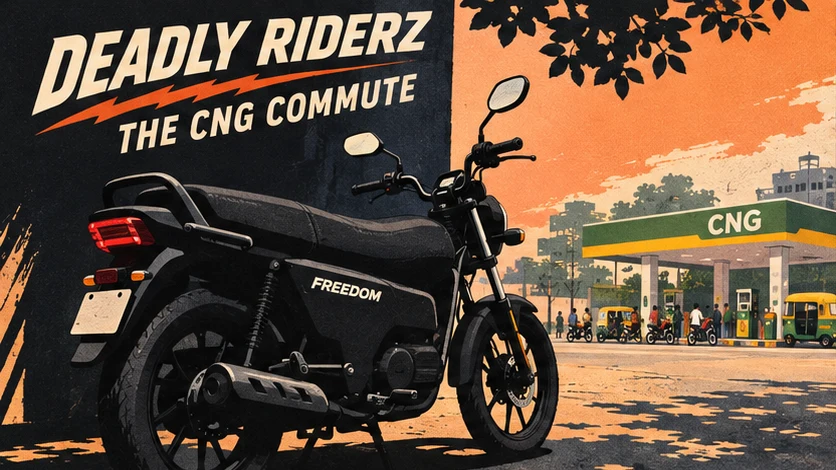

A CNG pump on the opposite side of a divided road can change the economics of a Bajaj Freedom 125. On a map it might sit a hundred metres from your office. On the bike it might mean two U-turns and a queue behind six autorickshaws. Before comparing a rupee-per-kilometre claim with your current petrol bill, ride past that pump at the hour you actually finish work.
Highlights
- The Freedom carries CNG and petrol separately. Each fuel needs its own mileage calculation.
- A 30 km daily round trip over 22 working days amounts to 660 km before errands and fuel detours.
- The pump receipt and the trip meter together tell you more about your running cost than a single range figure.
Understand the two tanks
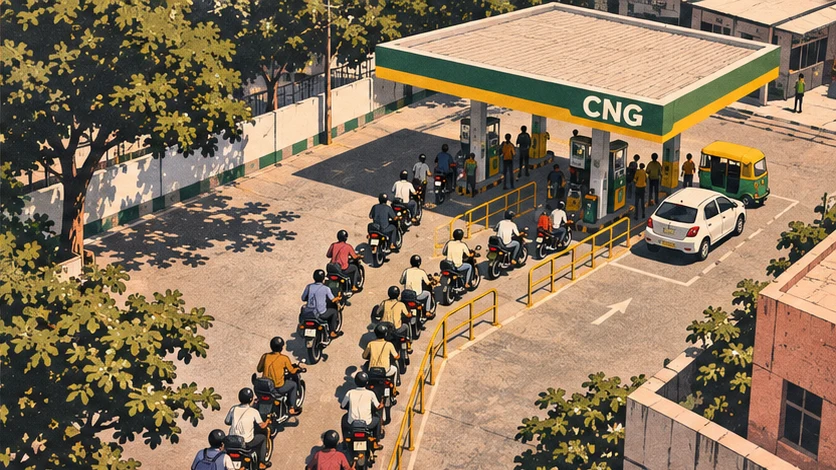
Bajaj launched the Freedom in India on 5 July 2024 with a small auxiliary petrol tank alongside the CNG cylinder. Its owner’s manual gives the gas capacity as 2 kg under specified pressure and temperature conditions. The petrol tank holds 2 litres. Those matching numerals describe entirely different quantities. At the pump you buy gas by mass and petrol by volume, so keep the bills in separate columns.
The much-quoted 330 km is Bajaj’s launch claim for the two fuels combined. It is a poor starting point for deciding how often you will queue for gas. If the reason for buying this particular bike is to run most of the week on CNG, the useful range ends when you need to change fuel. Petrol extends your choices on the way home. Spending a large share of the month riding on it changes the reason you bought the bike.
Price a working week
Take a hypothetical owner doing 15 km each way. Five round trips add up to 150 km. Assume, purely to show the maths, that their measured gas economy is 90 km/kg and their local receipt says ₹90/kg. The fuel for those commutes costs about ₹150. A petrol commuter returning an assumed 50 km/l at ₹100/l would use three litres and cost ₹300. Replace all four numbers with local prices and representative mileage before treating the difference as savings.
Now give the CNG pump a six-kilometre round-trip detour. In that example the diversion itself costs only about six rupees on gas. The real question is whether the visit fits between work and school pickup. A rider able to fill just after an early shift may have a quite different experience from a neighbour using the very same outlet at six in the evening. Keep the extra kilometres and minutes as separate entries.
| Worked example | CNG | Petrol |
|---|---|---|
| Fuel for 150 km | 1.67 kg | 3 litres |
| Weekly cost | ₹150 | ₹300 |
Check a second station
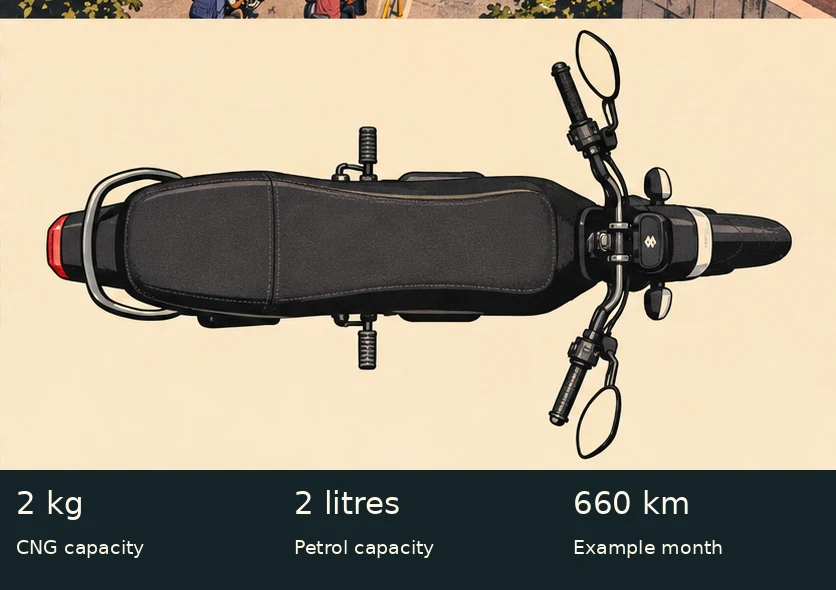
Pick one alternative on the actual route, ideally on a different stretch of road. Visit both stations during their ordinary operating hours. Look at access from your direction, where a motorcycle queues, whether a return trip requires a flyover and where you could stop for petrol if gas were temporarily unavailable. An outlet close to home can be ideal on working days and completely out of your way on a Sunday family visit.
For an occasional intercity trip, work backwards from the destination as well. A station that is easy to reach outbound may be across a median on the return leg. Save the location of the entrance rather than just the business name. Keep the petrol side available for contingencies according to the manual. Deliberately running either fuel empty to generate a range figure adds inconvenience without improving a purchasing decision.

Read your first month of receipts
Start a log at a repeatable fill point. Note the odometer, kilograms dispensed and total paid. If you use the petrol mode before the next gas fill, record where the change happened. Otherwise those petrol kilometres quietly inflate your apparent gas economy. It is easier to note a trip reading while parked than to reconstruct an entire weekend from a bank statement.
A single fill can mislead because the quantity delivered can differ between visits. Pool several comparable fills. Divide the gas-mode distance by total kilograms for km/kg. For a household-budget view, add everything paid for both fuels and divide by all kilometres over a period with similar starting and finishing fuel levels. The first figure describes how the bike uses gas. The second tells you what it actually costs your family to travel.
Decide using the payback distance
Collect written on-road quotations for the Freedom and the petrol bike you would otherwise buy. Compare like-for-like insurance and remove optional accessories you would decline. As an illustration, a ₹12,000 difference at a measured saving of ₹1 per kilometre takes 12,000 km to recover on fuel alone. At 660 km per month that is about 18 months. Lower monthly distance or frequent petrol running stretches the period.
There is still a case for a petrol commuter when cash savings depend on rearranging every working day around a particular pump. Equally, a rider passing a quiet CNG outlet twice a day has an advantage that a national mileage chart cannot show. Choose the Freedom when the station, the weekly distances and the local service arrangements all fit the life you already lead.
Watch the details
Autocar India’s Freedom road test. Watch the fuel stops alongside the mileage discussion.
Sources and further reading
Bajaj’s July 2024 Freedom launch announcement
Freedom owner’s manual, September 2025 edition


