
If the first line of both quotes just says “125,” step back and ask what each dealer is actually offering. The difference between a useful everyday bike and one you regret can be a seat that does not suit your pillion or a trim whose equipment you assumed was standard. The Raider and SP125 both cover the Indian 125 cc commuter brief. Compare them on one commute, at one parking spot and with the same assumptions about what you are paying for.
Highlights
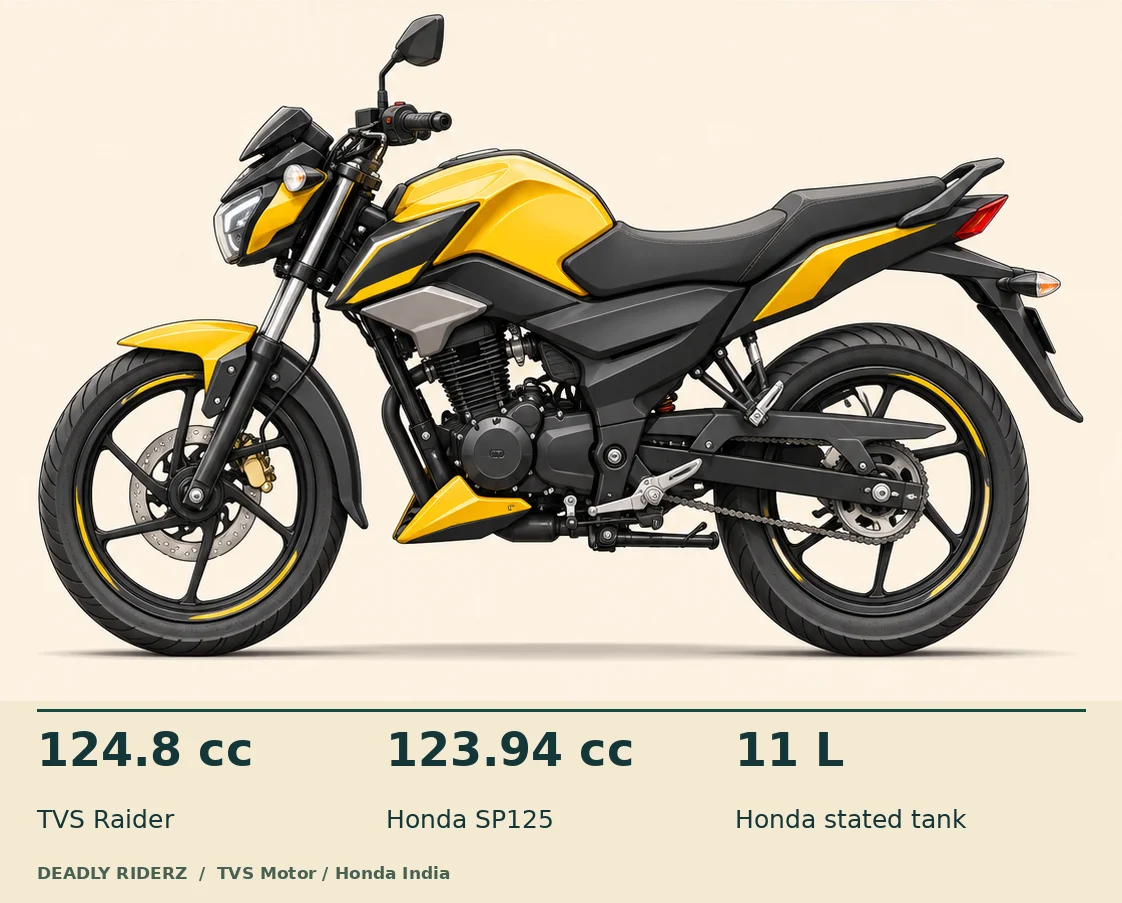
- TVS lists 124.8 cc for the Raider. Honda lists 123.94 cc and an 11-litre tank for the SP125.
- Compare equipment by actual trim. TVS lists multiple kerb weights across Raider configurations.
- Ask both outlets for the same insurance basis and put any accessories on separate lines.
Start with model and variant
TVS’s Raider specification page distinguishes several configurations and quotes 8.37 kW at 7,500 rpm. The TVS Raider ABS brochure labels weights by variant. Honda’s SP125 product page lets you select an offered variant and location. Ask the dealer to take you out to the exact specification being quoted, point out the wheels and brakes, then show you how the controls match the brochure. The engine class alone is too broad to tell you which of the two bikes is easier to live with.
| Dealer check | What to compare |
|---|---|
| Seat | Exact configuration and pillion space |
| Brakes | The hardware fitted to the quoted variant |
| Quote | Same insurance basis and accessories |
Check how you sit before you compare prices
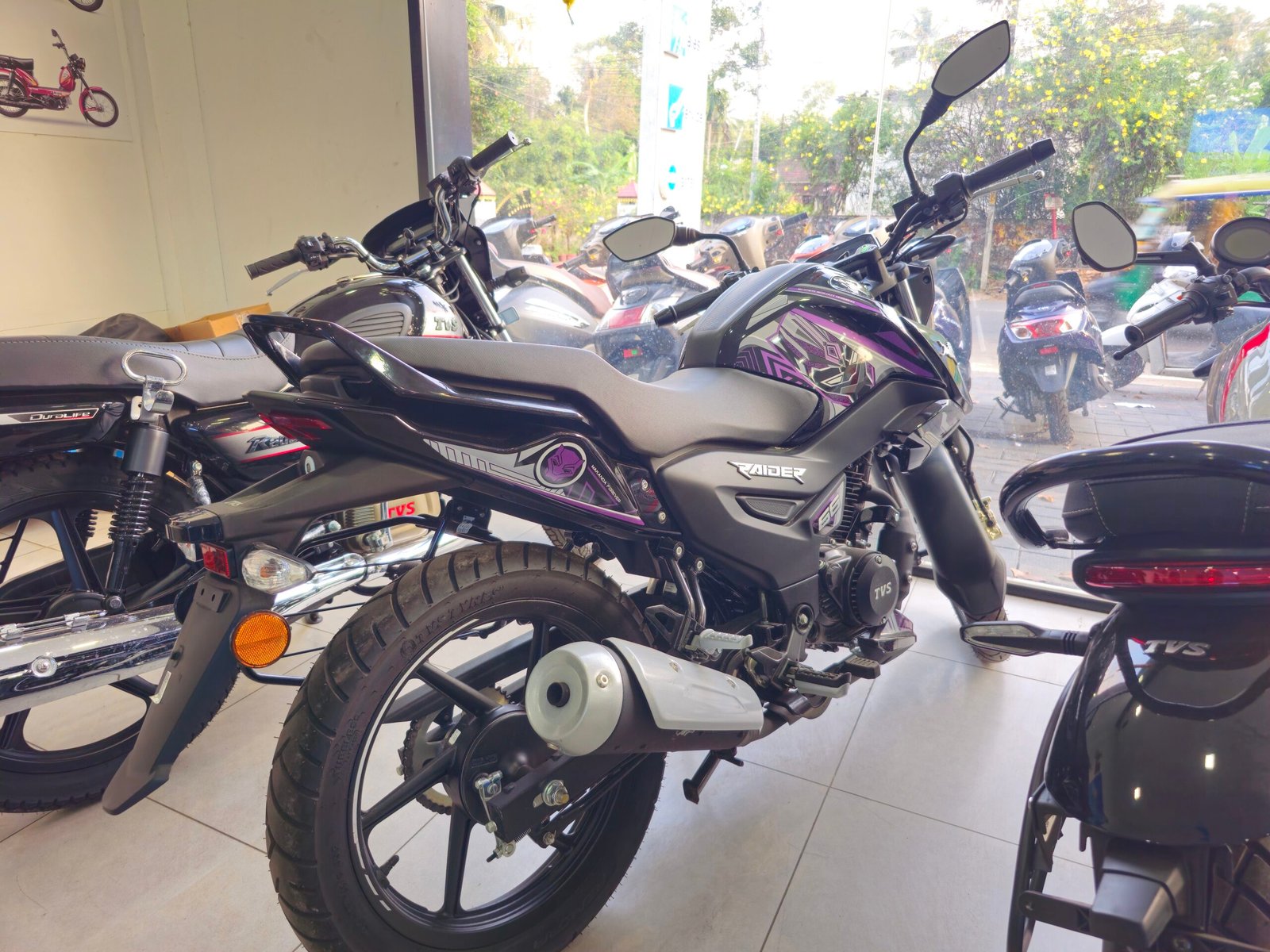
Try each motorcycle in the boots and office clothes you normally wear. If you ride with a passenger, have them climb on while the salesperson supports the bike. Check the distance to the pegs and where they naturally hold on. Then think about the seat format. A seat that feels fine with nobody behind you can lead to a different choice once you add a second person or a bag. Ask for room to dismount in a normal, controlled space rather than guessing from the web photograph.
For a solo rider, try moving both bikes by hand on level ground and turning the bars through the range you normally need in your building. If you have to back the bike out each morning, the distance between the grip and your hip matters. Let the familiar daily action separate the bikes. A difference of a couple of kilograms on a table is useful context, while how you move that weight is what you repeat.
Set up a useful city ride
Choose a familiar, permitted route with a few low-speed turns and a stop. In your usual gloves, notice how easily you find the controls and how gently the motorcycle moves off. Compare how readily you can see basic information outdoors. If the salesperson demonstrates an app or navigation feature, ask whether it is on the variant you can take home. Many buyers get more value from a readable speed display and a familiar lever reach than from a function they rarely enable.
If fuel spending matters to you, try to find independently measured results from riding similar to yours and work with a range. A high average from an easy route may be very different from an evening commute with repeated stops. Both brands’ published equipment pages are better used for specifications. Your month at the pump depends on the speeds, roads and loads you actually report.
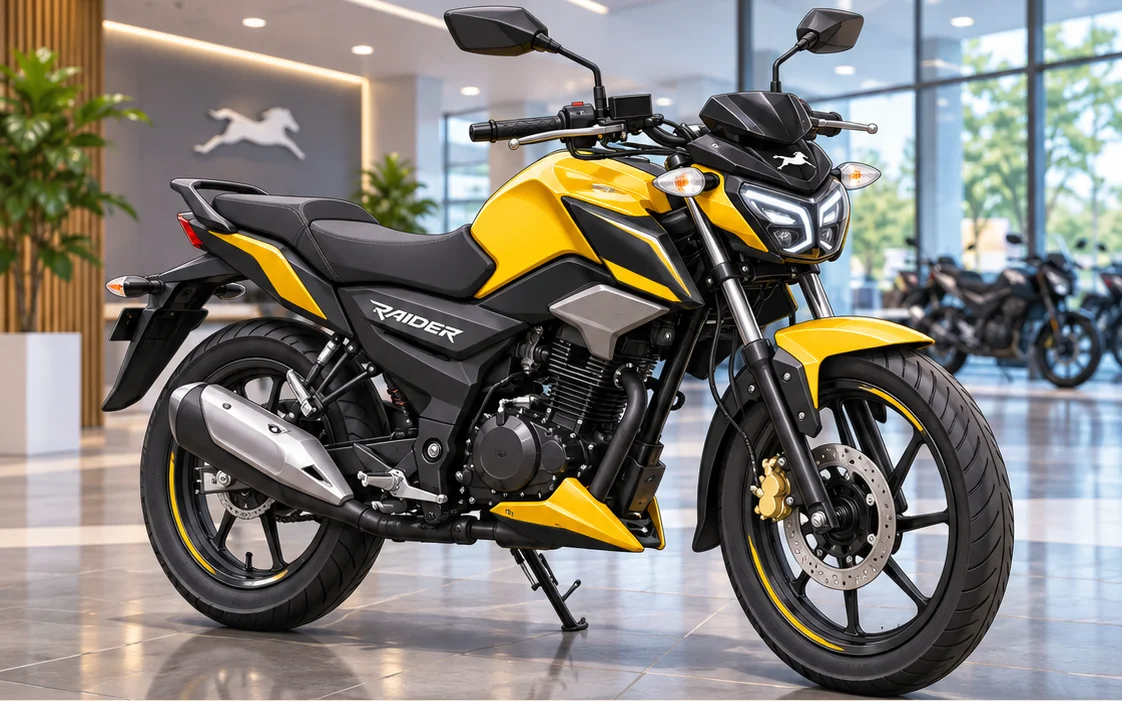
TVS’s original Raider introduction shows the bike’s basic layout. Check the latest dealer sheet for current equipment. Watch on YouTube
Check the workshop you would actually use
Call the two service centres before booking and ask when they can carry out a routine visit for the variant you are considering. Ask for a typical time window and a quotation for the service items, with any extra cleaning or accessories shown separately. A bike that is cheap to buy can still be inconvenient if you have to travel far to have it looked after. Put that distance beside the space you need at your own parking bay.
Make one decision per line
Write a row for seated fit, one for the braking equipment, one for the final quote and one for service access. Put a tick beside the one you can verify and a question mark where a claim still needs a dealer answer. That simple sheet is useful if you look at different trims at two different shops. It also gives a pillion room to record their own impression without turning the decision into a single number.
Compare a complete first year
Get an itemised quote for the bike, registration, insurance and every optional line. Ask the workshop for an estimate for routine service and for a price on a common consumable. Use the same assumptions for both bikes. You can apply the same process to the Splendor+ variant guide if you are also open to a simpler commuter.
Your shortlist may start with looks and price. Let the decision end with the seat, controls, service location and brakes you can actually verify. If both fit well, choose the one whose quote and regular workshop support make more sense. That is the difference you will experience long after you forget the display bike’s stickers.
Cover illustration by Deadly Riderz.


