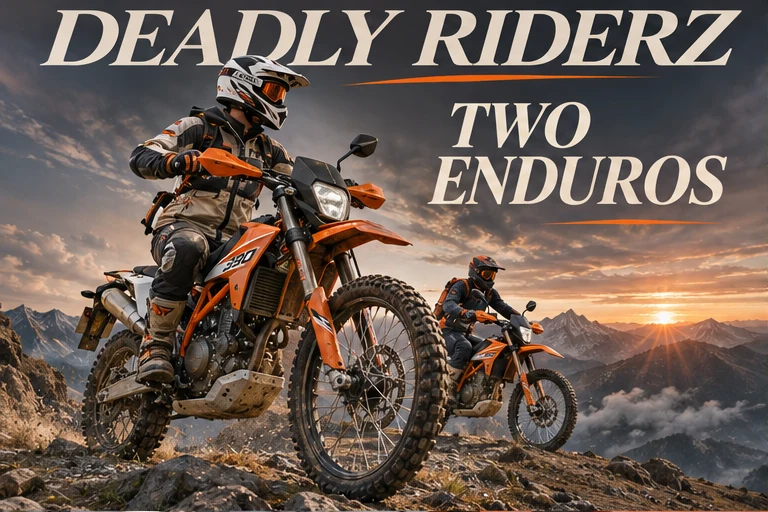

Two Indian listings for a KTM 390 Enduro R can describe different motorcycles even when both sellers have copied the model name correctly. One may quote 200 mm of front travel and the other 230 mm. Before assuming somebody mistyped a number, ask which suspension package is fitted. KTM brought the lower India specification to market first and the international version followed. For a trail rider that difference continues well beyond the showroom.
Highlights
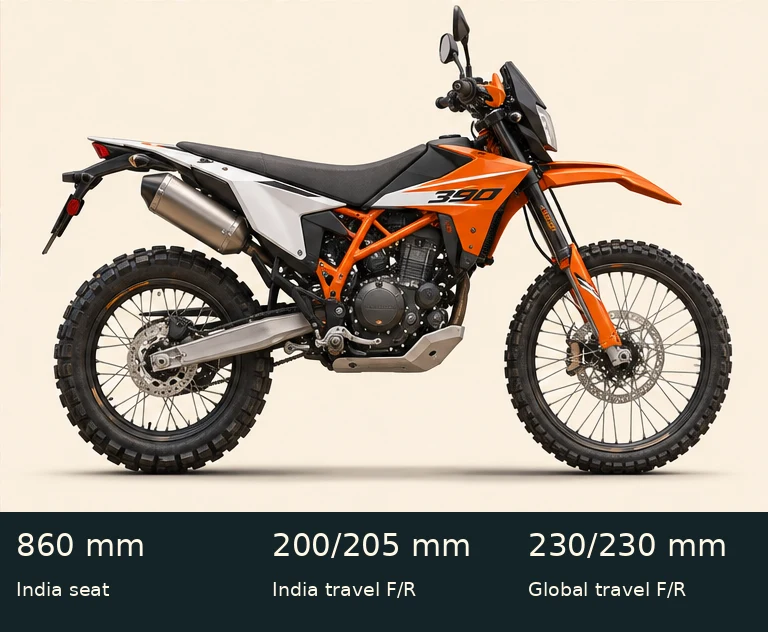
- KTM India lists 200 mm of front travel, 205 mm at the rear and an 860 mm saddle on the domestic specification.
- The international configuration has 230 mm of travel at both ends and a published 890 mm seat.
- Check the original invoice, variant details and any suspension changes before comparing two used-bike prices.
Read the right specification
BikeWale reported the Indian launch on 11 April 2025 and subsequently covered the arrival of the global-spec version. That sequence helps explain why contemporary first rides can reach different conclusions about the same model name. Look for the date, the market and the front and rear suspension figures before applying a reviewer’s comments to a particular bike. A riding impression from the first launch cannot tell you exactly how the later version behaves.
The India-market specification also lists a 21-inch front wheel, an 18-inch rear wheel, 253 mm of ground clearance and a nine-litre tank for the lower configuration. These figures describe different parts of the motorcycle. Wheel diameter measures the rim, clearance describes a distance beneath the machine and suspension travel describes available movement. An advert that gives one number as evidence for the other two has left the variant question unanswered.
What thirty millimetres buy
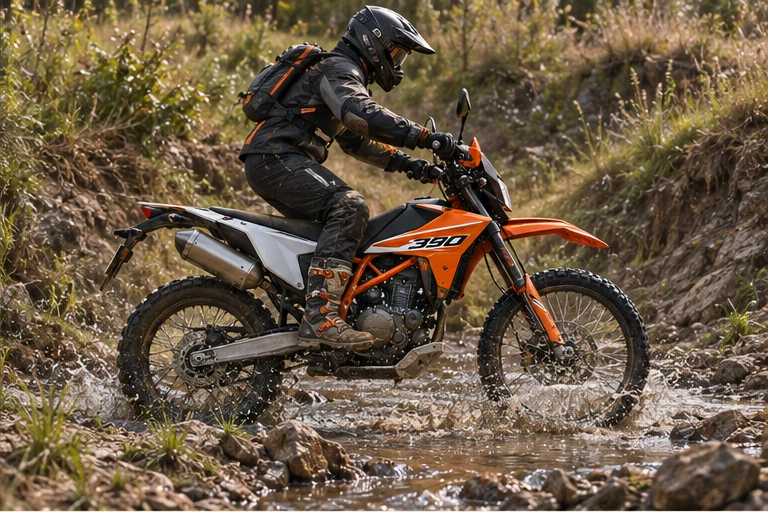
The longer version adds 30 mm of front travel and 25 mm at the rear relative to the domestic setup. Imagine a sequence of depressions on a trail. The wheels need room to move relative to the chassis as the surface rises and falls. More available travel gives the suspension a larger working range. How much of it the bike actually uses depends on load, pace, spring support and damping. A catalogue cannot predict how smoothly any individual rut will pass beneath you.
Now imagine a gate across that trail. Somebody has to stop, balance on the camber and get off to open it. The published saddle height rises by 30 mm as well. For a confident rider on the move that can sound trivial. For someone repeatedly stopping on uneven ground it can influence the whole afternoon. A rider’s confidence when the wheel stops turning deserves as much weight as their ambition once the trail opens up.
| 2025 configuration | Front / rear travel | Seat |
|---|---|---|
| India | 200 / 205 mm | 860 mm |
| International | 230 / 230 mm | 890 mm |
Compare with your boots on
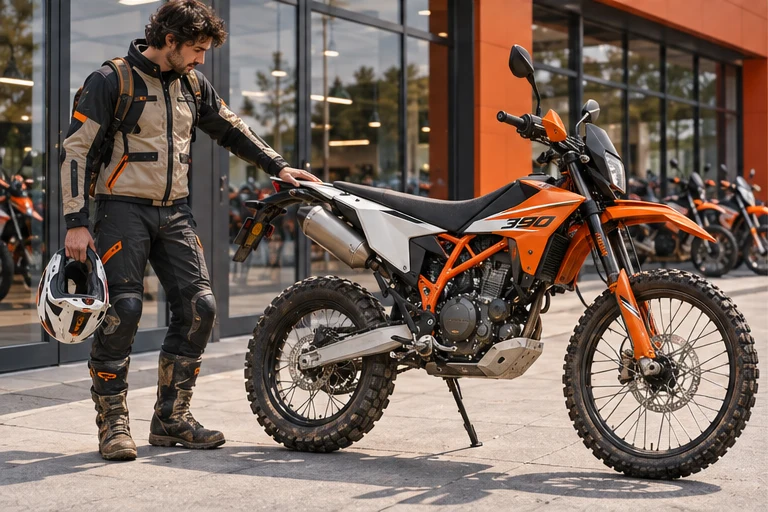
Arrange to sit on both configurations if possible. Ask the dealer to steady the motorcycle, use your usual boots and settle into the seat. Compare your reach on level ground first. Ground contact will change as the suspension settles under your weight. Boot soles, seat width and where you sit all matter, so subtracting your inside-leg measurement from the published height is a poor substitute for the exercise.
Look at how easy it is to dismount, stand alongside the machine and push it backwards into a marked space. You will do these things at petrol pumps and hotel parking areas even on a trip that is mostly excellent riding. Resist buying the taller version on the assumption that an arbitrary change to preload will make it equivalent to the lower model. Ask a qualified suspension specialist about setup for your weight and intended load.
Buying a used Enduro
Start with the original sale invoice and ask a KTM dealer to check the specification against the vehicle identification number. Ask the seller whether the fork, rear shock, linkage or seat has been changed and request receipts for any work. A tape measure held to the saddle can flag a question. Tyre changes, altered setup and aftermarket seats make it a poor way to settle one.
On a viewing, inspect the visible fork legs for damage, check for oil residue and ask about suspension service history. Take a closer look at the rims and the underside where trail contact can leave marks. Evidence of use is to be expected on a dual sport. What you are trying to establish is whether the bike has been cared for and whether the price reflects the machine in front of you. For a serious candidate, pay for an independent inspection.
Match the bike to the ride
For a weekday commute followed by slow trails where you often dab a foot or turn around, the lower bike makes a coherent case. It still gives you a large front wheel and substantial suspension movement. For a rider already comfortable with a tall machine who can explain where the shorter suspension runs out of working room, the long-travel model answers a more precise question than simply wanting the highest specification.
Put the two purchase quotes next to your real riding calendar. If the taller bike removes a constraint you encounter most weekends, its value is easy to explain. If it mostly adds a challenge every time you park, the domestic specification may leave you with more energy for the very trails you bought an Enduro to explore.
Watch the details
Autocar India’s Enduro first ride. Watch how far the suspension moves beneath the standing rider.
Sources and further reading
KTM India’s domestic specifications
KTM’s 2025 international specifications


