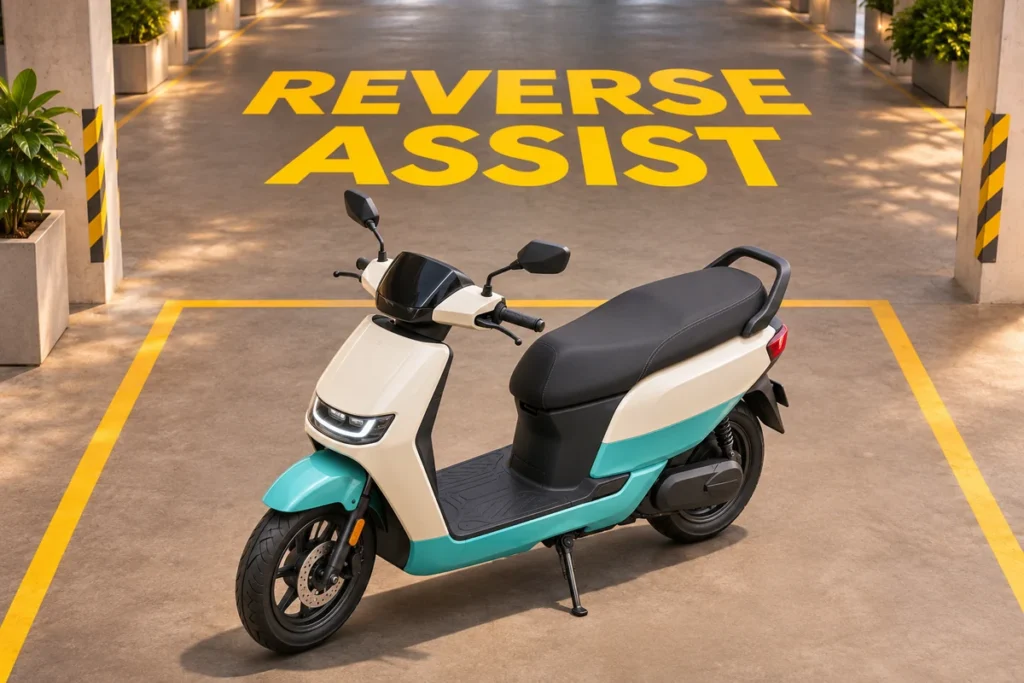

Ather Rizta Park Assist is motor-powered help for moving the scooter at parking speed. On the Rizta Z described in Ather’s quick-start guide, it can help the scooter back out of a bay and also move it forward slowly. It is not automatic parking, and it is not the same as Magic Twist. The feature is most useful when you can see a clear path but don’t want to move the scooter entirely under your own leg power.
Highlights
- The Rizta Z handbook gives 3 km/h in reverse and 5 km/h forward in Park Assist.
- Engage from stationary and check the direction on your own scooter before asking it to move.
- Park Assist helps move the scooter; Magic Twist slows it during a ride on equipped versions. Neither takes over observation or balance.
What it does in a real parking bay
Picture a basement bay with a wall in front and an aisle behind. You need to back beyond the painted line before you can straighten up and leave. Pushing manually might be easy on a level bay, but a small lip or the scooter’s weight can make it awkward. Powered reverse helps with movement, not the decision about when to move. An entering car, a pedestrian or a pillar close to your front corner can make your best move to stop and wait.
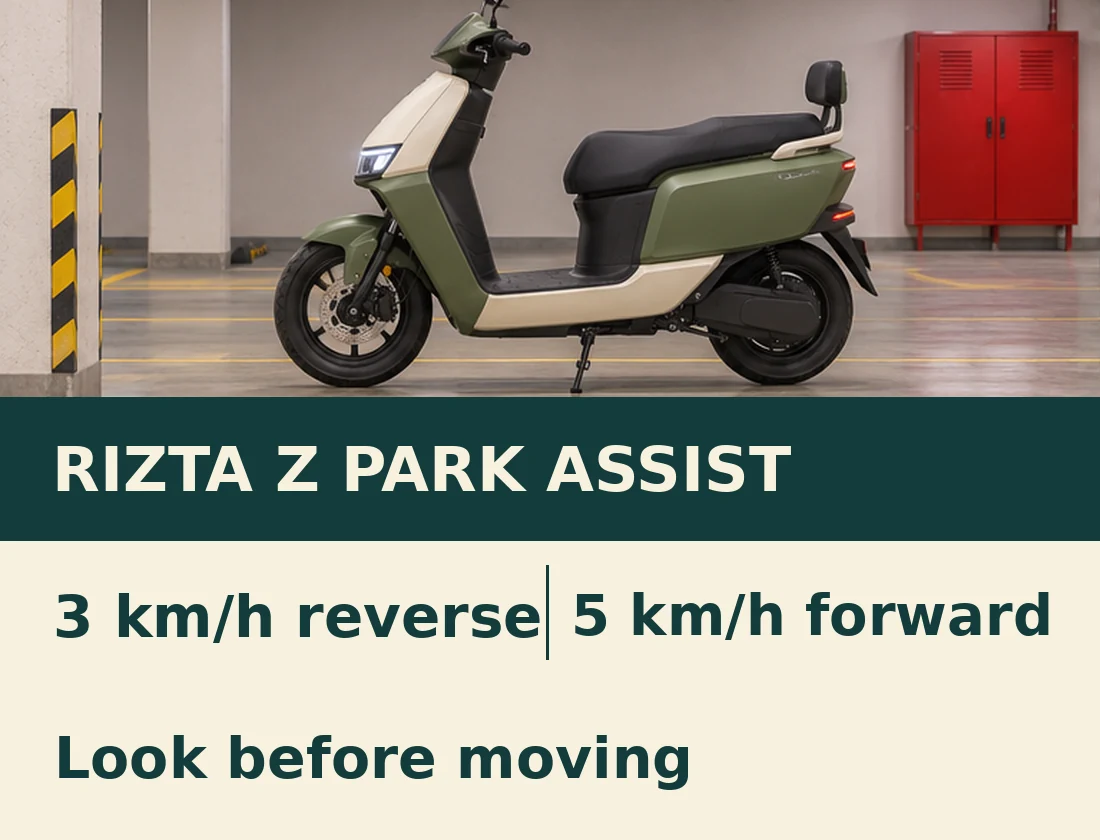
The Ather Rizta Z quick-start guide lists 3 km/h in reverse and 5 km/h forward with Park Assist. Read those figures as descriptions of the mode, not targets to reach in a tight spot. At a slow pace the scooter still needs adequate clearance, a surface you can balance on and room to stop. The feature does not independently find a path or manoeuvre around obstacles.
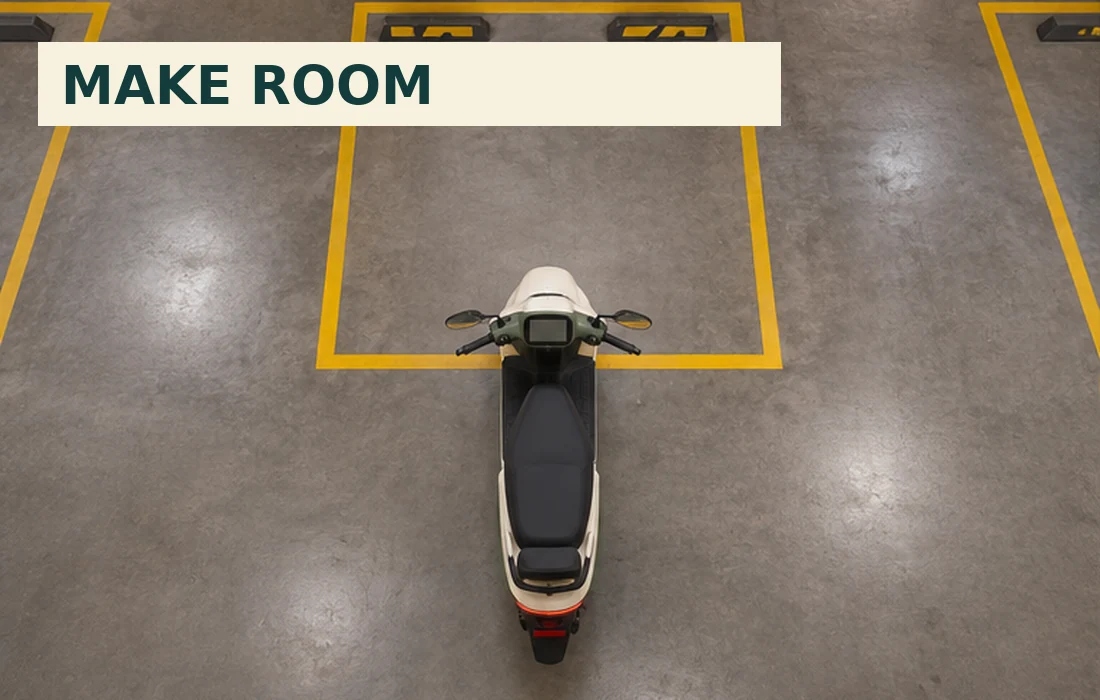
Why the direction matters
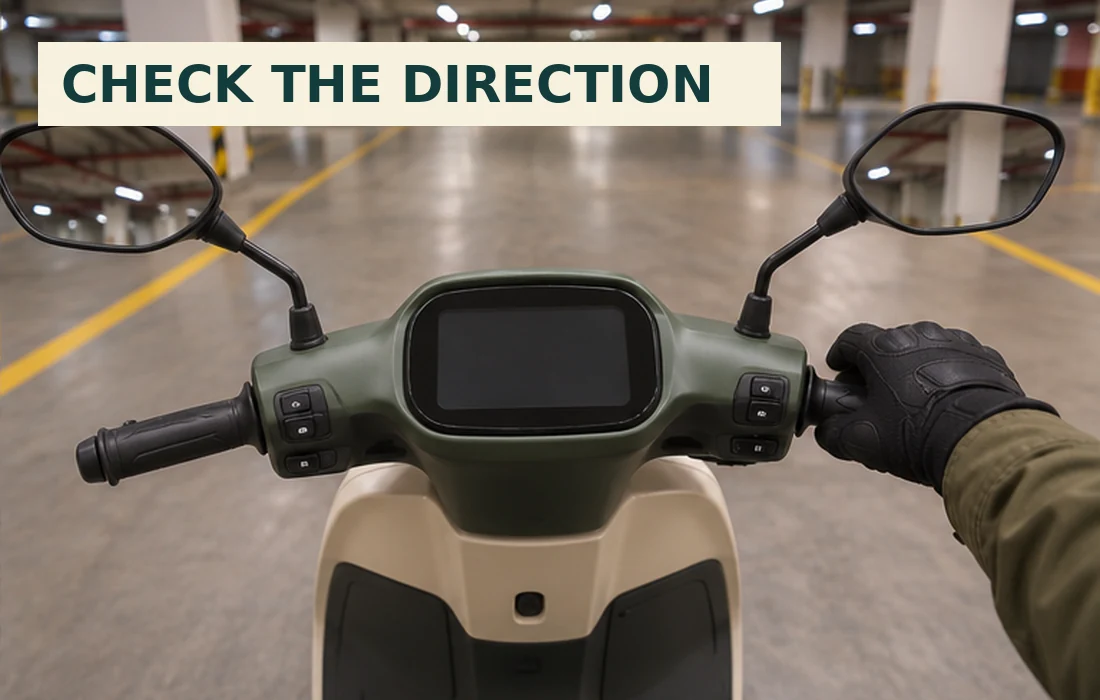
On the Z shown in the guide, the Park Assist button engages the mode with the scooter stationary. The guide describes reverse as the initial movement direction and the start switch as the way to choose forward within the mode. Treat the display as the final confirmation and use the handbook for the controls fitted to your scooter. Don’t copy an older 450 shortcut from a video or assume an S uses precisely the same interface as a Z.
Ask a salesperson to demonstrate with the scooter stopped on clear, level ground, no one in the direction of travel and enough room to pause. Make sure you know how to stop and exit the mode before needing it in a crowded garage. If the direction shown isn’t the one you expect, don’t use the accelerator to find out. If a display error or operational problem persists, follow Ather’s service guidance rather than trying to override an interlock.
What Magic Twist does instead
On an equipped scooter, Magic Twist lets the rider request deceleration with a twist of the grip in the opposite direction to acceleration. A reverse movement of your wrist in that context does not tell the scooter to drive backwards. Park Assist is the separate stationary-start manoeuvring feature. Ask the showroom to demonstrate each independently if you’re comparing features.
Ather’s Rizta model page and specifications comparison describe what is offered across the range. Verify the exact controls, package and any software requirements on the scooter you’re buying rather than assuming all website features are included together. The official older demonstration below explains the broader idea of powered manoeuvring; use your matching Rizta guide for the controls.
Watch the manufacturer video on YouTube.
When the feature is worth checking
If your usual space is flat and open and you’re comfortable walking the scooter out, the benefit might be modest. If your bay requires repeated short backward moves or two members of the household share the scooter, a supervised demo can establish whether it helps. Think about how you can see behind you, how much steering space you have and whether both riders are comfortable stopping it. Powered assistance doesn’t replace a scooter that fits you.
At the showroom, first try a comfortable stationary reach to the ground with your usual shoes, then have the dealer run a low-speed demonstration on the actual trim. Try to reproduce the width of your parking bay with markers instead of trying the feature first in a real aisle. For a broader fit comparison, see our Ather 450S versus Rizta S parking and seat-fit guide. That comparison helps you judge footing; this feature check tells you if powered parking assistance makes the space easier to use.
One final test is worth doing before deciding whether any of this justifies a different variant: have each regular rider back the same short distance at walking pace under supervision and stop at a clearly marked line. Compare how easy it is to look behind, keep the scooter upright and reach both brakes. Don’t make a cramped, sloped ramp the first attempt.
If your usual parking also has a ramp, do not judge the feature from a brochure speed. The actual turning radius, sight line and surface all affect whether the maneuver feels controllable. Test only where you and the demonstrator have enough space to stop.


