

If your Triumph Speed 400 feels different with a pillion and a weekend bag, start with the total load and the handbook, not a random number of preload clicks. Preload changes how much the spring is compressed before the rider and luggage settle onto the motorcycle. It can help put the rear suspension in a suitable working position for the load, but it doesn’t increase how much the motorcycle is allowed to carry.
Highlights
- Triumph lists a preload-adjustable rear monoshock on the Speed 400.
- The India handbook cited here lists 174 kg maximum payload for its Speed 400. Count riders, luggage and fitted accessories, and use the limit for your own model year.
- Match the factory guidance to the loading condition. Don’t copy a setting from a different bike or treat repeated bottoming as proof that adjustment alone is the fix.
Start with the weight, not the shock
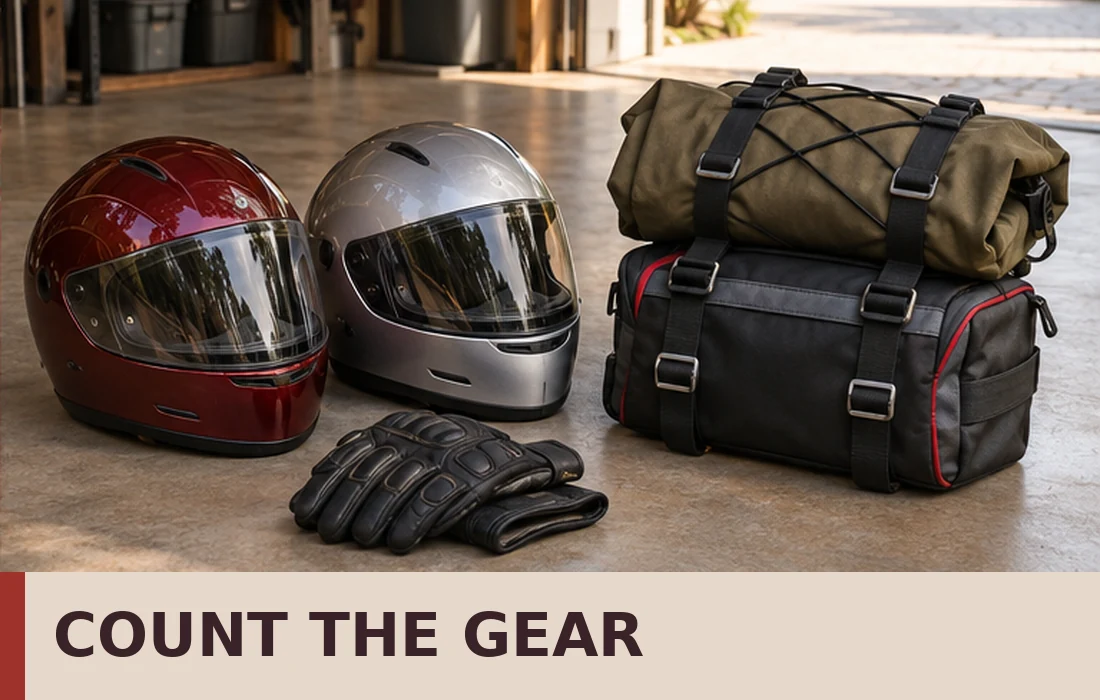
The Triumph India owner’s handbook for Speed 400 and Scrambler 400 X includes a loading chapter and a specification table. The 174 kg limit in that edition is the combined payload, not a luggage allowance. Check the handbook supplied with your exact unit before using the figure. Weigh the total with protective gear and full luggage, and count heavier items such as fitted racks and luggage hardware in the accessory or luggage weight, without counting them twice.
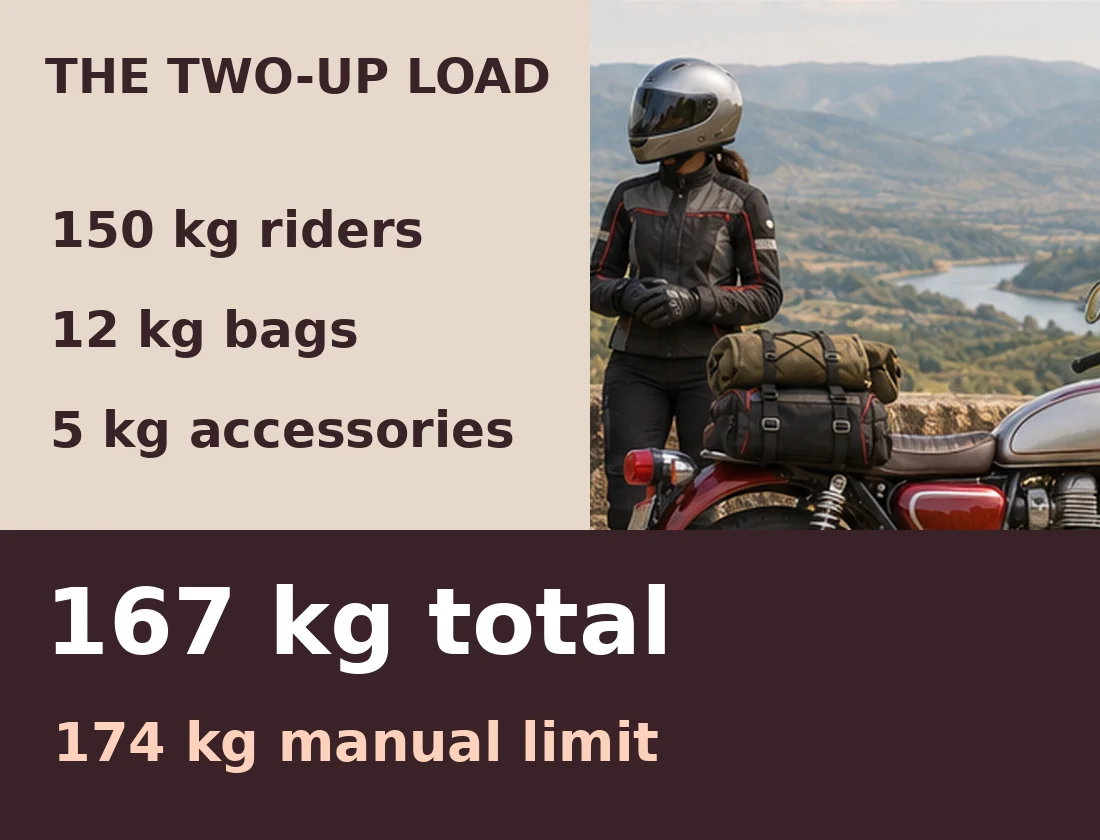
For example, suppose you and your pillion together weigh 150 kg in riding gear, the luggage with its bags weighs 12 kg, and other fitted accessories weigh 5 kg. That’s 167 kg, or just 7 kg below that handbook’s limit. Adding a second 8 kg bag puts the example over. A bag or rack can have its own lower limit as well; being under the motorcycle limit doesn’t cancel it. If the combination exceeds the relevant rating, remove weight or use another travel plan. A preload change cannot make that load permissible.
What preload can and cannot change
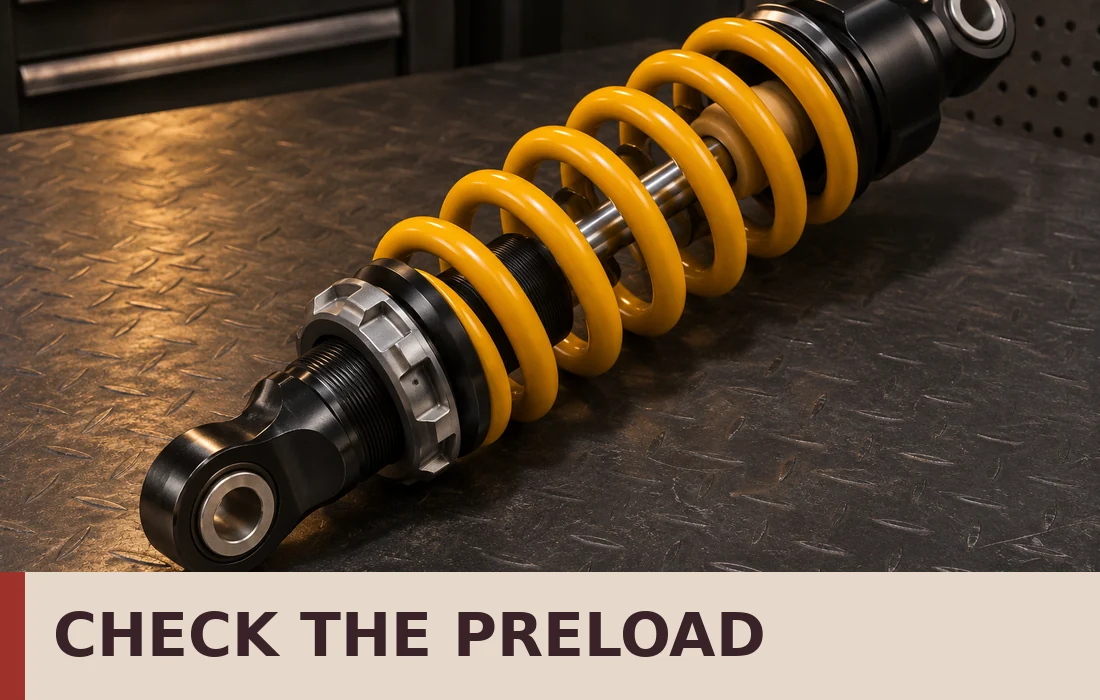
A motorcycle settles farther into the suspension under more load. The Triumph Speed 400 spec page describes preload adjustment at the rear. The purpose of this adjustment is to set the spring’s initial compression to suit the applicable load condition, not to swap in a different spring or independently tune how quickly the shock moves. It does not give extra total suspension travel, make the tyres stronger or lift the rating on a rack.
If the bike bottoms repeatedly, feels unstable or handles unexpectedly with a legal load, don’t keep increasing preload by trial and error. Check that your luggage is secure and placed appropriately, the tyre pressures match the manufacturer’s guidance for that load, and the setup matches your own handbook. A rear suspension problem or damage needs inspection, not another click. If you’re unsure how to identify the current setting or use the adjustment tool safely, ask a Triumph dealer to check the bike and demonstrate for your usual solo and two-up loads.
Make a two-up departure checklist
First, add the dressed rider, pillion, packed bags and accessories. Then confirm the correct loading guidance in the suspension section of your handbook and check tyres, luggage security and lighting. Keep luggage clear of moving parts, the exhaust and lights, and confirm the passenger can reach the footrests and sit securely. Triumph’s pre-ride safety checks are a useful reference before a trip.
Ask for help if you cannot reliably identify the correct handbook specification or condition. Before a long trip, get familiar with the handling changes with your normal load in safe conditions and allow for different stopping and balance behaviour. When things feel wrong, stop somewhere safe and inspect the luggage and bike, rather than judging it through a few fast bends. Before returning to your usual solo rides, refer to the matching solo guidance rather than leaving the machine in a setup chosen for a tour.
Two different problems
Getting a loaded bike out of a parking spot is a low-speed handling problem as much as a suspension question. See the Speed 400 reverse-parking slope guide for that separate decision. The original Triumph India clip below identifies the adjustable rear monoshock on the Speed 400; it is not a suspension adjustment tutorial. Use the manual and dealer for the actual procedure and applicable setting.
Watch the manufacturer video on YouTube.
For a repeatable handover with the workshop, bring the weights you normally carry rather than asking for the universally best click. Explain whether the setup is for occasional luggage, commuting two up, or both. Ask the technician to identify the current setting, the one they recommend under Triumph’s guidance and how to recognise it again. Keep those notes with your handbook so you can describe what changed if handling feels different later.
In particular, a heavy bag behind the pillion changes how the load is placed even if the scale says you are under the maximum. Check the mounting system separately, and prefer reducing or redistributing the load to using the shock adjustment as a workaround.


