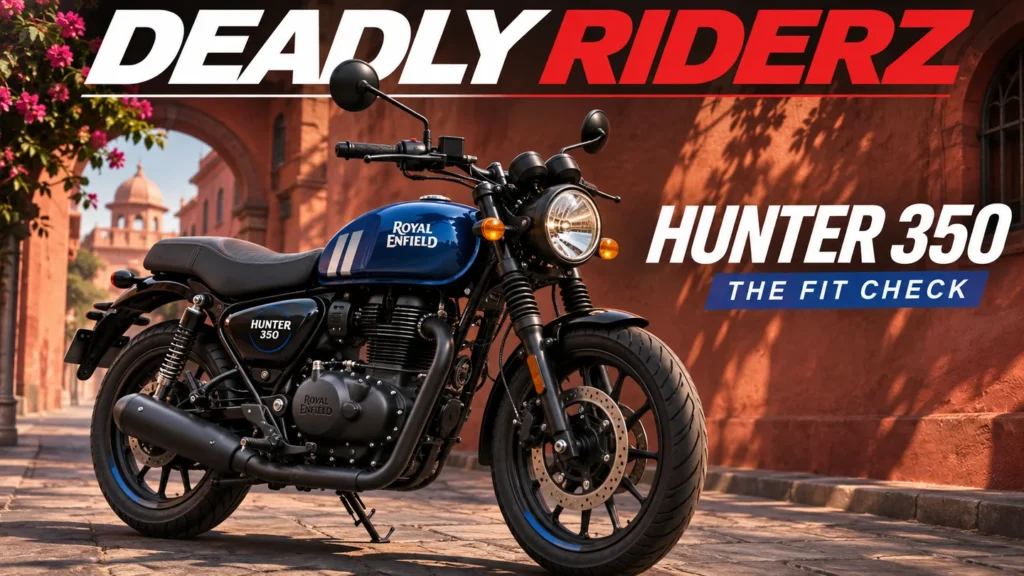

Start your Hunter 350 test before you turn the key. Ask a salesperson to stand next to the machine while you roll it a couple of steps, take it off the stand and bring it upright. Then settle into the saddle in your usual riding boots. The 790 mm on Royal Enfield’s specification sheet can help you shortlist the bike. That simple parking exercise tells you whether you would be comfortable arriving at a crowded shopfront and having to make room by hand.
Highlights
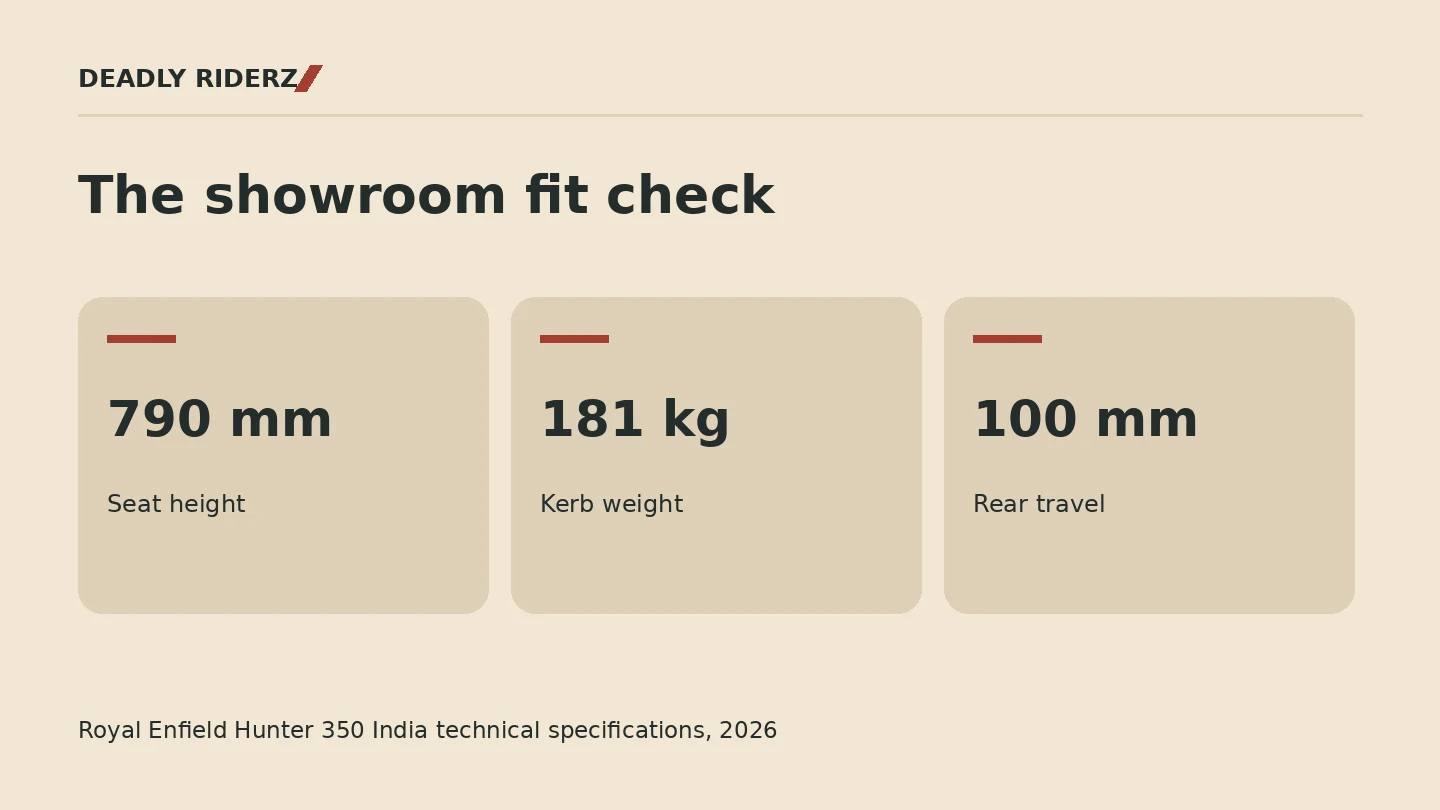
- Royal Enfield lists a 790 mm seat height and a 181 kg kerb weight with 90% fuel and oil.
- Seat width, boot soles and the side you normally stop on affect how comfortably you reach the ground.
- Check the clutch lever, low-speed turn and reverse parking in person. Include your usual passenger if you often ride two-up.
Start by matching the bike with its spec sheet
The 2026 Hunter 350 India specification sheet lists an assist-and-slipper clutch, a 790 mm seat and 181 kg kerb weight. Royal Enfield also lists 100 mm rear travel and six steps of rear preload adjustment. If you are shopping used or comparing a dealer demo with a bike still in stock, identify the model year and trim. Ask which parts or equipment the spec sheet actually describes. An aftermarket saddle or a changed suspension setup can make two motorcycles with the same model name feel different the moment you sit down.
Check the reach that you use at every light
Wear the boots you ride in. Try your usual stop position under supervision, with the bike on a level surface first. Note where your foot lands and how far you have to shift your hips to get a secure contact. Then try the other side. Roads are crowned and parking is often uneven, so it helps to understand which side feels more natural before the first tight situation. Rider height alone misses inseam, boot shape and how much the saddle pushes your legs outward.
When you sit on the bike, check the knees and hips as well. A low saddle can ease a stop while making the knee angle feel tighter on a longer ride. Sit in the position you would use for half an hour, with your hands light on the grips. Turn the bars through their useful range while stationary with support available. If you need to pull yourself forward to reach the far grip on a tight turn, make a showroom note about it and repeat the check on the second bike you are considering.
Recreate your least convenient parking spot
Think of the real spot where you use your bike. It might be a basement bay that leaves barely enough room to reverse, a roadside stop with a crown, or a driveway that slopes towards traffic. Use a suitable controlled space at the dealership to check the easy version of that scenario. Walk beside the bike with the engine off, check how much leverage you have at the handlebar and see what happens to your confidence when the front wheel is turned. On the test ride, ask for a legal, quiet turn-around at walking pace.
Test the clutch lever in your usual gloves. Check whether you can bring it towards the bar without twisting your wrist and whether the throttle and brake controls feel easy to reach in the position where you actually ride. If the standard setup feels uncomfortable, ask which adjustments the handbook allows and what the dealer recommends. A change to the saddle or bars deserves a new check of reach and steering clearance before you commit.
Royal Enfield’s Pune film shows the 2026 bike in an urban setting. Use it to see the basic rider triangle, then check your own reach in person.
Add the load you actually carry
If you ride regularly with someone else, ask the dealer to show you the recommended two-up setup and where your passenger puts their feet. Check how easily they get on with someone holding the bike, and whether you feel secure at a stop. A rear suspension setting changes how the bike sits with load. Ask the service team how to set it for the intended load and use the handbook for your model. Rear preload and seat choice answer different questions, so check both before treating either as a shortcut.
Note the test result in the showroom
| Check | What to record |
|---|---|
| Standing reach | Preferred foot and how far your hips move |
| Pushing and reversing | Whether the bike moves easily with bars turned |
| Passenger fit | Mounting room and reach at a stop |
Use the same notes if you try another motorcycle after the Hunter. Record the footwear, showroom surface and whether the bike was carrying a passenger. Two different surfaces can produce two different impressions of something as simple as getting the stand up. An honest comparison starts by keeping those conditions as similar as the dealer can reasonably arrange.
If your shortlist also includes the Speed 400, our Hunter 350 and Speed 400 comparison gives the broader context. Repeat the same parking and stop checks on both bikes on the same day. Choose the position that makes your own driveway and weekday traffic easiest to handle. Those are the moments you repeat most often.


