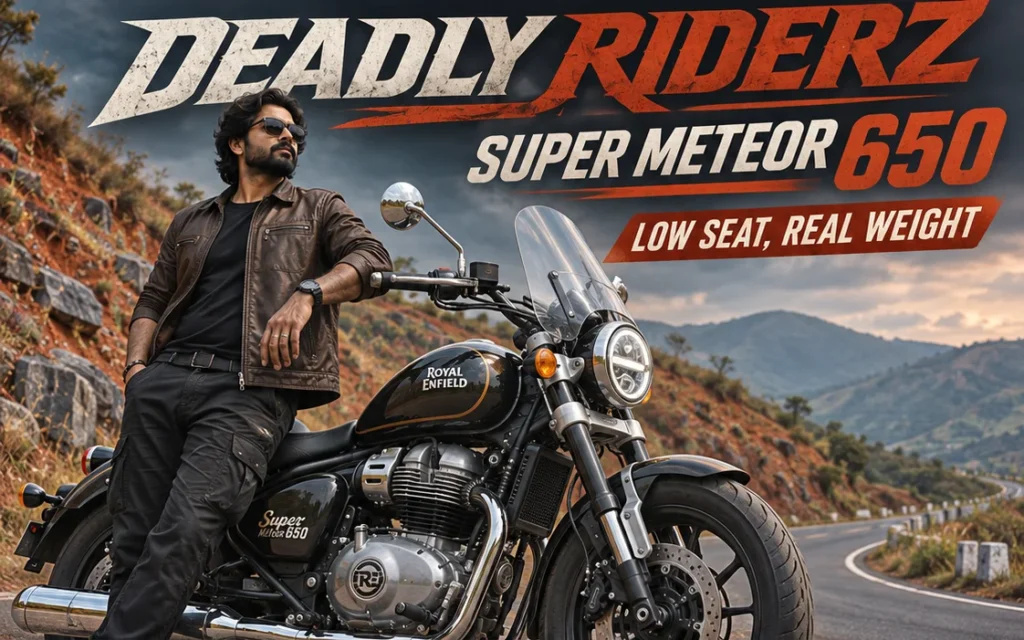

A low seat can give you enough confidence to pick a motorcycle up off its stand. It cannot tell you how the same bike will feel when you need to reverse it. The Super Meteor 650 puts that distinction into especially clear terms. Royal Enfield lists a 740 mm saddle and a 241 kg kerb weight. For someone choosing a cruiser, the two figures are equally useful. The one that matters most depends on whether you are stopped at a signal, setting off with a passenger or putting the bike away.
Highlights
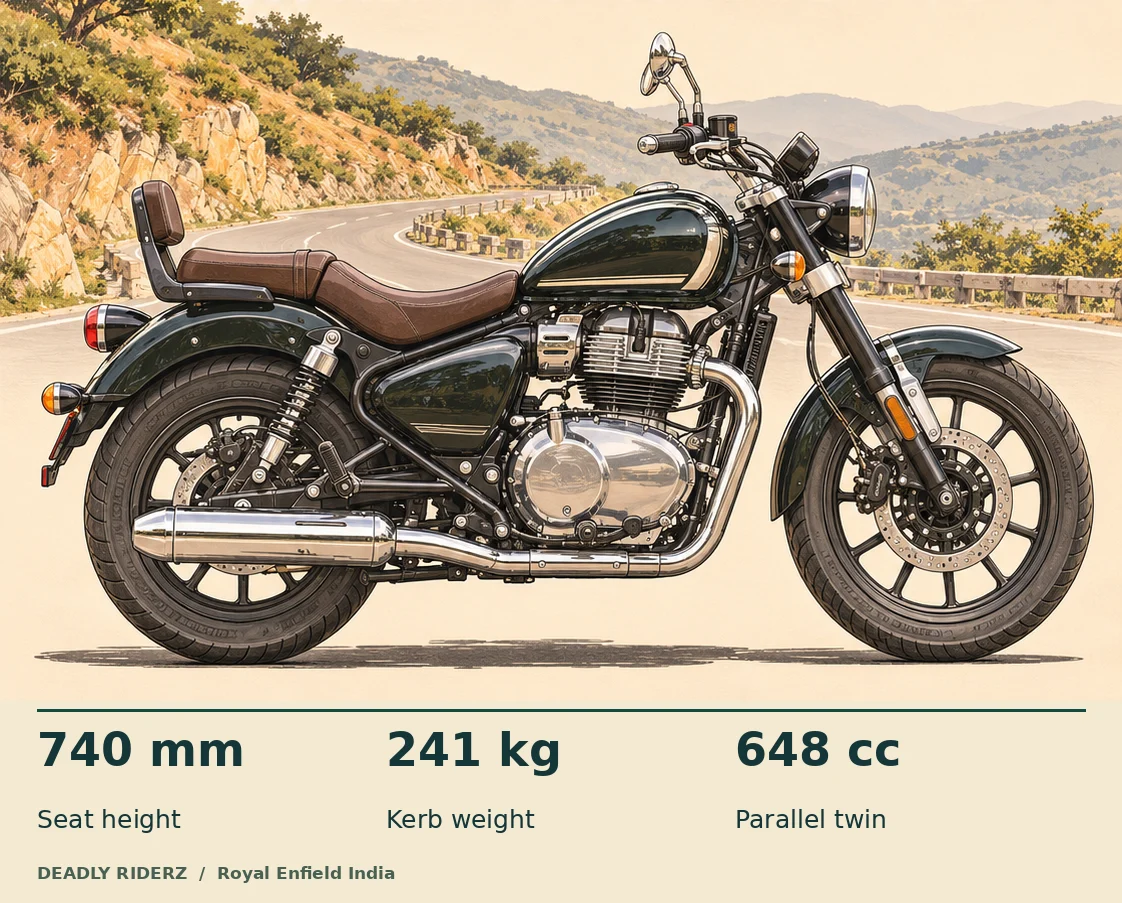
- Royal Enfield lists 740 mm seat height and 241 kg kerb weight with 90% fuel and oil.
- Test ground reach and pushing effort separately in a controlled, level space.
- Check the rider’s reach to the foot controls and the passenger’s fit on the exact seat arrangement you plan to buy.
What the figures do and do not measure
The Royal Enfield technical specification lists the 648 cc twin, 740 mm seat and 241 kg kerb weight. Compare the weight using a similar basis for any other bike. A change in how a manufacturer defines its weight figure can make a comparison less useful. The listed height tells you where the saddle is. Your route to the ground also depends on your boots, your own leg length and the shape of the seat.
Get on the bike in your usual boots
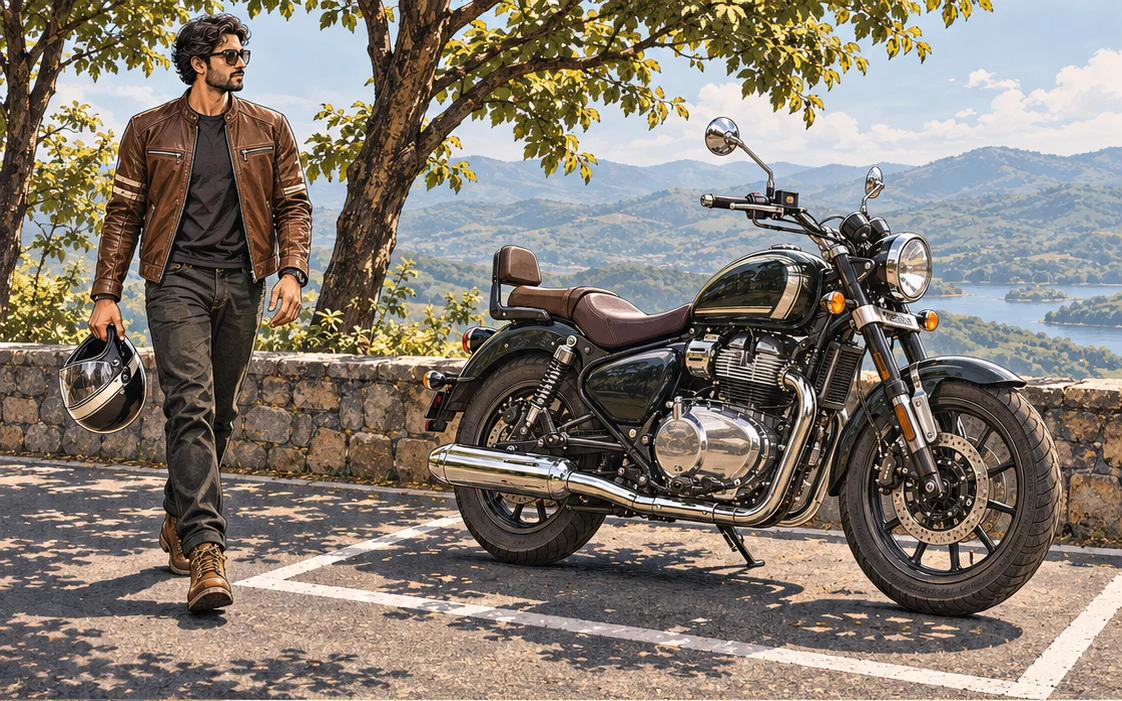
Try each side at a stop with the vehicle supported and ask where your foot naturally lands. Move your hips the amount you would use in a real traffic stop. A secure enough point of contact matters more than what any particular rider does on film. Reach forward to both controls and see whether you can keep your shoulders relaxed when the handlebar turns. Ask for a few minutes so you can decide whether you are genuinely comfortable while you sit there.
The forward foot controls are worth trying rather than describing from a distance. On a permitted ride, find out how easily your boots find them after you lift your feet. Check the way your hips and knees feel when you bring the bike to a stop. If you are used to a motorcycle with controls closer beneath you, the shift in posture may be part of the appeal or something you prefer to avoid. A short realistic ride gives you a better comparison.

Rehearse the parking you do at home
With a salesperson nearby, move the bike forward by hand and try moving it back on level ground. Work out whether you prefer to hold it from the seat or move it while standing beside it, with guidance from the dealer. Think about how you would handle the familiar part of your parking routine. If a slope is a part of your daily ride, say so. A repeatable level-ground test can tell you whether it is sensible to arrange a more realistic demonstration before you agree to take the bike home.
If you arrive with a passenger on weekends, check their access when the motorcycle is supported. Look at the actual seat and backrest arrangement. Optional accessories belong on the quote and should be tried before the handover. If you expect to carry luggage as well, ask how the chosen mounting system changes the available space. See our Himalayan two-up setup guide for the general approach and follow the cruiser’s documentation for its own limits.
Royal Enfield’s Super Meteor film shows the cruiser’s seating and control layout. Use the showroom checks to test the reach with your own gear. Watch on YouTube
Where you put the cruiser matters
Look at the space where you expect to leave the bike at work or at home. Ask whether you can set it down in the direction that makes the next departure straightforward. In a dealership, choose a controlled space for a realistic turning check. Ask a member of staff to demonstrate how they move the model with the handlebars turned. A five-minute check may tell you more about daily comfort than an hour admiring the specification.
Compare seat options in the same place
A different seat or backrest can alter where the rider and pillion end up, even if the published figure belongs to the standard setup. Try the accessories as actually fitted if you can. Note where your boots and hands fall naturally, and ask a passenger to describe the space in their own words. Use the same questions when you try another cruiser so the comparisons come from a similar situation.
Finish the test where you started
As you return the bike, ask which of the movements you tried would demand extra effort after a long day. If you are confident about routine stops, parking and footing with your usual load, you can concentrate on whether you enjoy the cruiser position. If one movement worries you, repeat it on another shortlisted bike from the same conditions. The Super Meteor’s numbers are most useful when they help you decide where to spend your test time.
Cover illustration by Deadly Riderz.


