

On a Bajaj Dominar 400 that matches the earlier 373.27 cc JF-52 handbook, two fuel bars mean low fuel. One bar is the separate REFUEL prompt. The book lists a 13-litre tank with no separate reserve. Neither message promises a known number of litres or kilometres left. If you see the first warning on a ride outside town, use it to make your next stop decision rather than waiting for the display to count down to zero.
Highlights
- The JF-52 handbook associates two bars with low fuel and one bar with REFUEL.
- The tank is listed at 13 litres with no separate reserve for that manual.
- Distance to empty is an estimate based on fuel level and current economy, not a measured distance available.
- Check the handbook for your specific instrument cluster; the Dominar 400 badge alone does not settle which manual applies.
Make sure your bike matches the manual
Read the displacement on your own paperwork and compare your cluster against the instrument section in Bajaj’s JF-52 Dominar 400 handbook. That book lists 373.27 cc and documents the two-message layout below. Bajaj’s current India model page lists 349.13 cc under the same Dominar 400 name. A matching name or tank size is not enough to establish that the message thresholds and cluster software are the same.
The article covers the indicator table in that particular handbook. If you have an earlier dash or a recently purchased revised bike, ask your Bajaj workshop which manual applies. Our Dominar 349 versus 373 buyer guide explains how to identify the two engine versions when comparing invoices or used listings.
What the two warnings tell you
The dash table in the JF-52 handbook separates a low-fuel level at two bars from REFUEL at one. Read those as two warnings in sequence, not two calibrated quantities. The tank’s stated capacity does not tell you how much is actually left when either warning appears. It also does not establish how much fuel can be used before the engine stops.

No separate reserve means there is no second tank capacity to add to the 13 litres listed. It does not mean that the bike stops as soon as the first warning comes on. The handbook does not give you a dependable distance for either message in that table, so do not treat a forum estimate or a ride that went well once as a safe rule.
Why the range readout can change
Bajaj describes distance to empty, or DTE, as an estimate based on current fuel economy and the level in the tank. That is useful for spotting a change, but two routes of the same length can consume different amounts of fuel. Stop-start traffic, an extended climb or time lost at a diversion may make yesterday’s readout irrelevant. Do not repeatedly check the display while moving to try to work out how quickly it is falling.
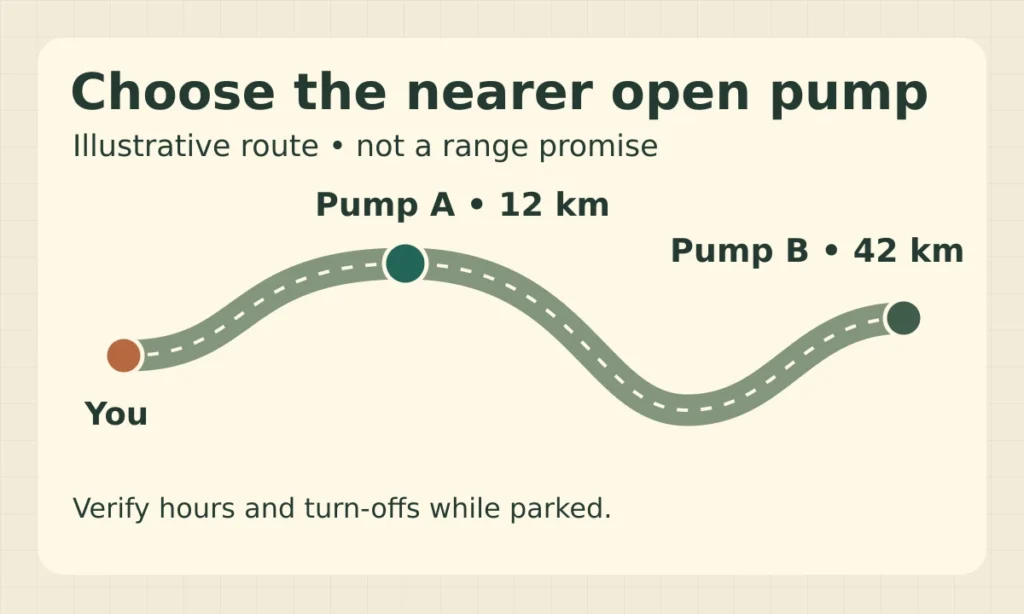
For example, imagine a known open station 12 km ahead and a cheaper pump 42 km along the next road. These example distances are not a claim that your bike will cover either one with a warning active. The decision is to verify a closer stop, including opening times and access, rather than betting on the farther one because the dash shows an estimate larger than the map distance. If there is no safe way to reach a confirmed station, stop safely and arrange help instead of trying to stretch the reading.
Plan the fuel stop before the warning
Start a long leg with enough fuel for the route you actually intend to ride. Pick a primary pump and a sensible fallback before the section where stations thin out. Once parked, check whether either station requires a detour or a turn that is hard to reach from your direction. A closed station affects the plan more than a small difference in fuel prices.
For your own records, note the odometer and the litres on the pump receipt when refuelling normally. Several ordinary rides are a better basis for planning than a single dashboard estimate. Our mileage log for part fills explains why one amount paid at the pump does not tell you the total fuel used since the last stop. Neither log nor DTE is a substitute for filling before an uncertain stretch.
If the fuel message does not fit the situation
The same handbook lists FLS OPEN or FLS SHORT separately as fuel-level sensor indications. If a fuel reading is persistently unusual after a normal refuel, or a sensor message appears, treat the readout as unreliable and have a Bajaj workshop check it. Do not run the tank down to see what the bike does. When the evidence is simply two bars on a matching cluster, the decision is simpler: identify a safe, verified fuel stop before the display advances to REFUEL.
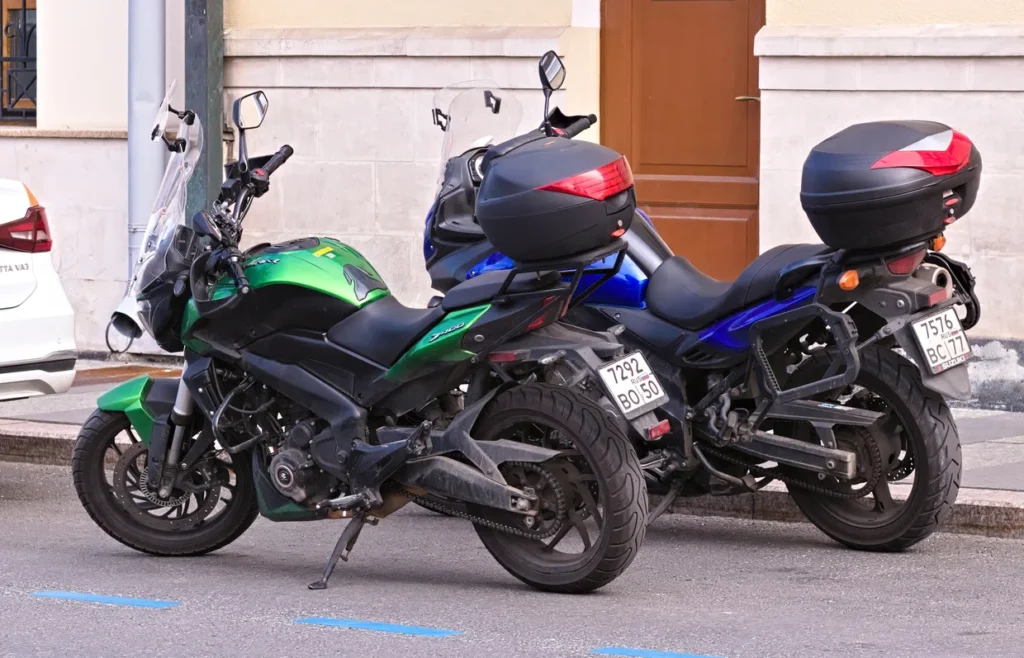
Cover: overseas archive photo by Retired electrician, CC0 1.0; cropped and framed.


