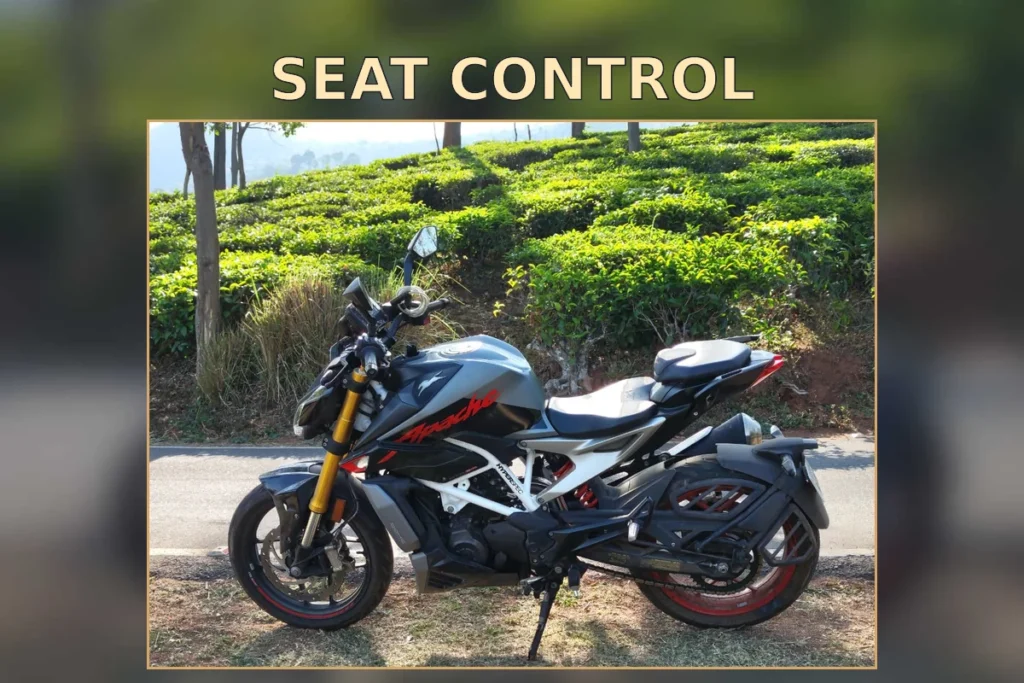

If a TVS Apache RTR 310 walkaround shows a seat that heats and cools, do not assume the bike in your dealer’s quote has the same feature. TVS documented heating and cooling on selected earlier Built to Order (BTO) versions. In the company’s newer India owner handbook for the period after August 2025, the manual’s Accessories control section instead says the seat menu is disabled for the vehicle that handbook covers. These are two different answers from TVS, not a reason to assume the setting is simply hidden.
Why older reports show a working feature
On earlier bikes, TVS specifically used the climate-controlled seat as a feature example. The November 2023 owner’s handbook describes three levels for heat and three for cooling, set through the TFT. It marks the equipment for selected versions rather than every RTR 310. That explains why two used listings can both say RTR 310 but only one seller can demonstrate the feature. The bike needs the relevant hardware, not just the familiar instrument layout.
What the newer handbook says
The TVS India handbook for the later production period contains the relevant note in Accessories control, on printed page 94. It says the option is disabled and does not apply to the vehicle covered by that section. The table of contents still includes a Climate Controlled Seat entry, so a text search for the phrase may point to the contents before you see the actual note. Read the page for the version you are buying, and have the dealer match the handbook against the bike’s build month or vehicle identification number.
This does not prove that every earlier bike was equipped, or that every subsequent edition will always omit it. It tells you that a 2023 launch feature, a 2024 video, an old PDF and a current showroom unit should not be treated as interchangeable. Even the current product page includes seat-related visuals alongside other feature and kit sections. A product photo or image caption is not a fitment promise for a specific motorcycle.

How to check a new bike at the showroom
Ask for a quote listing the exact vehicle or order specification, not just the category name. Then ask the dealer to show the relevant seat hardware and where the temperature control appears on that unit. Have staff demonstrate any feature on a safely stationary motorcycle, with their normal showroom procedure. If they can only show it on a video, a demonstrator with a different production date or an old spec sheet, treat it as unconfirmed.
The other question is whether the seat is a dealbreaker. If you want the bike for its riding position or controls anyway, compare the confirmed equipment and total price without assigning value to an unavailable upgrade. If you are paying specifically to get heat or cooling, get the answer in writing before agreeing to the order. Do not assume a software update will add physical seat equipment.

How to check a used bike
Start with manufacture month rather than registration date. A bike can be registered later than the month it was built. Ask the seller to show the original order sheet, any accessory invoice, and a live demonstration of the setting. Paperwork for a BTO kit helps identify what was paid for, but if the bike has had a seat replacement, the old invoice still does not prove the current seat has the feature. If it is listed as fitted and will not demonstrate, ask an authorised TVS dealer what they can verify on that exact unit before treating it as working.
The official TVS video below is useful for seeing the instrument family on an earlier example. It does not certify availability on a current model. For the current bike, the documentary check is the handbook version plus the written quote; the practical check is a demonstration on the same build you are buying. If those disagree, resolve the disagreement before paying.
Watch the official video on YouTube
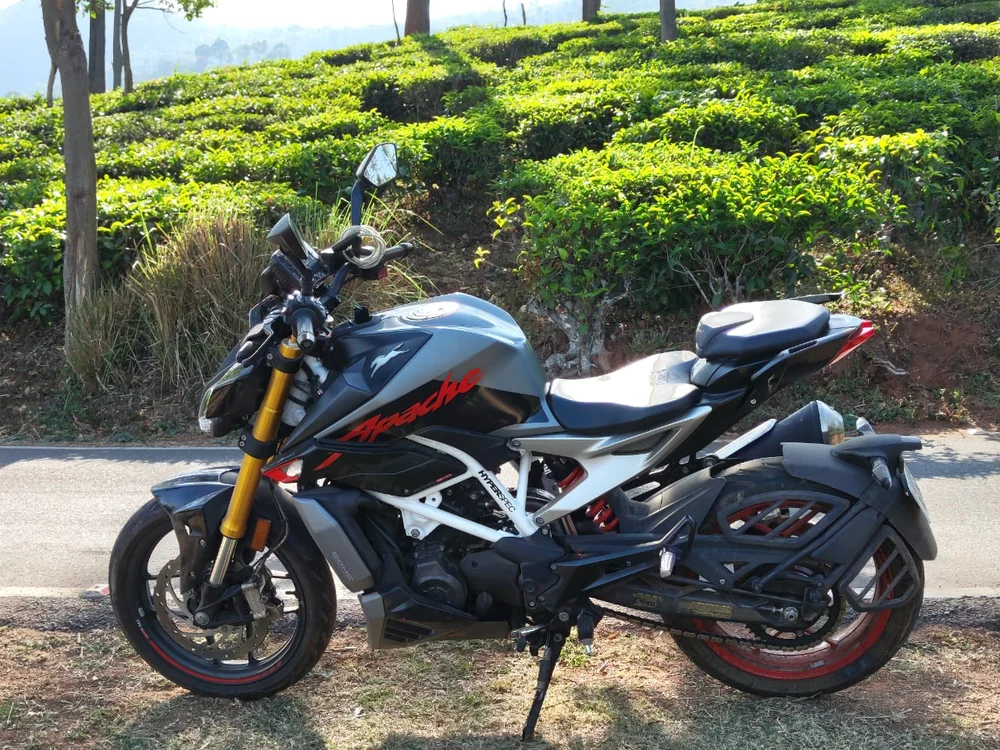
Cover and archival photo based on the 2024 photograph by Crazyranga via Wikimedia Commons, CC BY-SA 4.0. Cover cropped and reframed. Neither image certifies model-year seat equipment.


