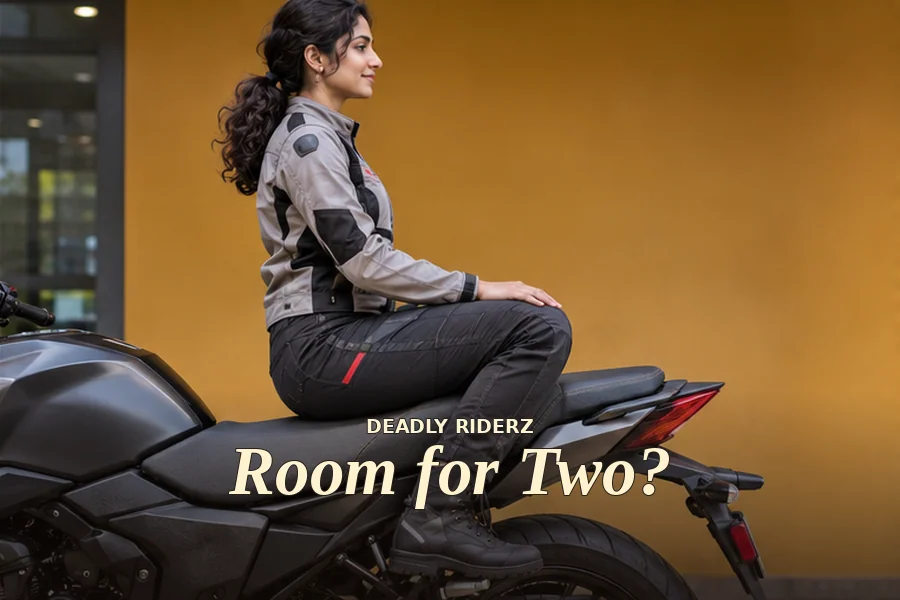

The most revealing seat in a Yamaha showroom is the one the buyer usually leaves empty. If your partner travels with you every evening, let them try the back of the MT-15 V2 and the R15 V4 before you decide between the two. The difference between an acceptable lift home and twenty uncomfortable minutes can be the few centimetres left behind you once you sit where you actually ride.
Highlights
- Yamaha lists rider seat heights of 810 mm for the MT-15 V2 and 815 mm for the R15 V4. Neither figure measures the passenger’s perch.
- Independent road testers found limited pillion room on both bikes. The R15’s tail scoops also shaped their verdict on longer rides.
- Try both seats in the same gear, with the same passenger and the bag you normally carry. Compare the passenger’s answers before sharing your own preference.
What the five millimetres tell you
Start with the specifications because they answer one question reliably. The rider trying to place a boot on the ground can use the seat-height figures as a starting point. The passenger trying to swing a leg over the tail needs a different measurement. Yamaha’s Indian brochures list the same 1,325 mm wheelbase for both motorcycles, yet that distance runs from one axle to the other. It tells you nothing about how much saddle is left once two people are aboard.
Look at the side profiles in the brochures. The R15 has a visibly separate, elevated rear pad. The MT has a stepped seat whose rear section shares the seat assembly. A continuous surface can look more generous in a photograph than it feels with two jackets pressed together. Conversely, a clearly defined rear pad can give the passenger an obvious place to sit while leaving them very little room to change position. Ask the showroom to show you the particular variant you are buying, with its standard seat fitted.
What independent riders found
BikeWale’s road test of the MT-15 Version 2.0 found the pillion accommodation cramped. That matters because an upright handlebar often gets the MT onto a shortlist for a shared commute. It can deliver a riding posture the person at the controls likes, while the person behind still has nowhere to move. BikeWale’s R15 V4 road test separately reported a small rear seat and found the tail scoops an uncomfortable handhold over a longer ride.
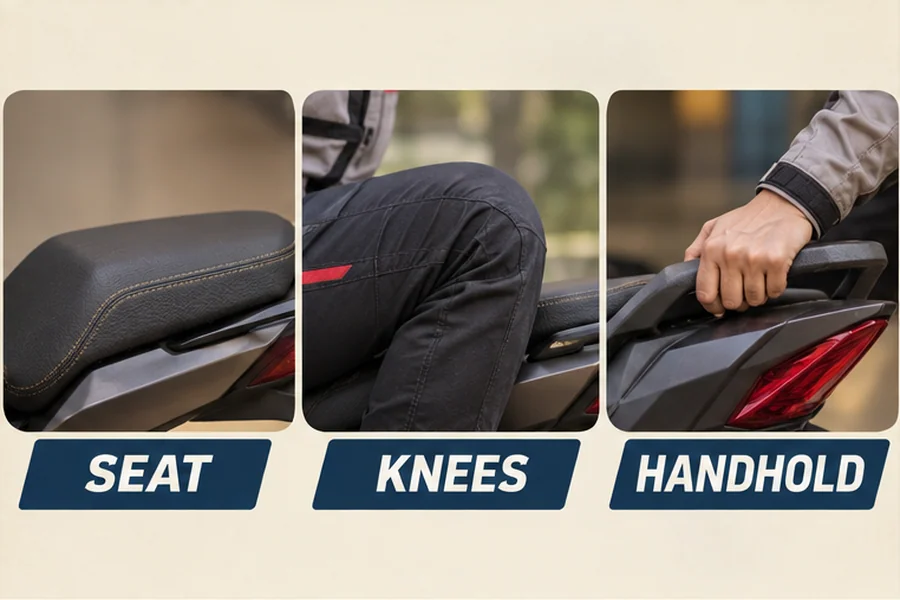
Those observations give you two specific things to try. Put the passenger where the seat naturally supports them and see how much freedom there is to shift. Then have them find the intended handhold while looking ahead. A passenger who has to twist to locate it may tolerate that once on a showroom floor and dislike doing it on every trip. These are independent testers’ observations. The checks below are a way for your own riding pair to make the decision.
Bring both people to the bike
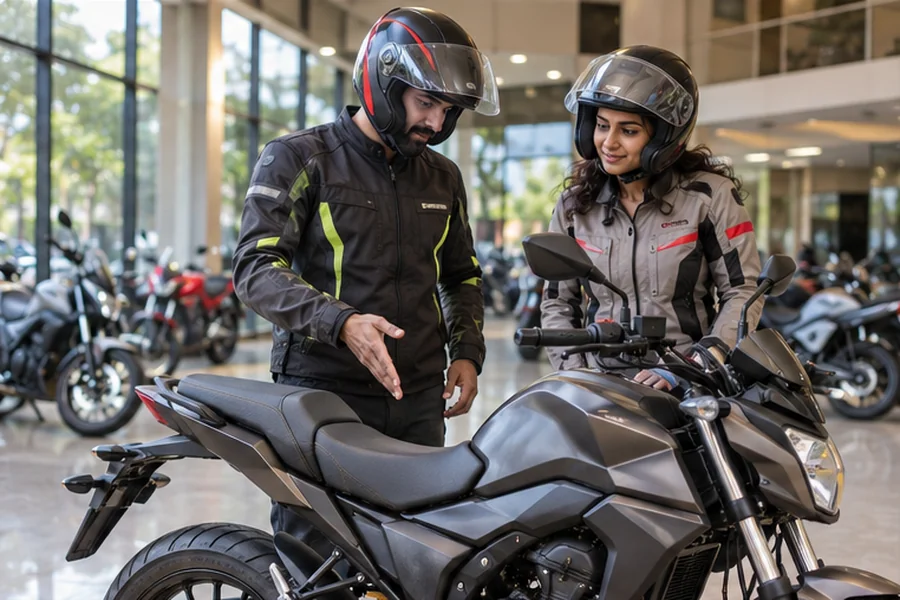
Ask the dealer to steady the stationary motorcycle on level ground while you try it together. Wear your usual shoes and jackets. Ask the passenger to get on and off in their normal way under the dealer’s guidance. If their regular pickup spot is a narrow lane, notice how much room they need beside the bike. A generous, empty showroom aisle can hide the awkward part of a routine that has to work at a busy kerb.
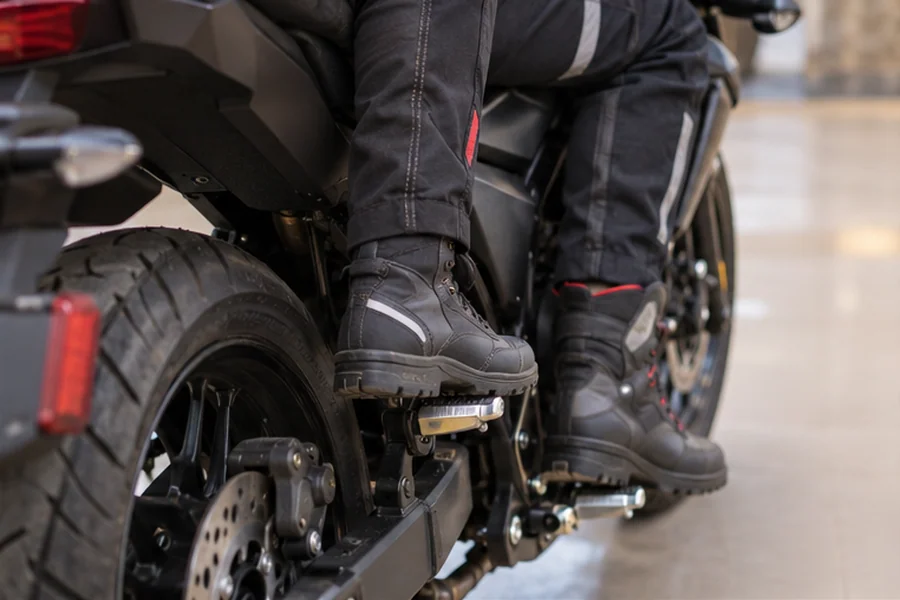
Settle into your usual riding position first. Adjusting yourself forward to give your passenger extra room can make a promising first impression that disappears as soon as you reach for the bars. Now ask three questions separately. Where does the rear pad support the passenger? Where do their boots rest on the passenger pegs? Can they reach the intended grip without leaning their entire upper body against you? Repeat in the same order on the other bike.
Try the trip you actually make
Consider two households. One collects a partner from the Metro for the last two kilometres, and both people carry only what fits in their pockets. Easy access and a usable grab point might settle the choice. Another pair spends forty minutes together each way and carries a laptop. For them the important moment comes when the rider puts the backpack on. It occupies the same space the passenger used a minute earlier. Have the passenger sit again with the bag in place and check whether its base presses into their abdomen or pushes them towards the rear edge.
If the dealer permits an insured two-up demonstration ride, take the same short route on each bike, with helmets and appropriate gear. Ask how the passenger feels after ordinary stops and turns. A static fit check can uncover obvious problems, but it cannot tell you how a small rear pad will feel after a full commute. If only a static comparison is available, record that limit before deciding how much weight to give the result.
Make the choice together
Have each person write down one thing that worked and one thing that became irritating on each bike. Compare notes afterwards. It is surprisingly easy for the passenger to say “fine” because they know which colour the rider wants. A more revealing answer is “I could reach the grip on the MT, but my knees felt folded” or “I could settle on the R15 pad, but the bag took up the space in front of me.”
For an occasional lift, a limitation both people understand may be an acceptable trade. For a daily shared ride, a passenger who cannot get comfortable on either showroom bike has already given you a useful answer. Expand the shortlist before putting money into a seat cover or accessories. If both bikes pass the passenger check, use the differences in rider posture and city use to break the tie.
Watch the MT in profile
In BikeWale’s MT-15 V2 review, look at where the stepped saddle ends above the rear wheel. Watch the BikeWale video on YouTube.
Sources and further reading
Checked on 27 November 2026.
Yamaha India’s MT-15 V2 brochure

