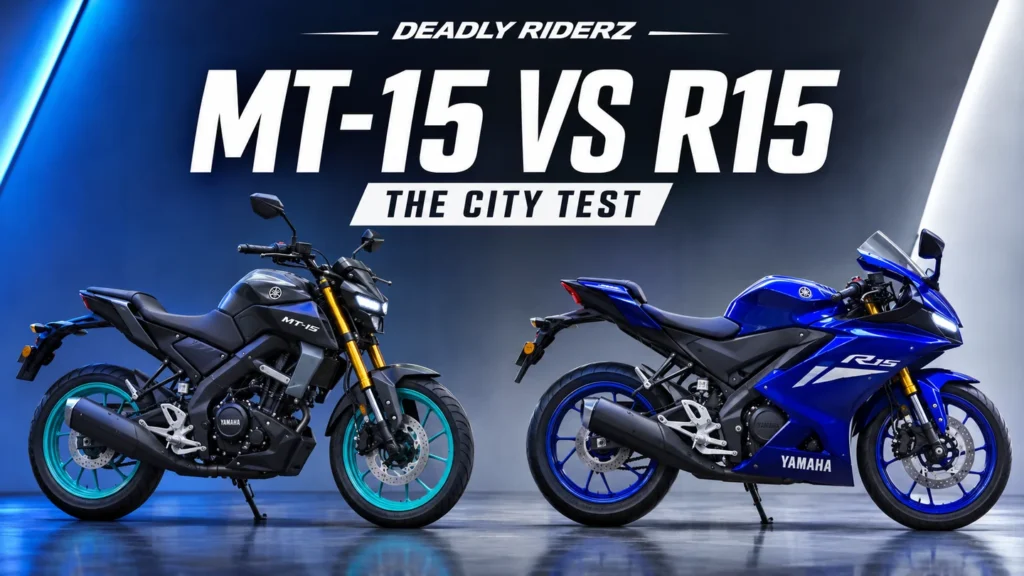

The moment that separates these two Yamahas may happen before you leave the showroom. Sit on the MT-15 V2 first, swing the handlebar, then sit on the R15 V4 and reach for its controls. Both brochures list a 155 cc engine and a 141 kg kerb weight, but that exercise exposes how different two bikes with the same published mass can feel. If you buy one primarily to commute, focus on the next hundred turns into your parking spot as much as your first Sunday ride.
Highlights
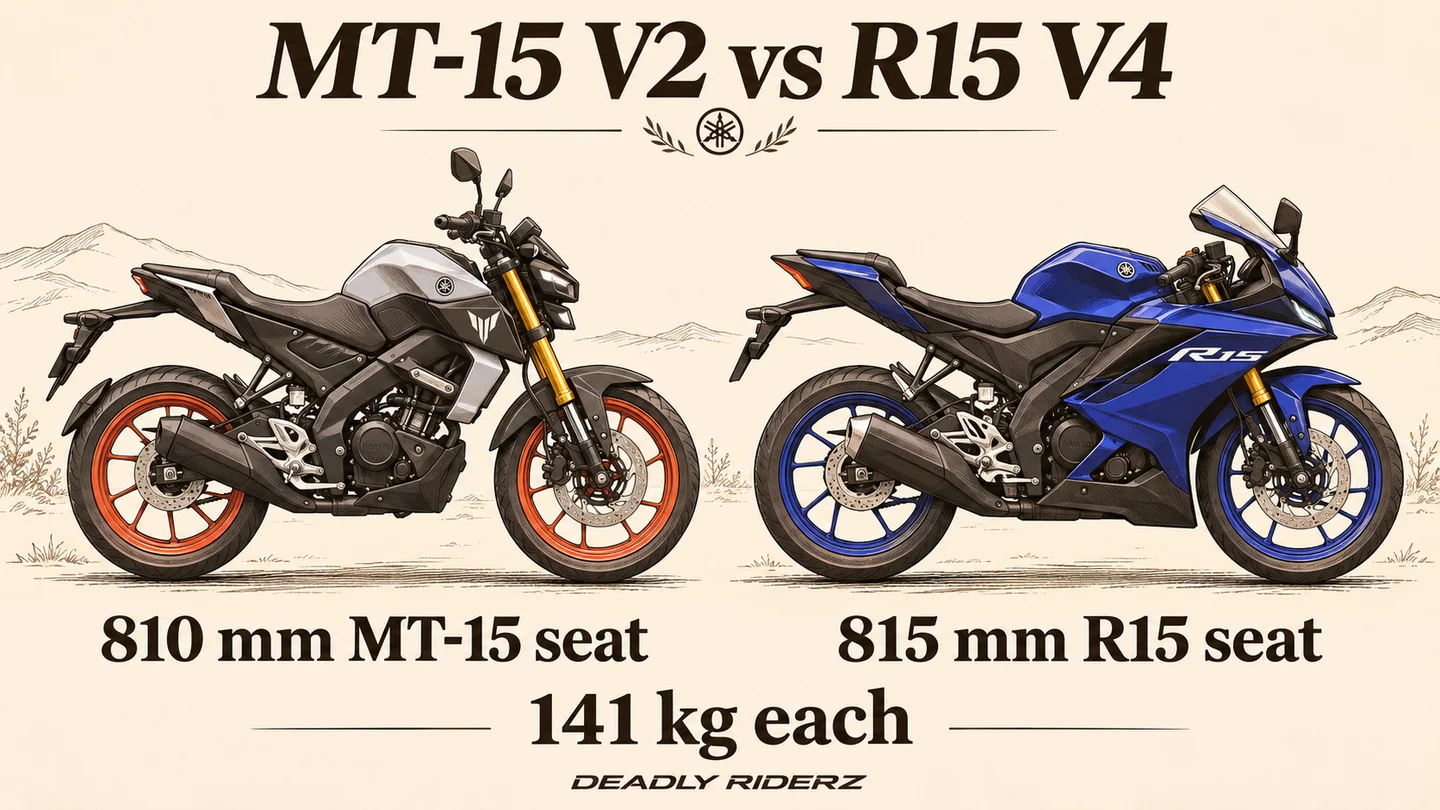
- Yamaha lists 810 mm seat height for the MT-15 V2 and 815 mm for the R15 V4.
- Both brochures list 141 kg kerb weight. Your reach to the bars and the saddle shape matter more than the five-millimetre difference suggests.
- Check the exact trim for equipment and repeat the same low-speed manoeuvres on both bikes.
What the figures tell you
Yamaha’s MT-15 V2 brochure and the R15 V4 brochure give comparable dimensions. Both quote a 1,325 mm wheelbase and 170 mm minimum ground clearance. Yamaha also quotes different overall widths. Those figures are useful for shortlisting and measuring your parking space. They cannot show how much room you need to turn your shoulder under a low ramp, or how easily you can turn the bars while keeping your elbows relaxed.
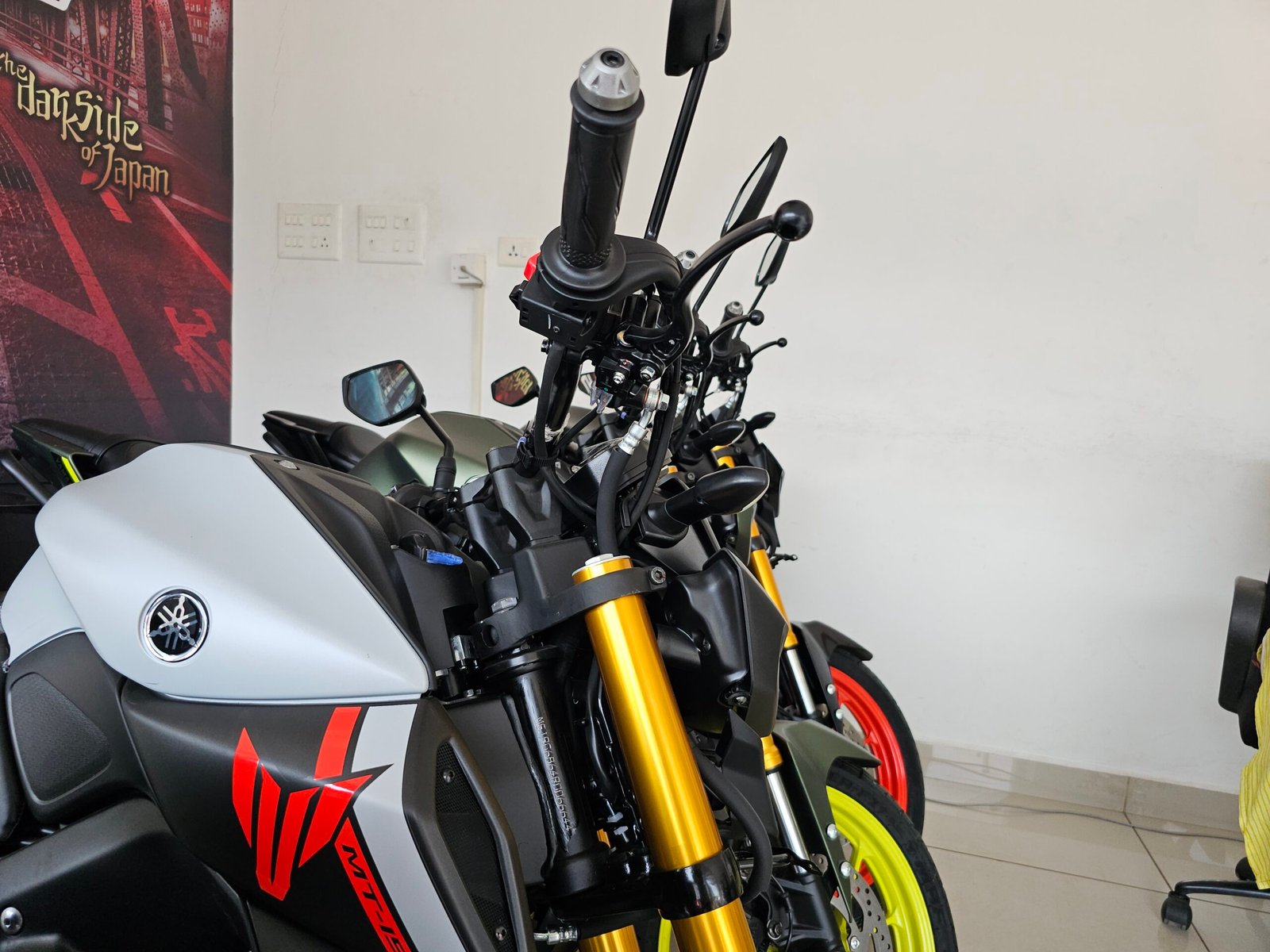
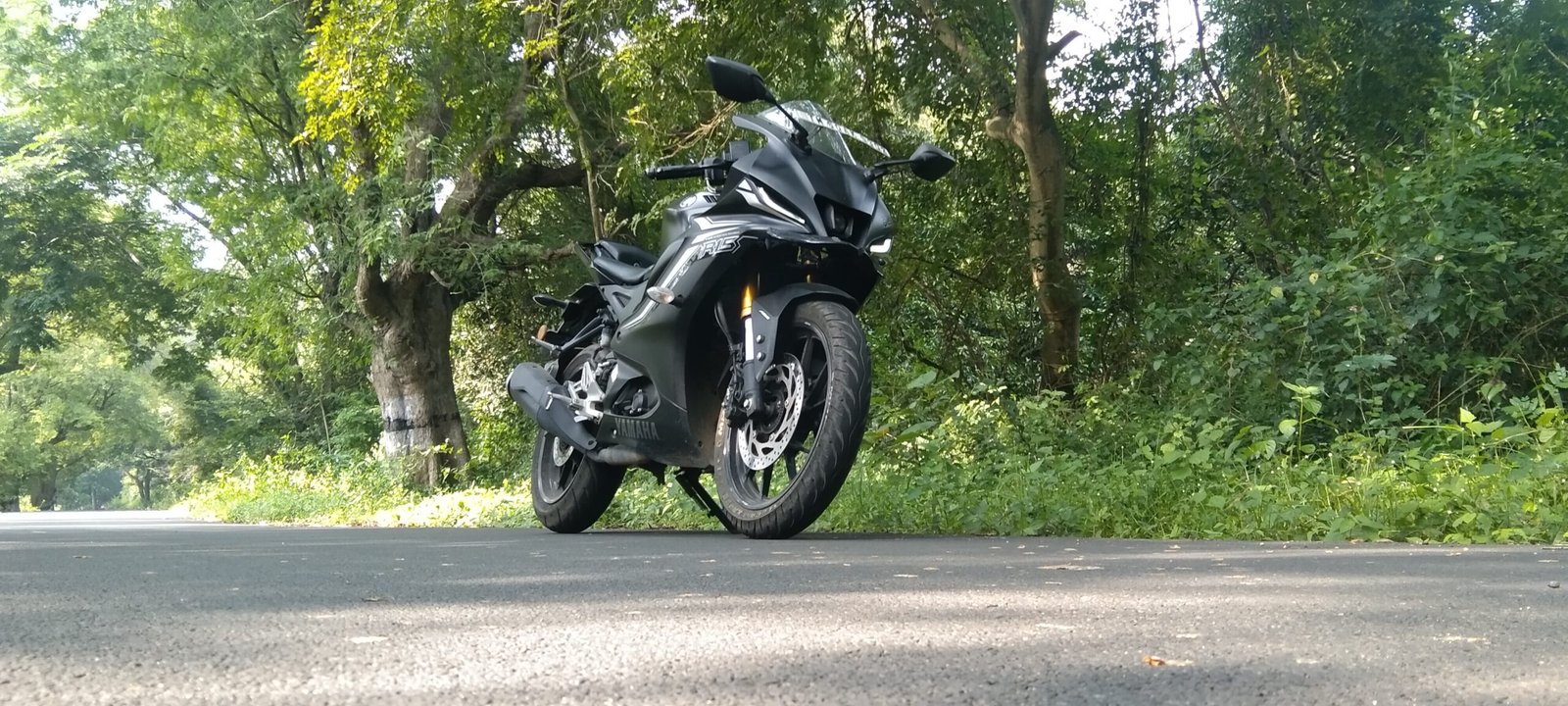
Photo credits: Ganesh Mohan T (MT-15) and Kamalnath P (R15 V4), both CC BY-SA 4.0.
| Brochure figure | MT-15 V2 | R15 V4 |
|---|---|---|
| Capacity | 155 cc | 155 cc |
| Seat height | 810 mm | 815 mm |
| Kerb weight | 141 kg | 141 kg |
| Overall width | 800 mm | 725 mm |
Give each bike the same city test
Start on level ground. With permission, walk the bike a short distance and take it off its stand. Bring the bars near full lock, then check whether you need to move much to reach the far grip. Try the same exercise on the R15. On a test ride, choose a few quiet turns at walking pace, a normal stop, and the kind of road repairs you encounter on your commute. Bring your own boots and gloves. Those make the result more repeatable than trying one bike in sandals and the other in a boot with a tall sole.
When you come to a stop, check the contact patch under your preferred foot and whether you feel able to glance over your shoulder. Pay attention to the space your knees have and the effort you need to reverse out of the bay. Our Hunter 350 fit checklist describes how to repeat those tests across models.
Decide how much forward reach you want
On the MT-15, the bar arrangement gives you an opportunity to sit more upright. The R15 puts you in a position intended for a sportier ride. A more forward reach may feel natural if you like the way the fairing and controls bring you into the bike. After half an hour of slow traffic, you may care more about how easily your arms relax. If your test is short, take a minute to evaluate wrists, hips and knees immediately afterwards, before you start discussing the paint.
Pillion space deserves its own check. If you ride with a partner twice a week, ask whether they can sit on both bikes in a controlled showroom setting. Check the height of the passenger section, where their feet land and whether they have somewhere they are comfortable holding. The person who rides pillion should make their own assessment. A solo buyer may reasonably choose the styling and body position they prefer.
India Yamaha Motor’s R15 V4 introduction shows the faired bike’s cockpit and riding position. Check the exact current trim on the showroom floor. Watch on YouTube
Look beyond the top of the invoice
Things as ordinary as a damaged mirror or a scuffed panel can matter when parking is tight. Ask your dealer which parts are specific to each model and what is commonly stocked. Check that your quote lists the actual equipment for the colour and trim you want. A feature shown in a promotional clip may be offered on one version, and an accessory can quietly appear in one quote but not the next.
Make a test route before visiting
Choose one stretch that exposes each meaningful difference. A stretch with frequent junctions helps you evaluate the stop-and-start rhythm. A wide, open section lets you settle into each position and see what the fairing and bar reach do at the pace you normally travel. Back at the shop, note whether you spent the ride moving your hips or relaxing into the seat. If you mainly ride to work, fit that route into the test even if the salesperson recommends a faster one.
The MT-15 earns the first test ride if your priorities are traffic, frequent turns and an upright bar reach. The R15 deserves the first ride if the sportier position and fairing are what you look forward to on every outing. Repeat the city tests and see whether that early preference survives a realistic commute. The best answer should be obvious before you reach for a calculator.
Cover illustration by Deadly Riderz.


