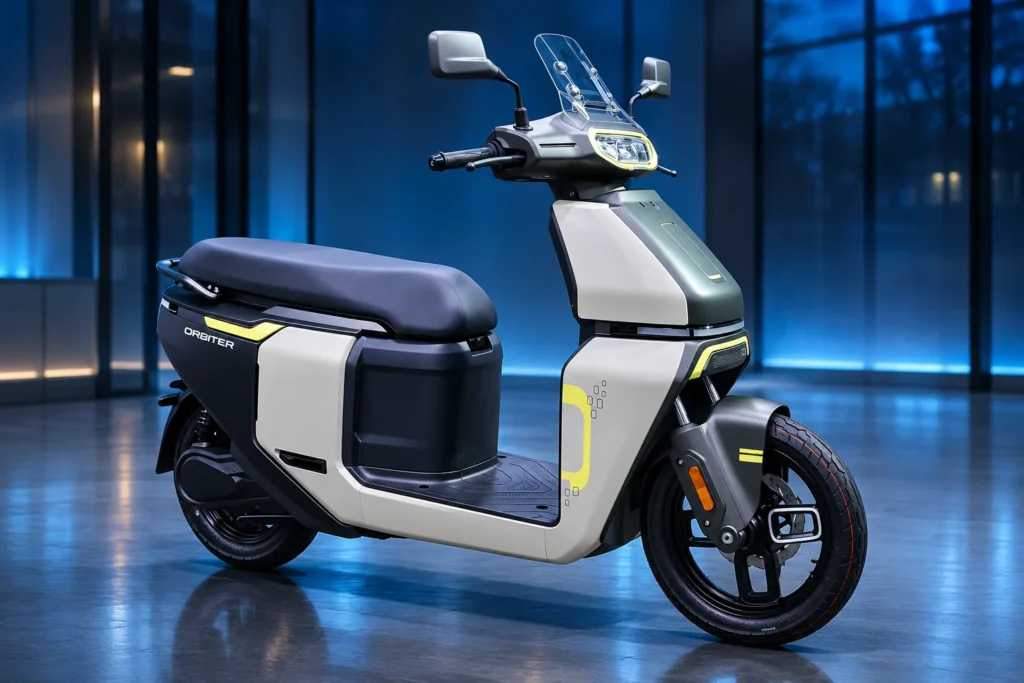

Quick answer: The TVS Orbiter V1 is the one to price first if your daily ride is short and you can count on a roughly two-hour charging window. The V2 has the larger battery, but TVS lists three and a half hours for the same 10–80% interval on the included charger. What matters is how much useful range you can add before the scooter has to move, not how fast the percentage rises.
Compare the included chargers on the same basis
The India product selector lists the V1 at 1.8 kWh and the V2 at 3.1 kWh. Its 10–80% figures with the included 650 W charger are two hours and three hours thirty minutes respectively. Those times are not estimates for charging from empty to full. If your charging access ends at a set time, give yourself margin for setup, interruptions and conditions that differ from the manufacturer’s test.
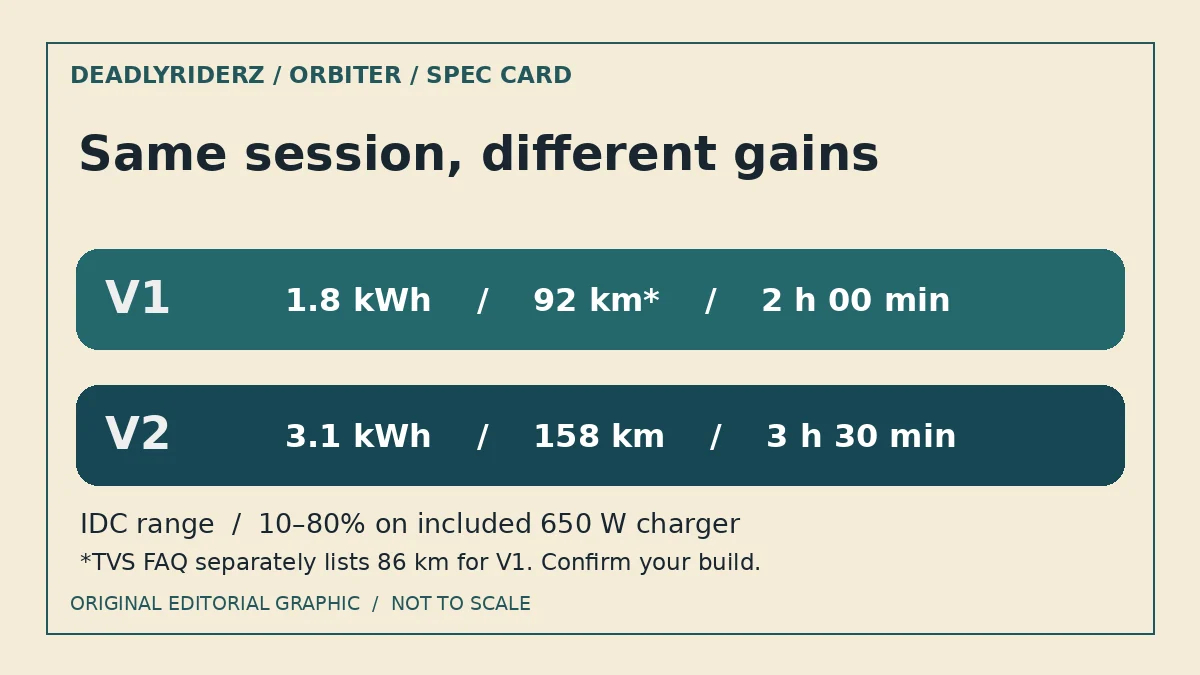
There is a detail worth asking about: the selector lists 92 km IDC for the V1, while the TVS Orbiter FAQ lists 86 km. The V1 launch filing also quotes 86 km. The references agree that the V2 is rated at 158 km IDC. I couldn’t confirm why the two V1 figures differ. Ask which rating applies to the actual scooter on the invoice, and don’t treat either number as a route-specific prediction.
Start with the socket, even if you prefer the V2
A home outlet you can use every night is different from a shared workplace point that’s busy after lunch. For a dependable two-hour slot, the V1’s standard-charger claim is only just inside that window. The V2’s larger pack may still make sense if your routine includes longer sessions or if it lets you skip a day between charges. In a shared parking bay without a reliable outlet, settle access first rather than spending more to postpone the same problem.
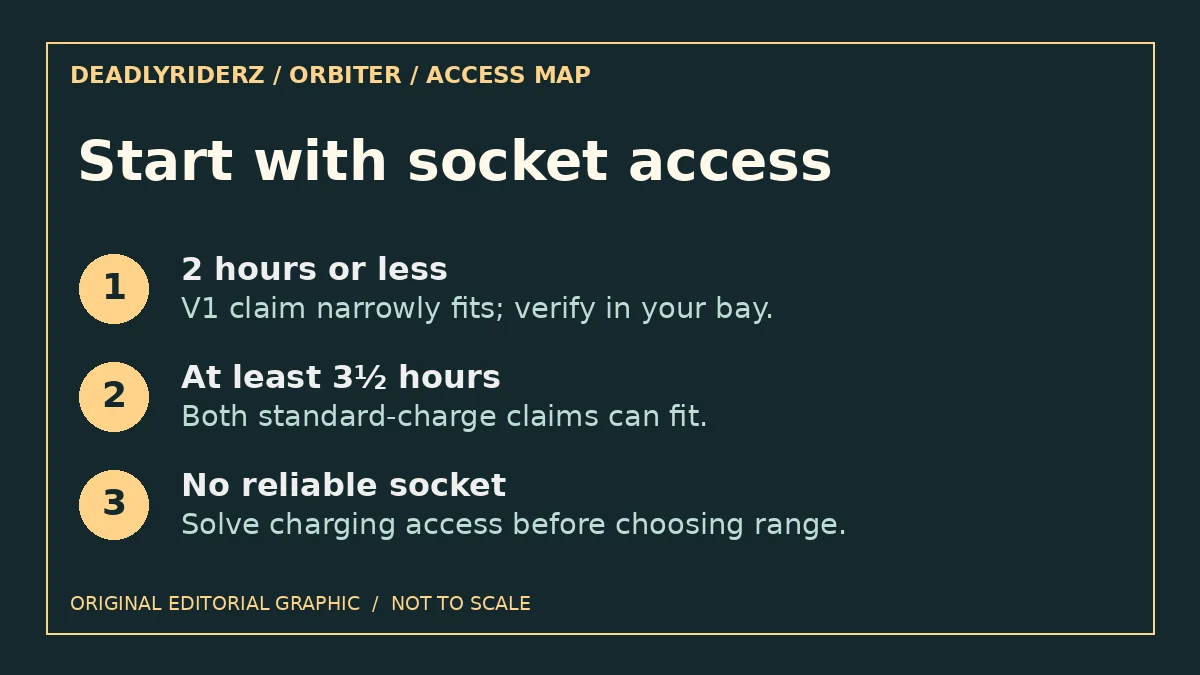
TVS describes its included portable charger as using a standard 15 A domestic socket. The product page advertises an optional 950 W charger, but I would ask the dealer to document the expected time, the approved charger part number and socket requirements for the specific trim before relying on that option. For the questions to ask a building manager, see our apartment EV charging checklist.
Translate the battery window into a repeatable commute
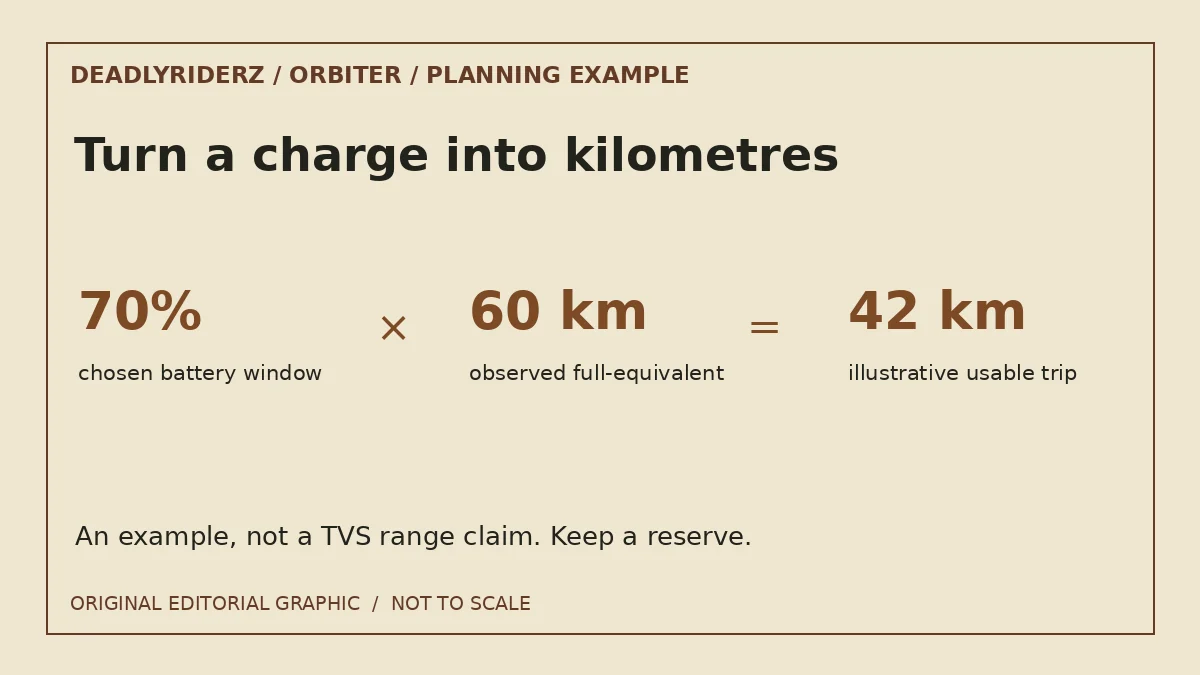
Add up your normal trip, likely errands and the first part of the following day if you miss one scheduled charge. Then use the battery percentage seen on a dealer demo or your own repeated rides to turn that route into a planning figure. If an observed full-equivalent riding distance were 60 km, using 70 percentage points would cover about 42 km before any extra reserve. This is arithmetic for your own observations, not a range claim for either Orbiter.
What to ask before placing an order
Get the exact battery and included charger printed on both quotes. Ask for a demonstration of the charging connection, how you’ll know it has started, and the realistic charging time at the outlet you intend to use. For either variant, compare the dealer’s on-road quote and your own monthly distance before deciding how much range is worth paying for. Our rupees-per-kilometre guide explains the running-cost calculation.
Cover: TVS Orbiter display photograph by 802xr, CC BY 4.0. Background adapted; specific trim not inferred.


