

If the low-fuel light comes on and your Royal Enfield Hunter 350 switches to Trip F, the number that appears is distance ridden since the warning. It is not how many kilometres you have left. If it says 18 km, you’ve covered roughly 18 km since the counter started; it doesn’t tell you whether the next petrol pump is within range. If the last fuel bar is flashing, Royal Enfield says to refuel immediately.
Highlights
- Trip F counts up from the low-fuel event on clusters with the feature.
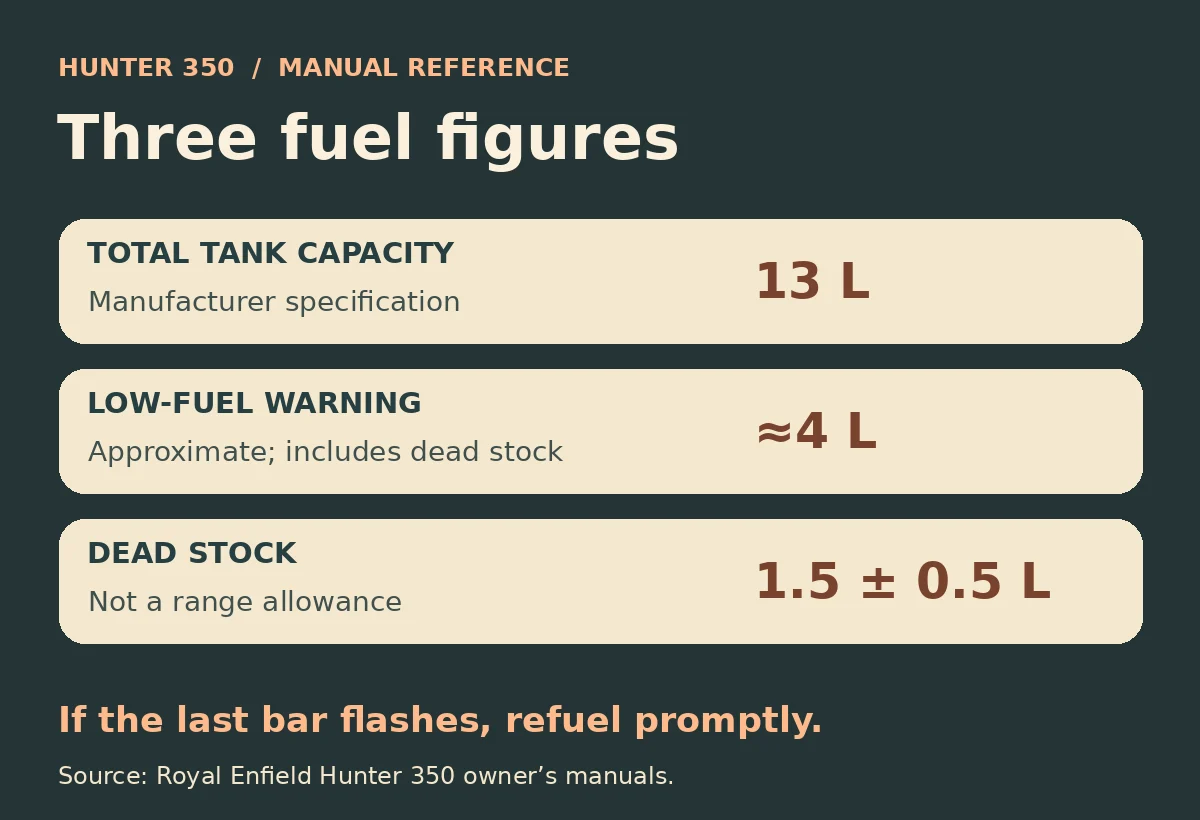
- The owner’s manual lists a 13-litre tank and an approximate 4-litre warning point, including dead stock.
- Gradients or a leaned bike can change the gauge reading.
- Use the manual that matches your cluster and model year.
What Trip F is measuring
The Hunter 350 owner’s manual describes a final flashing fuel bar and low-fuel tell-tale. On clusters that support Trip F, the counter starts when the low-fuel condition is detected. Think of it as a record of distance already covered during that warning period, rather than a countdown. Even if your riding is steady, the display is not predicting what the next stretch will cost in fuel.
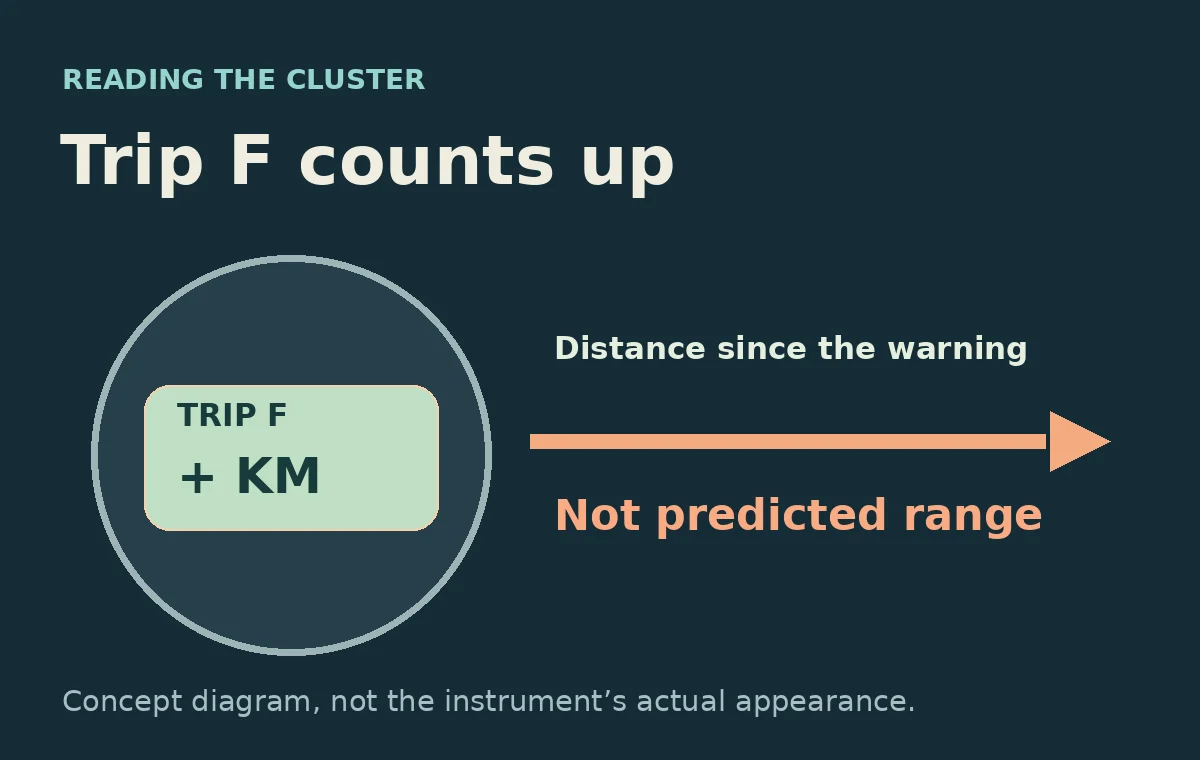
Trip F is also separate from Trip A and Trip B. Those normal trip readings are useful for tracking distance between fills; you can reset them for that purpose. The manual says you cannot manually reset Trip F. If you’re logging running costs, use your fill receipt and your own trip meter, not the low-fuel warning. See our guide to logging real mileage with partial refills for a practical example.
Why four litres isn’t four usable litres
Royal Enfield lists the tank at 13 litres. The warning point is roughly four litres including dead stock, which the manual specifies as 1.5 litres plus or minus half a litre. That final figure describes fuel not to count on as usable. The warning itself is approximate. Subtracting the two numbers and multiplying by your personal mileage does not create a reliable reserve range. Road gradient, traffic, load and fuel use can all change what happens next.
There’s a practical difference between the mileage you use for monthly budgeting and the amount you can safely plan on after the last bar starts blinking. For budgeting, compare consistent fills over multiple trips. For the warning, treat the need to refuel as immediate. Don’t make a range test out of the remaining fuel; Royal Enfield’s safety guide warns against letting the fuel level remain too low.
Why the light can change while you’re parked
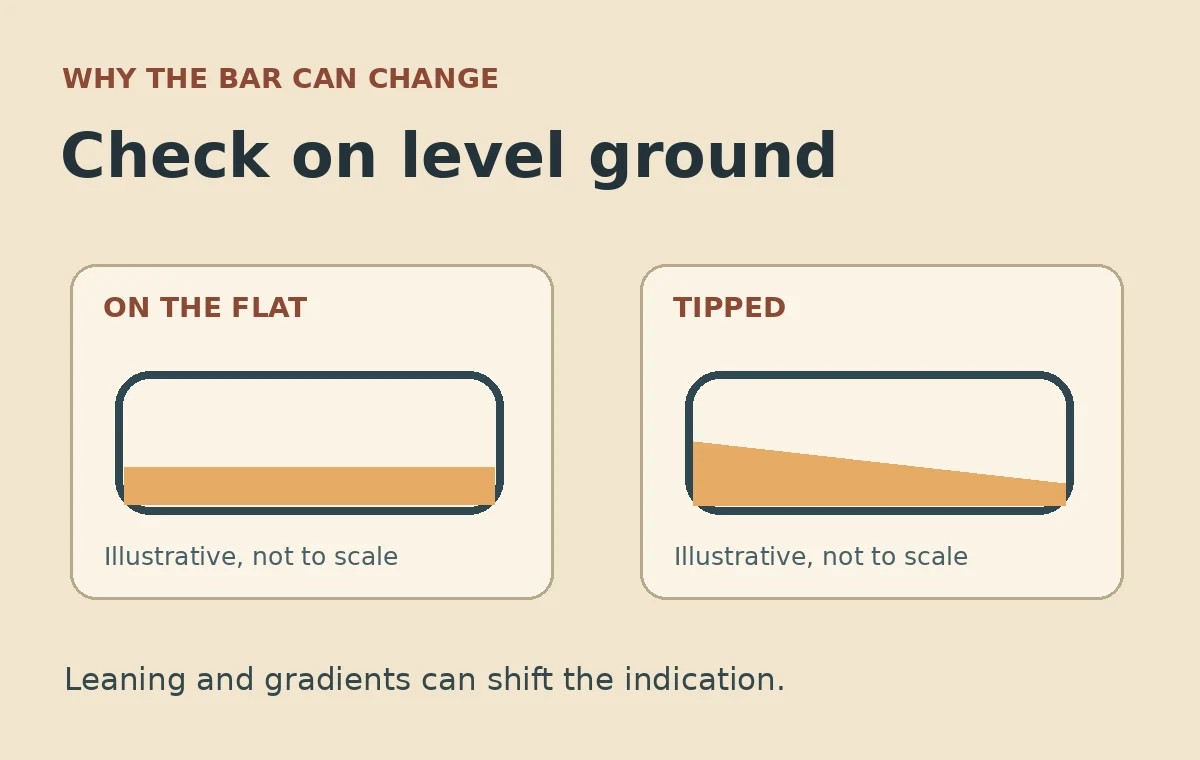
A bike leaning on its side stand is not in the same position as a bike upright on level ground. The manual notes that tank movement, slopes and leaning can affect the indication. If the gauge shows a different bar when you move off a slope, don’t read that change as fresh fuel. Once it’s safe to stop, check the bike on level ground. If you’ve seen a sustained low-fuel warning, plan to fill rather than waiting to see if a bar comes back.
The handbook also notes that the Trip F display can take a few minutes to clear after sufficient refuelling. You don’t need to hunt for a reset option just because it stays on momentarily at the pump. If you’ve added enough fuel and the warning persists after the expected update, consult your bike’s manual and have the display or fuel sender checked by Royal Enfield service. Don’t rely on a suspected faulty gauge.
Not every Hunter cluster shows the same thing
The earlier dual-channel ABS manual documents Trip F in the cluster’s display sequence. The earlier single-channel ABS manual lists the low-fuel figures and warning but does not show Trip F in its display sequence. This is one reason two owners can describe different behaviour without either misreading the bike. Check the controls and manual for your actual model rather than relying on the word Hunter on a listing.
The useful rule is simple: a flashing final bar means refuel, regardless of whether the cluster also provides a distance counter. Use Trip F to understand when the low-fuel warning started, not to decide to bypass a convenient pump. Cover: original DeadlyRiderz editorial illustration, not a photograph of the model.


