
If the cooling fan on a Hero Xpulse 210 runs briefly after you turn off the key, that alone does not mean it is overheating. The India owner’s handbook dated March 2025 describes that as possible when the fan was already running. What changes the decision is the dashboard while the engine is running: in the cited handbook, six or seven coolant bars mean hot. A high reading that persists or returns needs attention, not a ride to see if the system sorts itself out.
Highlights
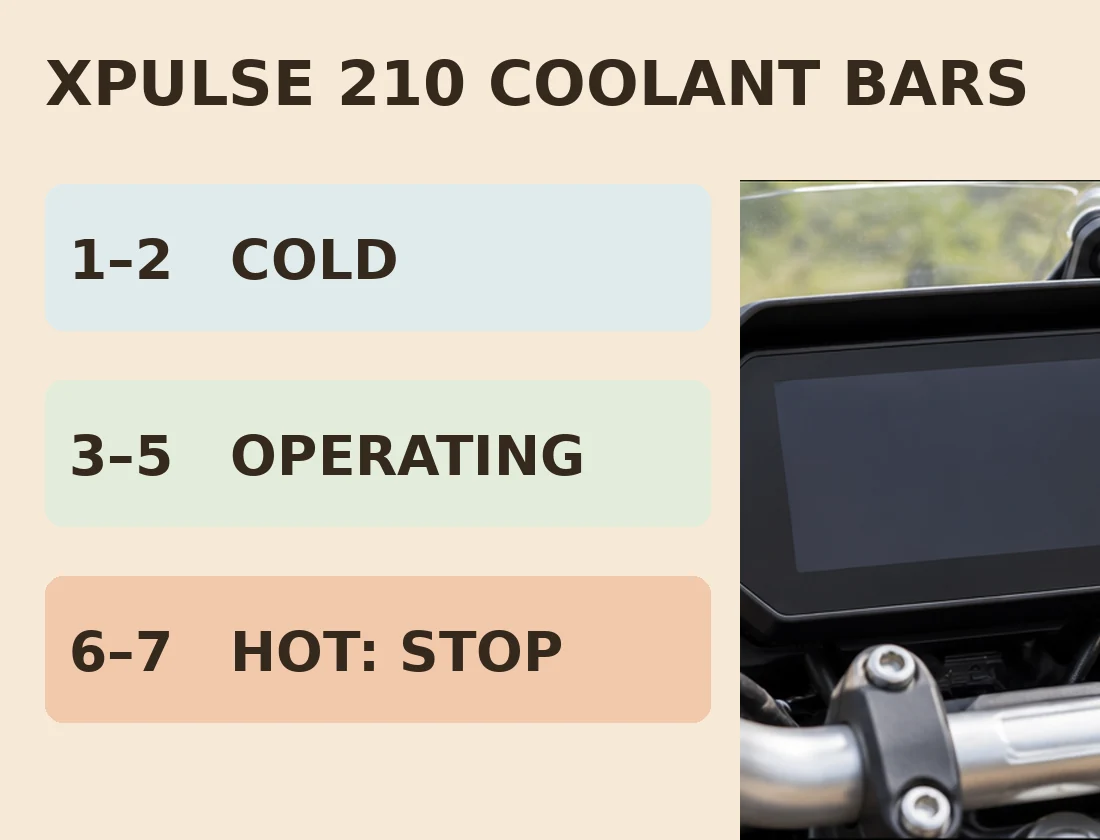
- The handbook describes up to two coolant bars as cold, three to five as normal operating range and six to seven as hot.
- The fan may continue for roughly 10 to 20 seconds after switch-off in the conditions Hero describes; fan sound alone is not a diagnosis.
- At six bars, Hero advises stopping and contacting an authorised workshop. Never open a hot cooling system.
Separate the fan from the warning
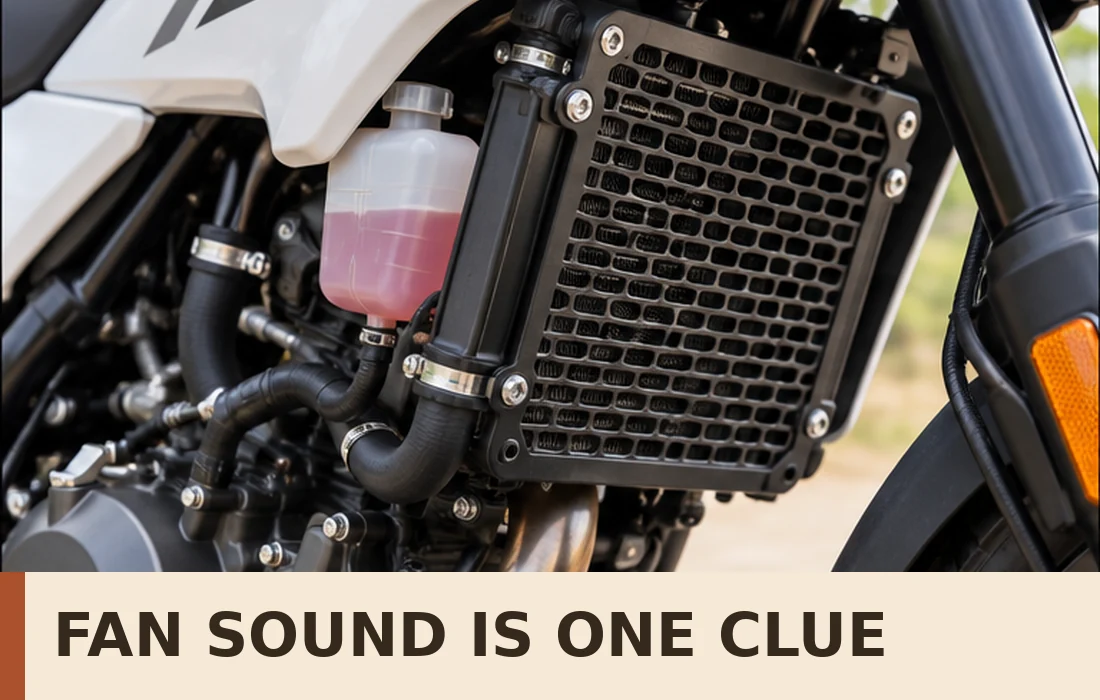
A liquid-cooled engine moves heat from the engine to coolant and then through the radiator. In slow traffic there is less airflow coming through the radiator from riding, so hearing the electric fan while stopped is not surprising. The Hero Xpulse 210 owner’s manual gives a useful reference: the fan is commanded on at 95°C or above and off once coolant has cooled to 90°C or below. The handbook also says it can keep running for 10 to 20 seconds after switch-off depending on temperature, if it was running at the time. These are manufacturer descriptions, not measurements of every individual bike.
A fan coming on with the display in its operating band is not the same as a hot warning. Likewise, hearing a fan does not prove everything is fine if the temperature keeps climbing. Listen if it happens, but read the gauge once you can do so safely and record what happened. Never put fingers or a tool near the fan to see if it is moving, and don’t leave a bike idling to deliberately bring the temperature up.
Read the bars once the self-check ends
The gauge briefly sweeps up when the ignition first comes on. Wait for it to settle rather than judging the maximum during that check as a real temperature. The handbook explains the settled range as up to two segments cold, three to five segments within operating temperature, and six to seven segments hot. Match the handbook to the actual cluster on your motorcycle. Hero lists different displays for the Base and Pro versions on its India Xpulse 210 model page, so the location or look of a gauge in a video isn’t your best reference.
Hero describes a protective engine-speed restriction once the cited system reaches six bars and says it may shut off the engine and show the malfunction indicator if it continues. Don’t try to verify that behaviour. If the live gauge reaches the hot band, leave traffic as safely as possible, stop and switch off. Let the bike cool and contact an authorised Hero workshop, especially if the light persists, the bike won’t start or the temperature climbs again. If you see steam, a leak or repeated overheating, arrange assistance rather than entering traffic again.
What to tell the workshop
A useful fault report separates a hot engine from a brief fan run: record the bars after the ignition check, warning lights, approximate ride duration, whether moving or in traffic, and whether the problem had appeared before. Note any recent repair, wash or visible residue without dismantling anything. A photo at a safe stop can help a technician understand which gauge you saw, but equipment and rider safety come first. Keep the key off and wait for cooling; hot coolant is pressurised and can cause severe injury if a cap is opened.
Check the manual for the prescribed cold visual inspection if you want to learn where the expansion bottle is. Low level, a visible leak or recurring hot readings are reasons to have the motorcycle examined, not a reason to add an unidentified fluid or disconnect a fan. The source handbook covers how Hero expects the system to behave; it can’t tell you what failed on a particular motorcycle without inspection.
Bottom line: a short fan run can be expected; a hot reading is a separate instruction to stop. The condition, warning light and gauge matter more than fan noise, especially in slow traffic or after a trail ride.
Two examples with different next steps
If the gauge is in its usual operating band on the way home and the fan stops shortly after you park, the handbook gives a reasonable explanation for what you heard. Record the conditions if the behaviour is new and pay attention to the next normal cold-start indication. If the gauge instead reaches the hot band and there is a warning or loss of power, don’t use the fan running as reassurance. Stop and follow the manual’s workshop advice. These examples explain how to interpret the observations, not how to test the cooling system by intentionally heating the bike.
Hero’s Xpulse 210 film shows the liquid-cooled motorcycle in use. It’s model context, not a cooling-service tutorial or a demonstration of the gauge thresholds; the owner’s manual is the reference for those.


