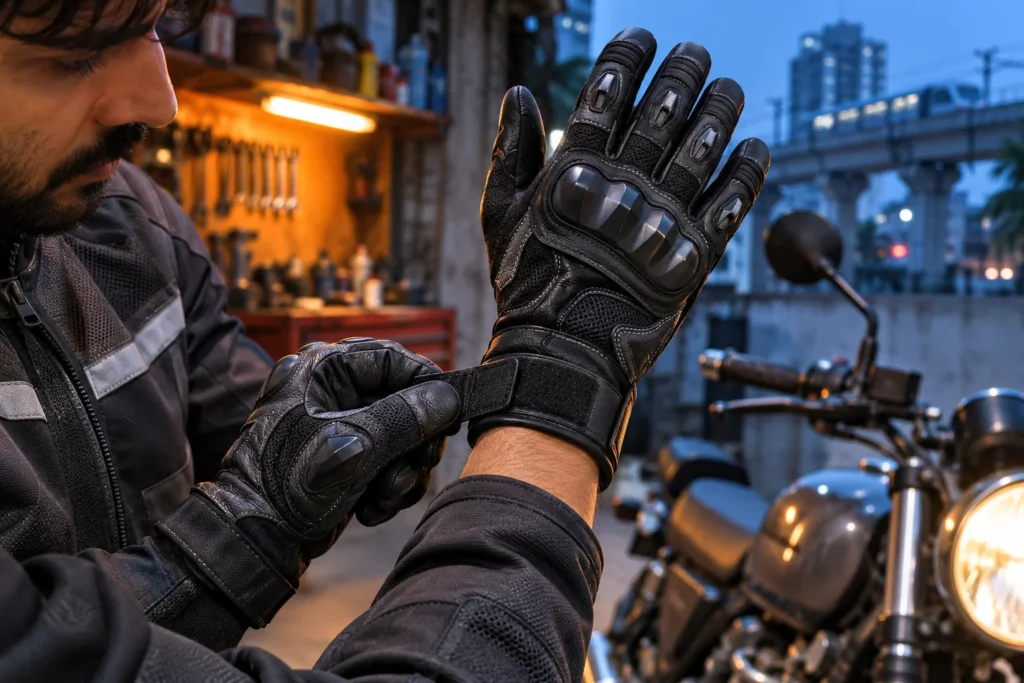

A hard knuckle shell is easy to spot. Whole-glove certification is harder to see in an online listing. For a motorcycle glove, look for EN 13594:2015 for the exact model, inspect the finished glove’s level marking and look for KP if you want documented knuckle impact protection. Ask for the declaration of conformity when the product page does not make the distinction clear.
Read the standard, the number and the letters separately
EN 13594 is a standard for protective motorcycle gloves. Level 1 and Level 2 are different performance levels; Level 2 is higher in the standard, not a promise that the glove will fit or prevent injury. REV’IT!’s certification guidance explains that KP marks certified knuckle protection; its Duty product page shows a finished-glove Level 1 KP claim. Level and KP should be read together, not as interchangeable shorthand.
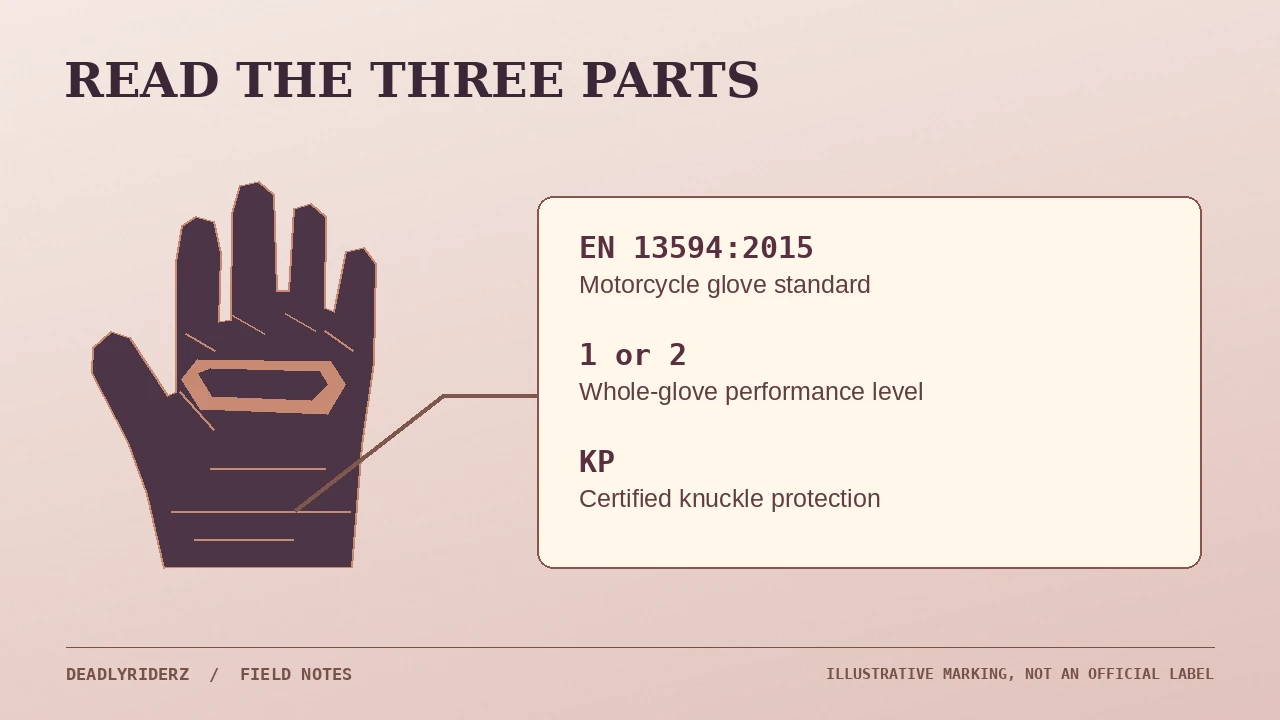
Why a Level 2 knuckle claim can sit beside a 1 KP glove
The Rynox Advento Pro page is a good India-market example of the distinction. It lists a knuckle protector that passes a Level 2 impact criterion and links a whole-glove declaration marked Class 1 KP. The individual knuckle component and the finished glove are not rated as the same object. Use the complete-glove marking for comparisons; treat individual component test claims as additional information.
Watch Rynox’s official Advento Pro introduction on YouTube.
Do a control check before choosing a cuff length
Try the gloves with your own riding jacket. Fasten the wrist and cuff as you would for a ride. On a parked bike, make sure you can fully operate the brake and clutch, move the throttle freely, and reach the switches without shifting the glove around the hand. The knuckle shell should not jab when you make a fist. Finger tips should not jam into the ends, and surplus fabric should not bunch under the grip.

Compare jacket overlap with the elbow bent and the wrist turned. A gauntlet can give more overlap, but only if it closes securely in your setup. A loose glove that pulls off too easily, or one that restricts controls, is a reason to try another size or cut rather than hoping break-in will fix it. If two riders wear the same size on paper, their palm width and finger lengths can still differ.
What a crash-protection label does not tell you
Do not infer ventilation or rain protection from the protection level. Check the maker’s weather claims independently, and decide whether the glove suits your usual commute or your longest touring day. Try it in person when possible; if buying online in India, confirm the seller will exchange an unworn size before ordering. Do not buy by the protector logo alone if the retailer cannot show the whole-glove documentation.
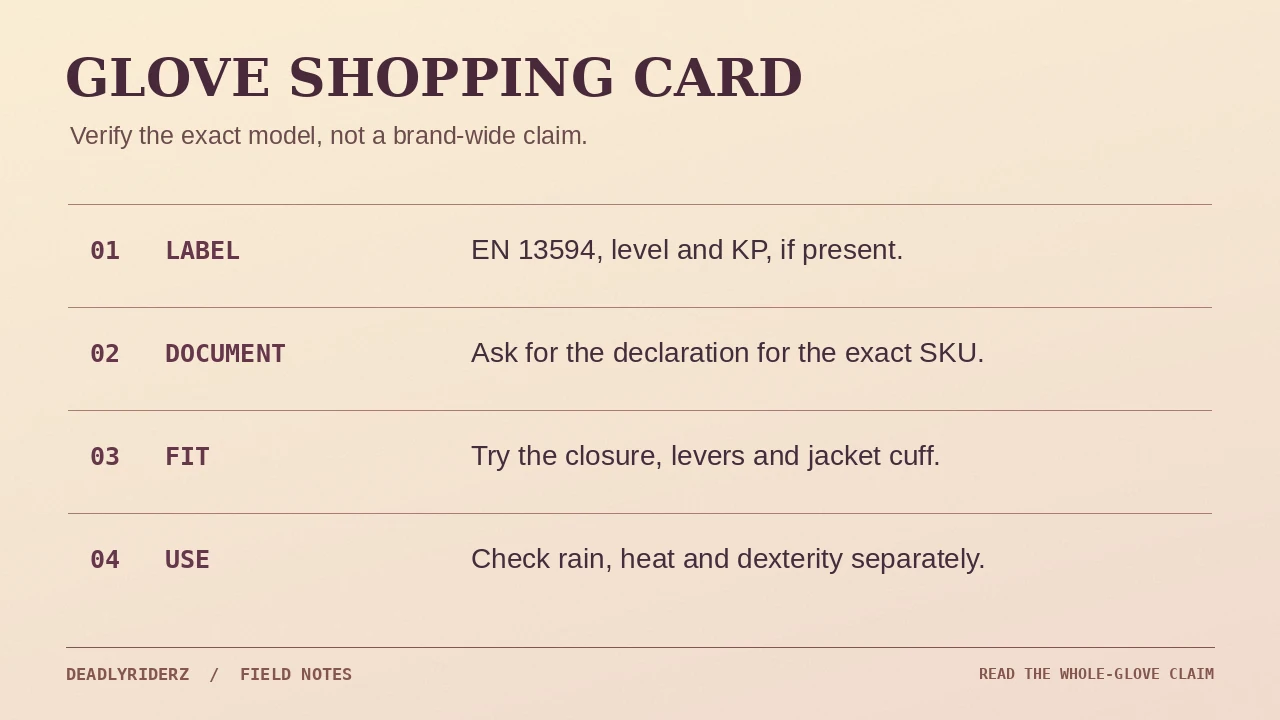
One question to ask the shop
Ask: “Can you show me the rating and declaration for this exact glove, not just the knuckle insert?” Then do the control and cuff check. That sequence is more useful than comparing swatches, carbon-look panels or the length of the feature list. For your next gear fitting, the same try-before-you-ride approach applies to a full-face helmet.
Cover: Editorial illustration of an armored riding glove, not an example of a certified product.


