

Before you book a long weekend on the V-Strom SX, pack for one night and try rolling the loaded bike out of your normal parking space. It is a short exercise, but it exposes problems with a wide bag, a tall saddle or a hard-to-reach tie-down while you still have time to fix them. Suzuki lists an 835 mm seat, 167 kg kerb mass and a 12-litre tank. Use each figure to ask a practical question about the road ahead, the people travelling with you and the weight you plan to carry.
Highlights
- Suzuki India lists an 835 mm seat height, 167 kg kerb mass and 12 L fuel tank on the V-Strom SX.
- Choose a luggage setup by checking the bike, carrier and bag limits in their applicable documentation.
- Base fuel stops on measured consumption and a reserve, especially where opening hours and detours are uncertain.
The three figures that matter at departure
Suzuki’s India specification lists those dimensions along with a 249 cc oil-cooled single, 26.5 PS, 22.2 Nm and a six-speed gearbox. Its dimensions are a starting point for a fit test. The kerb figure describes the bike in the manufacturer’s condition, and your own luggage, passenger and accessories change what you handle at a stop. Ask for the exact model’s handbook and the official information for any rack or bag you intend to fit.
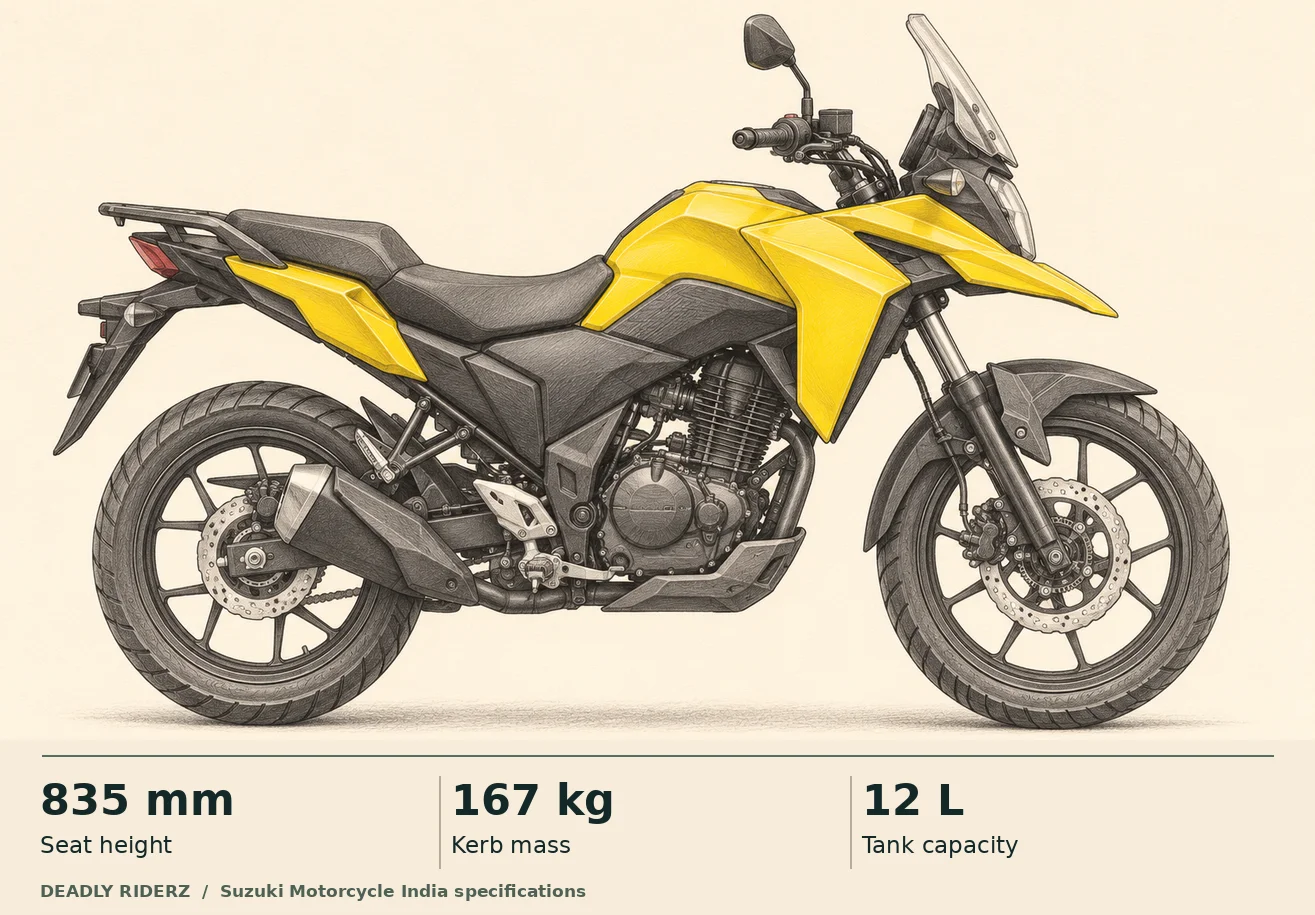
| Suzuki India figure | What to plan around |
|---|---|
| 835 mm seat height | Parking and footing in your own boots |
| 167 kg kerb mass | Handling before you add luggage |
| 12 L tank | Refuelling based on observed consumption |
Fit the bag before you fill it
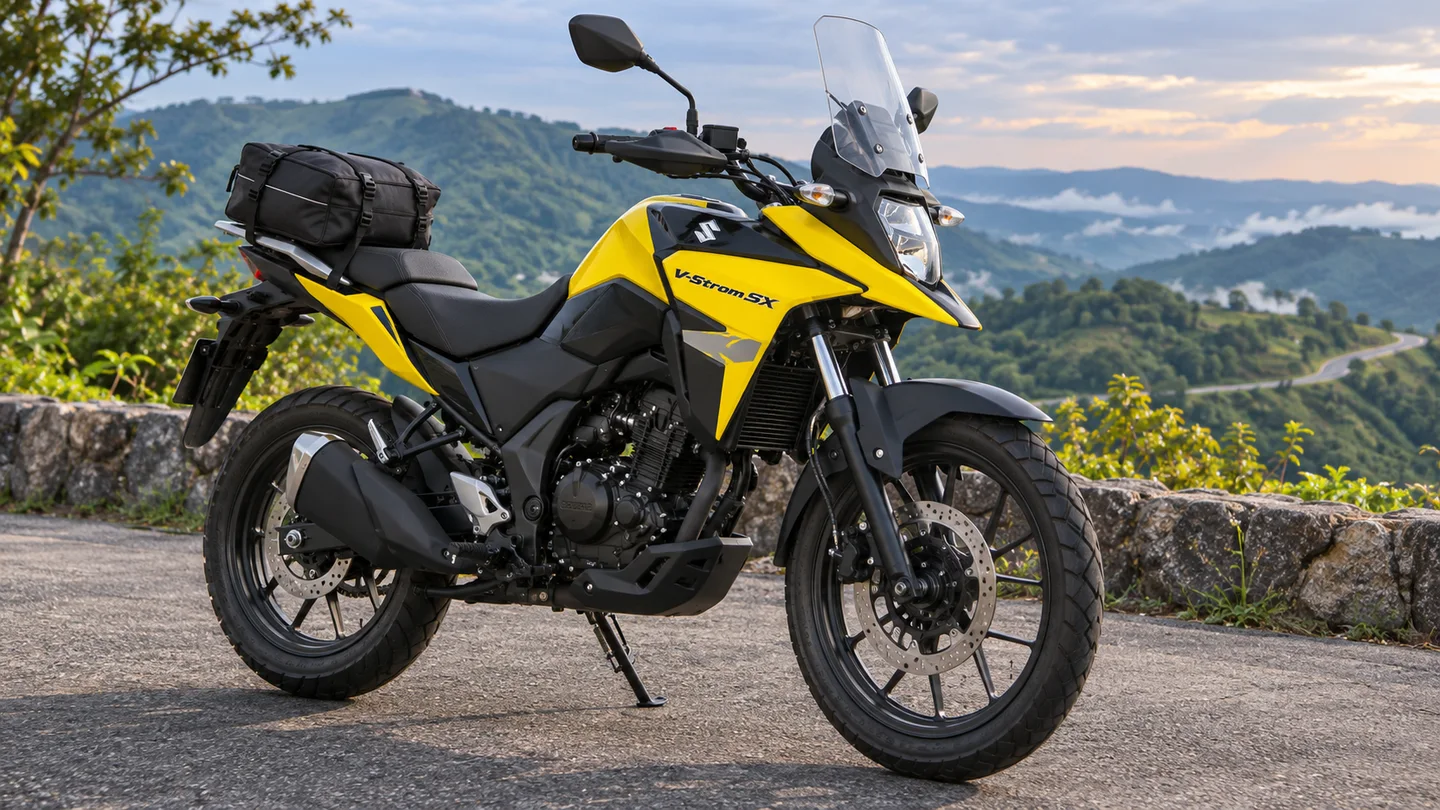
Look for a luggage system that fits the bike and leaves the passenger as much room as they need. A large bag can be tempting for the first trip. It can also fill the space you intended to give your pillion. Put heavy items low and secure only as allowed by the bag and motorcycle instructions. Check the relevant load limit for each installed carrier and the limits for the complete bike. Decide where to put documents and a light rain layer so you can reach them at the first stop.
BikeWale’s 10,000 km V-Strom SX long-term report describes the reviewer’s experience carrying a tank bag and a tail bag. That is a useful example of how the space can be used. Confirm your own fitment and limits for the tank surface, rack and bag. For the arithmetic of weighing a complete load, see our two-up packing worksheet and substitute Suzuki’s instructions for your bike.
Decide how often to stop for fuel
Use the actual consumption you record on a comparable ride. If you plan using a hypothetical 30 km/L, and choose to budget 8 litres between fuel stops, the result is 240 km. That is simply 30 multiplied by 8, not a measured V-Strom figure or a guaranteed distance. An earlier refill may make sense if the next stretch has few filling stations or your detour options are poor. Build in a reserve that fits the route and the uncertainty of your estimate.
Keep a station on each side of the point you normally expect to stop. A station being on a map and open in front of you are different things, especially at unusual hours. Pair a fuel stop with a planned break if you can. It gives you time to check the load and discuss how the pace feels before everyone is committed to the next long section.
Give yourself a short practice ride
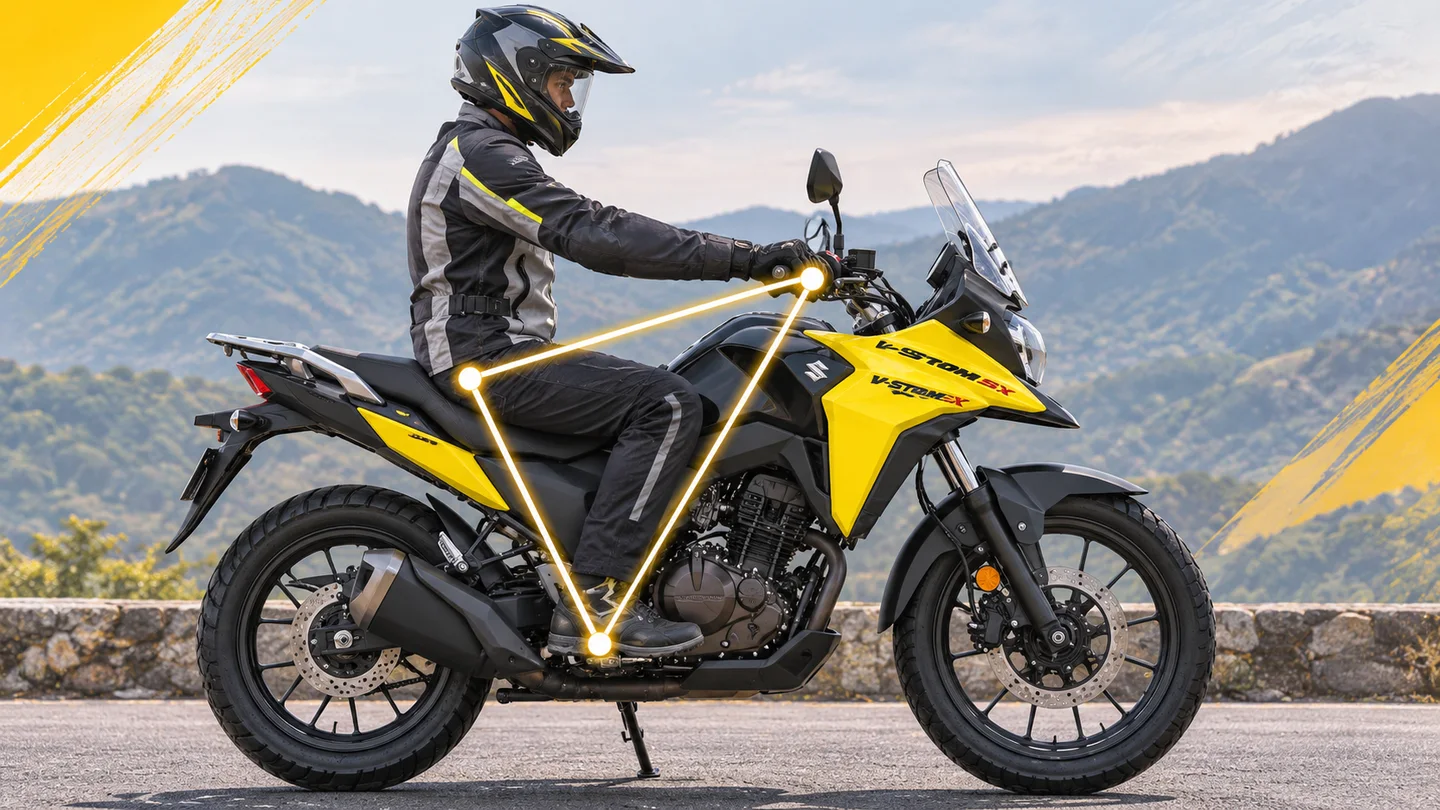
Try a loop close to home before your first overnight ride. The goal is to check whether you can access essentials in the right order, whether the passenger can get on and off comfortably and where the loaded bike needs more space in a turn. After the first few stops, review the attachment points using the manufacturer’s instructions. If you discover a cramped bag arrangement, change it while home is a few minutes away.
Use the wheel and route together
Suzuki’s specification lists a 19-inch front and 17-inch rear tyre fitment. Identify the replacement sizes at your usual workshop before creating a route that depends on finding the same tyres in a small town. If you stop at a workshop while travelling, provide the exact size and model details. Focus on the condition and correct fitment of the tyres you already have before buying accessories aimed at a hypothetical trip. Record where you have mobile coverage and which towns have support.
Suzuki’s V-Strom SX touring film shows the bike in a range of settings. Use it for visual context, then check your own luggage setup against the handbook. Watch on YouTube
A useful setup is one you can repeat
Write down the luggage you actually used, the amount you added at the pump and which item was always buried at the bottom. Make the next trip simpler with those observations. If someone joins as pillion later, repeat the load and fit checks rather than carrying over assumptions from the solo ride. A well-planned weekend on the Suzuki starts with a parking exit you can handle, a properly checked load and a fuel stop you can reach comfortably.
Cover illustration by Deadly Riderz.


