
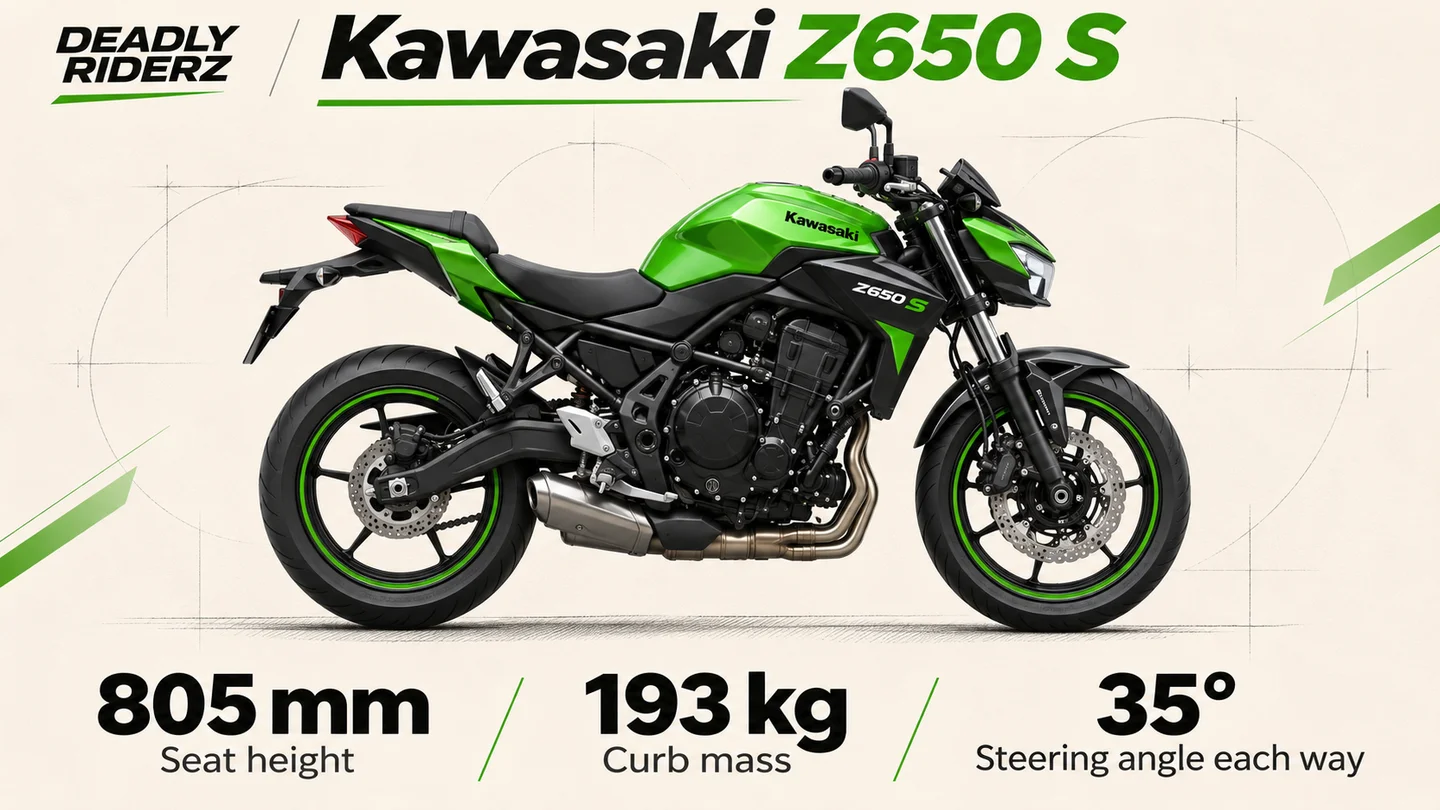
If you are stepping off a lighter motorcycle and shopping for a Z650 S, try pushing it backwards before you listen to the engine. A bike can feel wonderfully compact when it is moving and demand quite a different effort when you need to reverse it into a narrow space. Kawasaki’s Indian specification gives you an 805 mm seat height and 193 kg curb mass. A short sequence of checks will turn those figures into something you can use when you compare the Z650 S with the machine you ride now.
Highlights
- Kawasaki India lists a 649 cc parallel twin, 805 mm seat and 193 kg curb mass.
- The separate dry estimate is 175 kg. The curb figure is the relevant starting point for a fuelled parking comparison.
- Use your normal riding boots and check clutch reach, steering lock and space for a passenger before deciding.
Read the two weights carefully
Kawasaki’s 2027 Z650 S India specification publishes both curb mass and estimated dry weight. The company’s curb figure includes fluids and the fuel quantity described in the specification. Use that figure when comparing with another curb figure. In early-November India launch coverage, BikeWale reported ₹7.59 lakh. For a purchase, ask for the invoice and registration estimates for your city, and make sure the quote specifies the new S.
| India model specification | Listed figure |
|---|---|
| Seat height | 805 mm |
| Curb mass | 193 kg |
| Steering angle left / right | 35° / 35° |
| Wheelbase | 1,410 mm |
| Fuel capacity | 15.0 litres |
Make the parking test repeatable
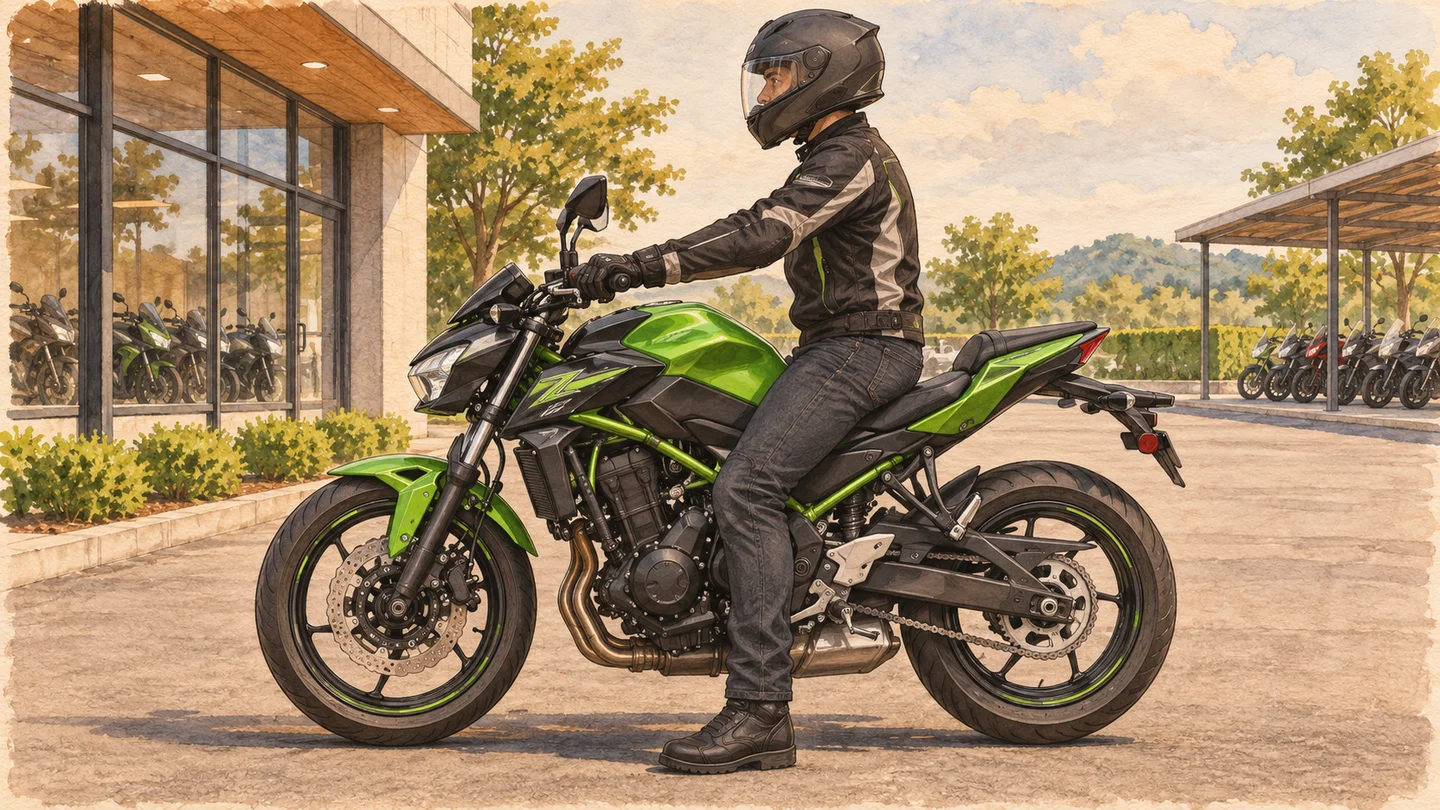
With a showroom representative nearby, push the bike by hand on a level surface. Walk it forwards, stop, and try rolling it back a couple of steps while keeping it steady. If your regular building has a ramp, ask whether the dealer can demonstrate the bike in a suitable space. A short stationary check is useful before you start talking about how you would handle a slope with a passenger. Pay attention to whether the handlebar gives you enough leverage and whether you can keep your hip close to the bike without catching the footrest.
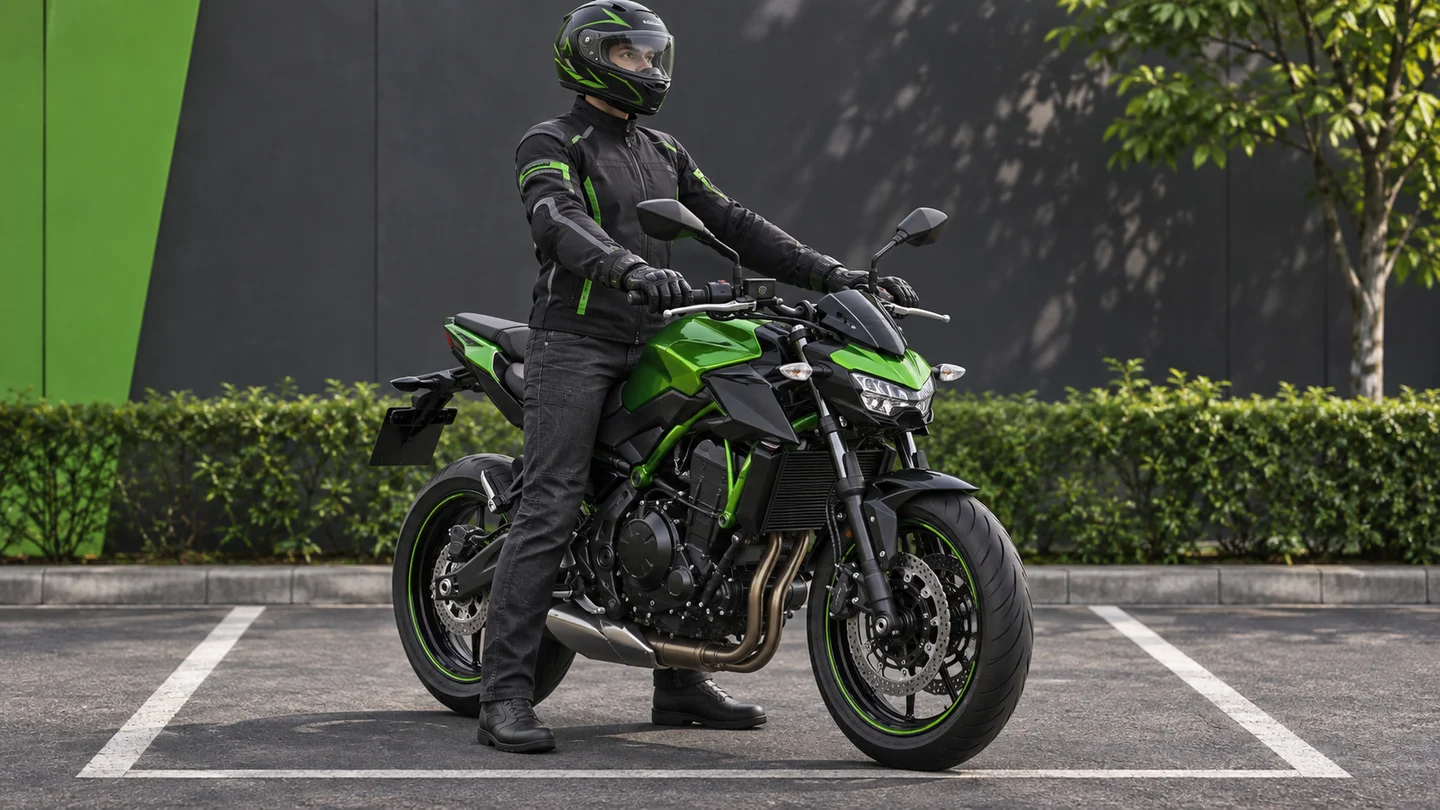
Sit on the saddle in the boots you normally wear. See where each foot settles when you slide slightly to one side. Turn the bars towards the stop and check that you can comfortably reach the far grip. Kawasaki lists 35 degrees of steering angle each way, but the space your arms need depends on your posture as well. This is the right moment to notice the one movement you repeat most frequently, whether it is a turn into a basement or rolling the bike out of a roadside parking bay.
Watch the first part of the throttle
Kawasaki lists 68 PS and 64 Nm for the liquid-cooled twin. A city test is a good place to learn about the part of its response you will use most. At moderate speed and in an appropriate gear, see how the bike feels as you open the throttle gently. Take one familiar slow turn with the dealer’s permission, then report to yourself how often you had to adjust your grip or lean forward. A bigger engine can be enjoyable at normal speeds when the relationship between the lever, throttle and bike is predictable for you.
Kawasaki’s technical video shows the Z650 S controls and chassis. Use it to prepare questions for the Indian demonstration bike. Watch on YouTube
Include the person or gear you normally carry
If you regularly ride with a passenger, ask the dealer for permission to have them try the actual rear seat with the bike supported. Check footrest access, seat room and where they can hold on. If you ride mostly alone yet carry heavy work kit, ask about compatible mounts and installed clearances. Your real loadout matters more than the way the display model has been accessorised. Ask the workshop how it handles tyre replacement and routine service appointments before you judge the difference in ownership cost.
Plan where you can use the bike every week
Consider the service and parking logistics together. If a reliable dealer sits far from home, estimate how much time a normal workshop trip will take and whether you can arrange a lift. Back at home, think about where you stand while unlocking the bike and where your feet land in your driveway. Those small actions affect how often the bigger machine leaves the house. The fit check works best when it predicts ordinary rides, including the ones you take alone at short notice.
Write down what would make the upgrade worthwhile
A change from a small single to the Z650 S may feel obvious in engine character. The purchase makes more sense if you can name the ordinary ride that gets better. List the points you liked and the awkward movements you would repeat every morning. If the second list is long, compare the same checks on another bike or on the one you already own. The Deadly Riderz buying guides include more rider-fit examples. Put the quote aside until you can picture the bike leaving your own parking spot on a busy Monday.
Cover illustration by Deadly Riderz.


