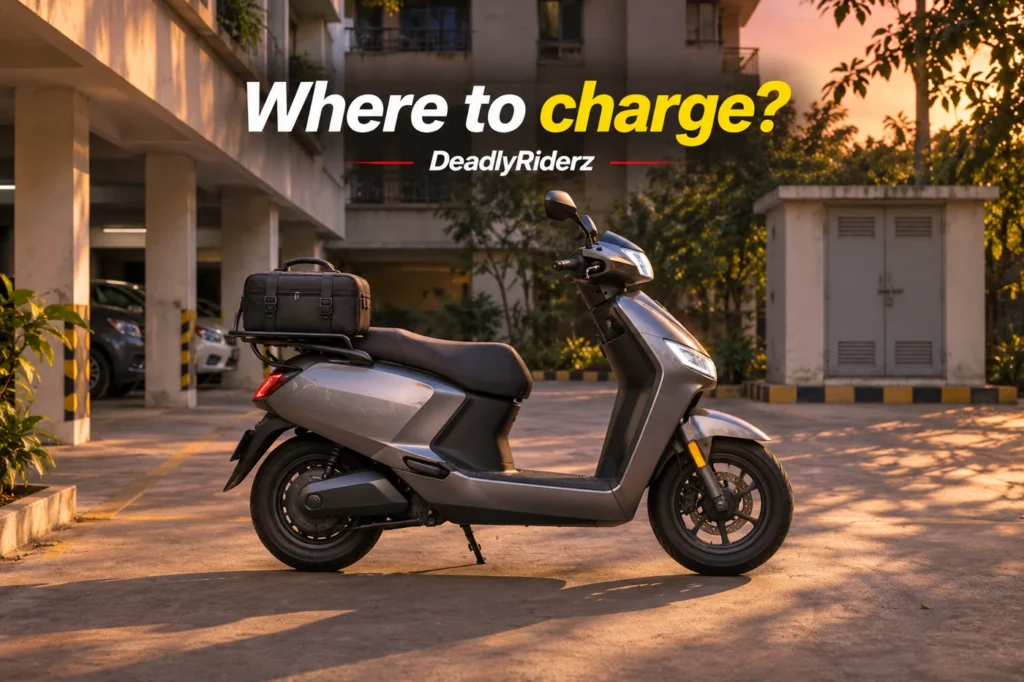

For the India-market TVS iQube 3.5 kWh, plan on using the TVS-approved portable charger at a suitable inspected socket for routine charging. Treat a public station as a backup only after the operator confirms that it supports your actual scooter or has a suitable socket you may use with your own charger. A charger symbol on a map, a large number on a cabinet or the word “EV” on a sign does not tell you whether you can plug in or how long the stop will take.
Highlights
- Match the handbook and approved portable charger to your India-market iQube 3.5 kWh.
- Have the proposed home charging outlet checked for suitability.
- Before detouring to a public station, ask the operator about compatibility and permission to use your charger.
This guide is for the standard iQube 3.5 kWh, not the iQube ST, an older 3.4 kWh model or another variant with the same-looking body. TVS lists its charging figure for a defined battery percentage window, and its May 2026 handbook for 3.5 kWh vehicles built after 21 April 2025 says the actual charger supplied may differ from the one in the illustration. Use the handbook that matches your scooter and compare the charger label at delivery.
What the home-charging figure really tells you
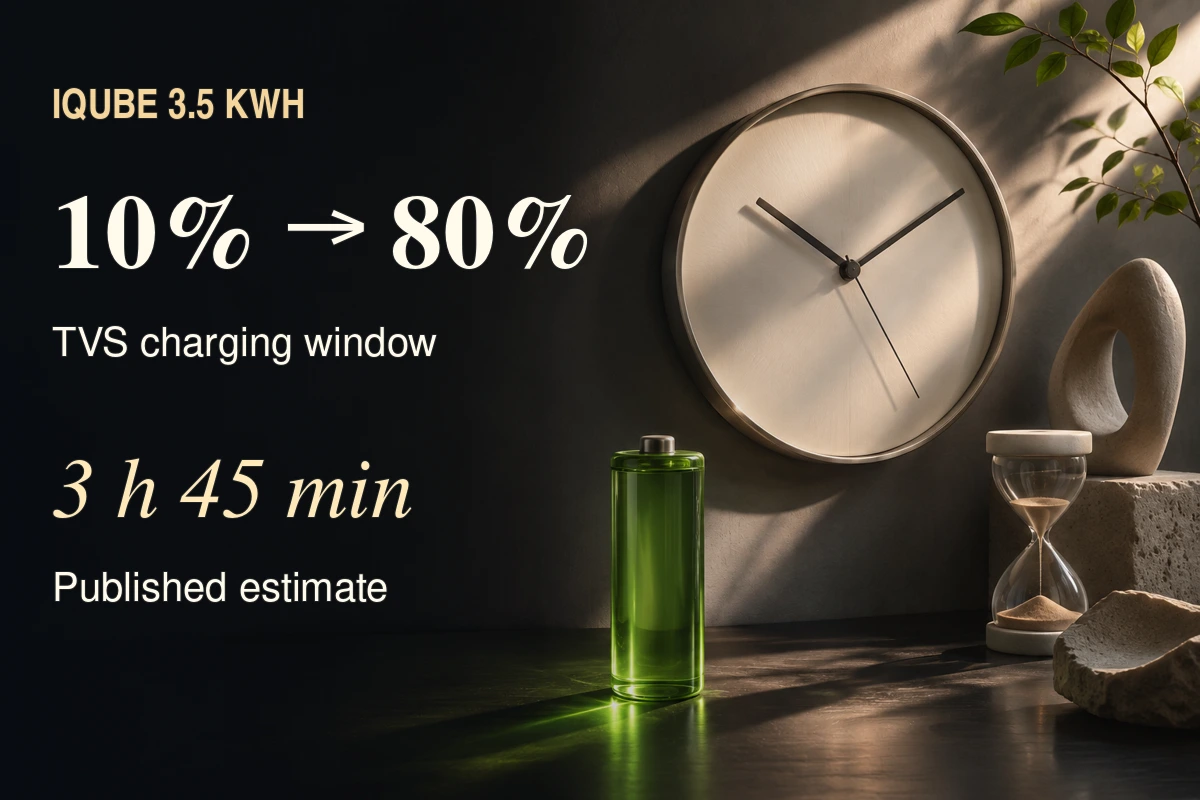
The India variant page lists a portable offboard charger and 3 hours 45 minutes from 10% to 80%. That means a test window of 70 percentage points, not time from empty to full and not a guaranteed appointment length. The estimate does not establish what a particular roadside charger will deliver. If you hear a different quoted time, ask for the starting and ending percentages, the exact variant and the charger used before comparing numbers.
Most riders choosing between home and public charging have a simpler question: can the scooter stay parked long enough where it will be plugged in? An approved home setup fits a regular commute if the scooter can charge while parked. At a public site, the same session can take longer to complete from your point of view even when charging itself is comparable, because you have to ride there, get access and possibly wait. Do not buy on the assumption that you can always make up missed charging with a short stop.
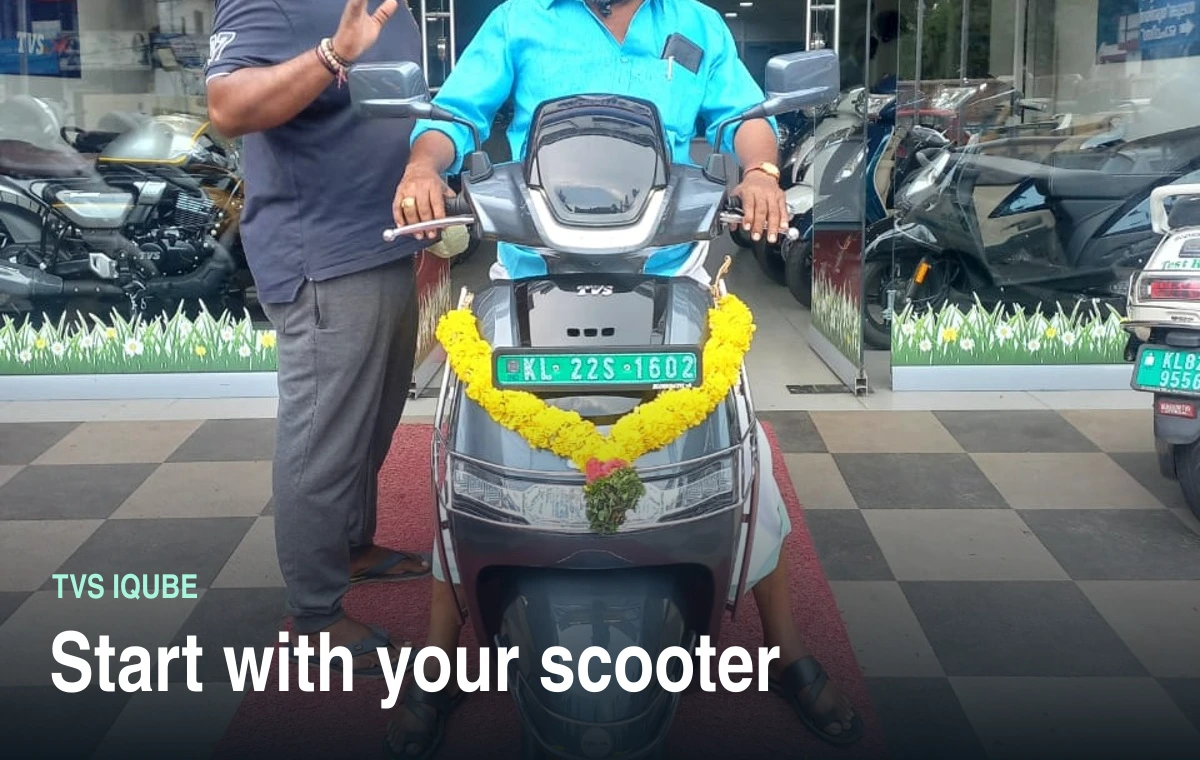
Check your actual parking bay, not just your flat
The TVS owner’s manual calls for a properly earthed domestic AC socket, prohibits extension cables or boxes and describes the required power-point installation and protection. It also says that a 15 A plug may be required depending on which charger is supplied. Take a photo of the label and plug of the actual charger and show it to your dealer and a qualified electrician. Ask them to inspect the outlet and protection at the parking bay, and confirm that the charger reaches your scooter without an extension or a cable crossing a walking or driving route.
For an apartment, check who can approve use of the outlet, who pays for power and whether you can use that bay routinely. A socket upstairs or at a security desk is not a charging plan if you cannot use it where the scooter parks. If the approved point is not ready, work out the cost and timeline before paying a deposit on the scooter. Let the dealer or electrician handle installation and fault checks; do not change plugs or wire an improvised supply yourself.
Two very different things can be called a public charger
One site may have an approved domestic outlet and expect you to bring the TVS charger. Another may use a station-owned connector that goes straight to a compatible scooter. Ask which one it is. TVS recommends its supplied or approved chargers and tells riders to look for charging options on the iQube app in its India charging FAQ. A listing is a place to start checking, not a personal confirmation of access, connector fit or pricing. If the operator cannot confirm a fixed connector for your specific iQube, do not try it or improvise with an adapter.
Before leaving, contact the operator and ask for the exact connector or approved socket, whether your model is supported, live availability, hours, parking access and any app, payment or membership requirement. Also ask whether a long session is allowed if you intend to leave the scooter there. Save a backup location in advance, and test your usual public stop on an ordinary day before putting it on the critical path for getting to work.
A simple decision if you have no home socket
If the only confirmed option is public, do a trial during the hours when you actually park. Write down the time spent detouring and waiting as well as the fee and the charge you gained. Repeat the check if you normally ride on different days or shifts. A reliable station beside an office works very differently from a location that closes before you return, even if both appear equally close on the map. If the trial turns up access problems, fix the parking arrangement or verify a different stop instead of counting on a generic roadside charger.
If the approved charging setup is wet, damaged or repeatedly trips protection, stop and consult TVS or the installer rather than testing another adapter. For a shorter errand, choose a place you already know works rather than trusting a new pin with a low battery. The best buying question is not “Can it charge in public?” but “Which exact place can I reliably use week after week, with this charger and this scooter?”
TVS iQube Electric’s portable-charging video shows the general idea. It is an older model-family demonstration, not a guide to the current 3.5 kWh charger or a promise that an arbitrary outlet is suitable. Use your matching manual and dealer guidance for the actual equipment.
TVS explains iQube charging
TVS iQube Electric demonstrates charging precautions. Match the equipment shown to the handbook for your scooter. TVS explains iQube charging video.
Also comparing a different TVS model? See our TVS Orbiter V1 vs V2 charging guide. If plugging in at home is the main obstacle, our VIDA VX2 apartment carry test explains what to check before counting on a removable-battery alternative.


