

What to know: At an observed 35 km/L, an eight-litre planning allowance gives 280 km. Treat that as a calculation, not as a mileage promise.
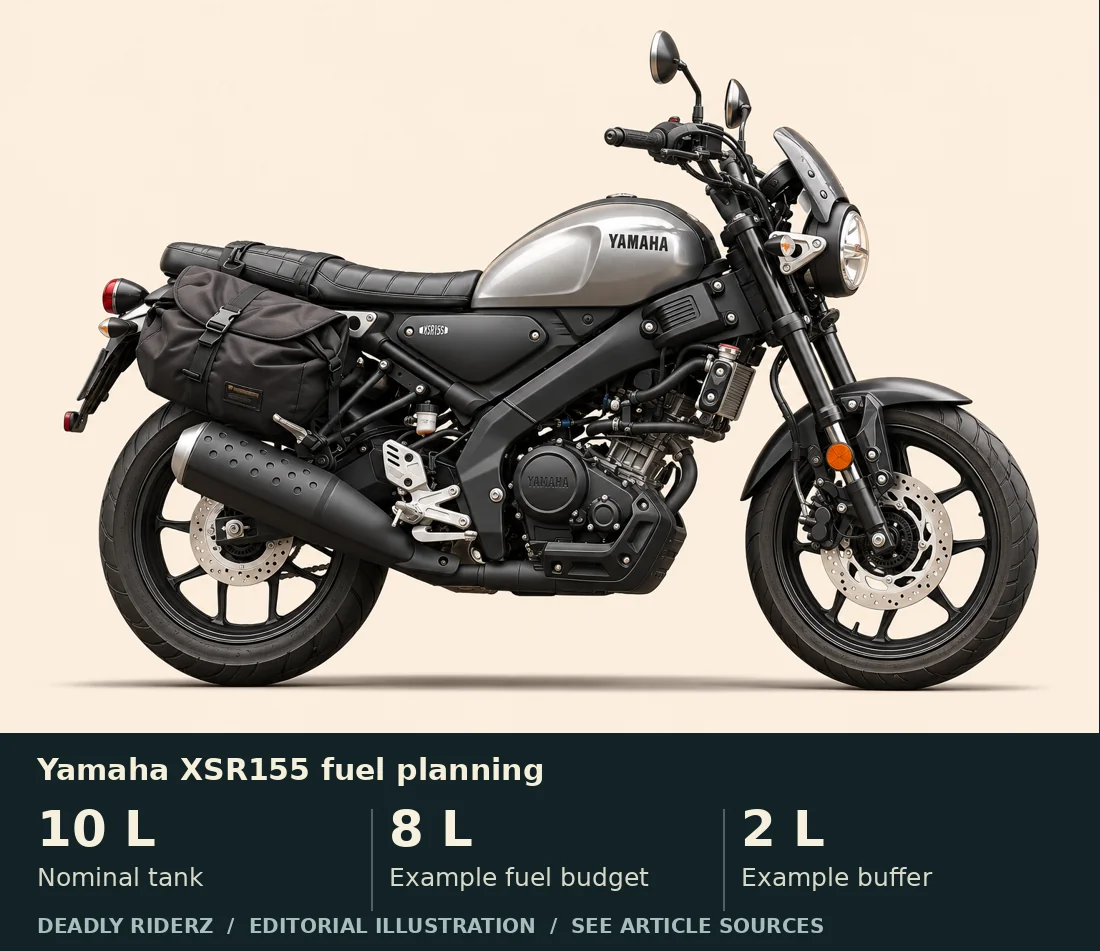
Yamaha lists a 10-litre fuel tank for the India-market XSR155. That is a nominal capacity, not a promise that you can ride a fixed distance before refuelling. For a weekend trip, multiply the fuel economy you have actually observed by the portion of the tank you’re willing to plan around, and choose a working fuel stop before that distance.
The simple range calculation
For illustration, planning around eight litres from a nominal ten leaves a two-litre planning margin. At an observed 30 km/L that is 240 km; at 35 km/L it is 280 km; at 40 km/L it is 320 km. Those figures are scenarios, not Yamaha mileage claims or a statement about the fuel-warning threshold. If your last comparable ride returned less than 30 km/L, use your lower number instead.
A margin is especially useful on routes with uncertain fuel stops, where a pump shown on a map might be shut when you arrive. Pick the last reliable stop comfortably inside your plan, not the first one after the theoretical limit. If you are unsure how the fuel display behaves, err earlier rather than deliberately riding it down.
Measure your own number between comparable fills
Reset a trip meter after a normal fill. At the next comparable fill, divide distance covered by the litres shown on the receipt. Record more than one tank. A single short interval can exaggerate small differences in fill level, and a city-only record is not a substitute for a highway day with luggage.
Compare like with like: note traffic, speeds, luggage and whether you rode into strong wind. Use the less favourable result from rides that resemble your planned route. Don’t overfill the tank to chase repeatability; follow the filling guidance in the manual and make consistent, normal fills.
How I’d plan the first trip
For a first ride somewhere unfamiliar, I’d pick a fuel stop earlier than the calculation and arrive with alternatives still available. After two or three similar trips, I’d revise the interval using the receipts. The goal is not to maximise kilometres between pumps. It’s to avoid having fuel anxiety decide your pace or detours.
Official video
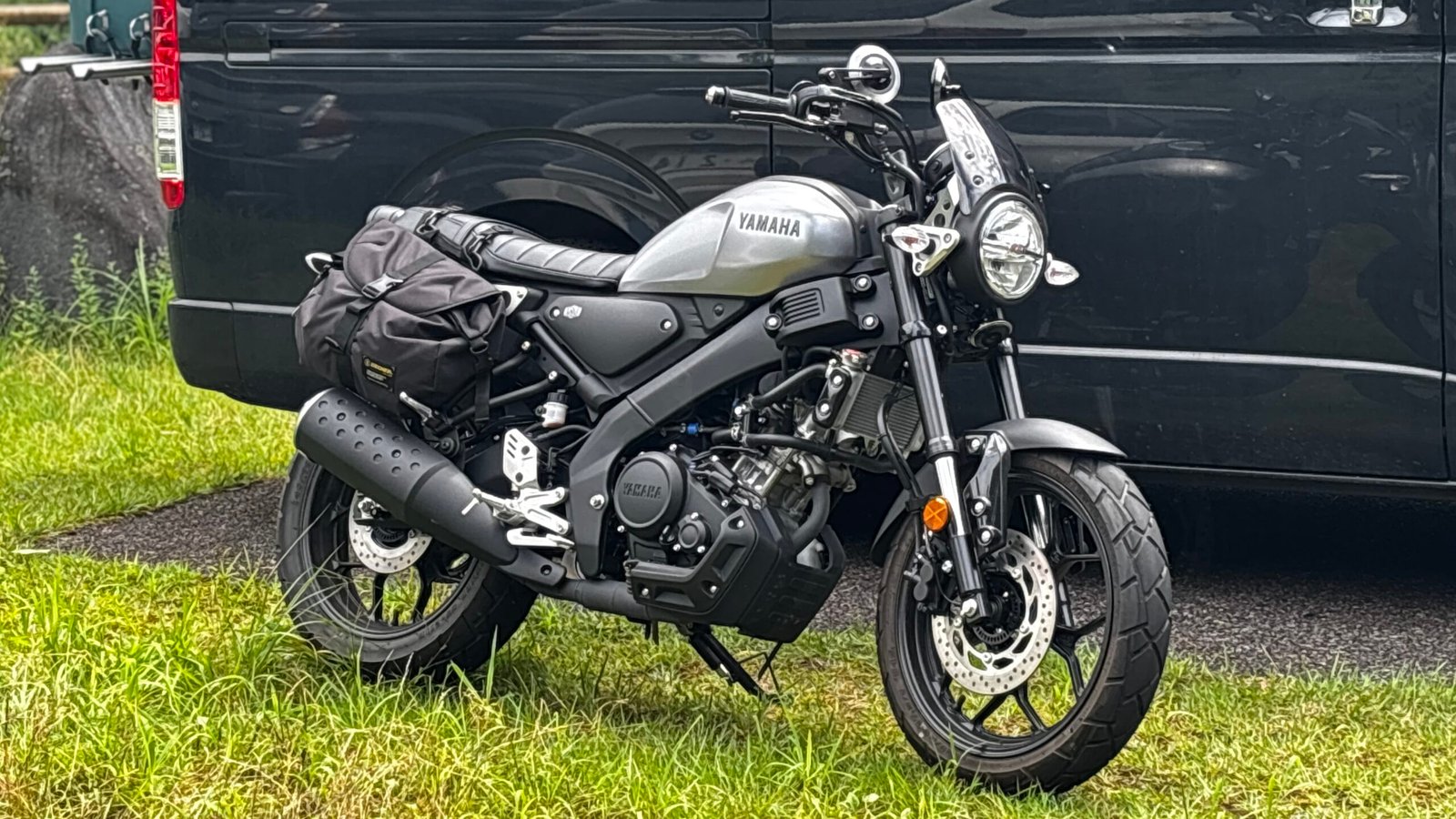
The manufacturer’s video illustrates the model. Check the written India specifications and manual for fitment and limits.
Sources and related reading
Yamaha India XSR155 specifications
Reference photo: Oq10pass, Wikimedia Commons, CC0 1.0. Original photo · Licence.
Featured image: Deadly Riderz editorial illustration.


Pingback: Yamaha RX100 in India: Original specs and what to check on a used bike