

Choosing the Gixxer SF 250 over the naked Gixxer 250 is a decision you can make on the way to work. Check how the bars fit through the turn into your parking area, how your wrists feel after a long signal, and what the air does around your helmet once the road opens. The fairing changes what you see from the seat and adds some mass. Whether it makes the Suzuki more useful depends on how often your commute turns into a ride out of town.
Highlights
- Suzuki’s specification sheet lists 249 cc and an 800 mm seat for the standard Gixxer SF 250 and Gixxer 250.
- The faired standard bike is listed at 161 kg, against 156 kg for the naked standard bike in the same brochure.
- Suzuki’s product page also lists a separate SF 250 FFV. Ask the dealer to spell out the variant and fuel compatibility on the quote.
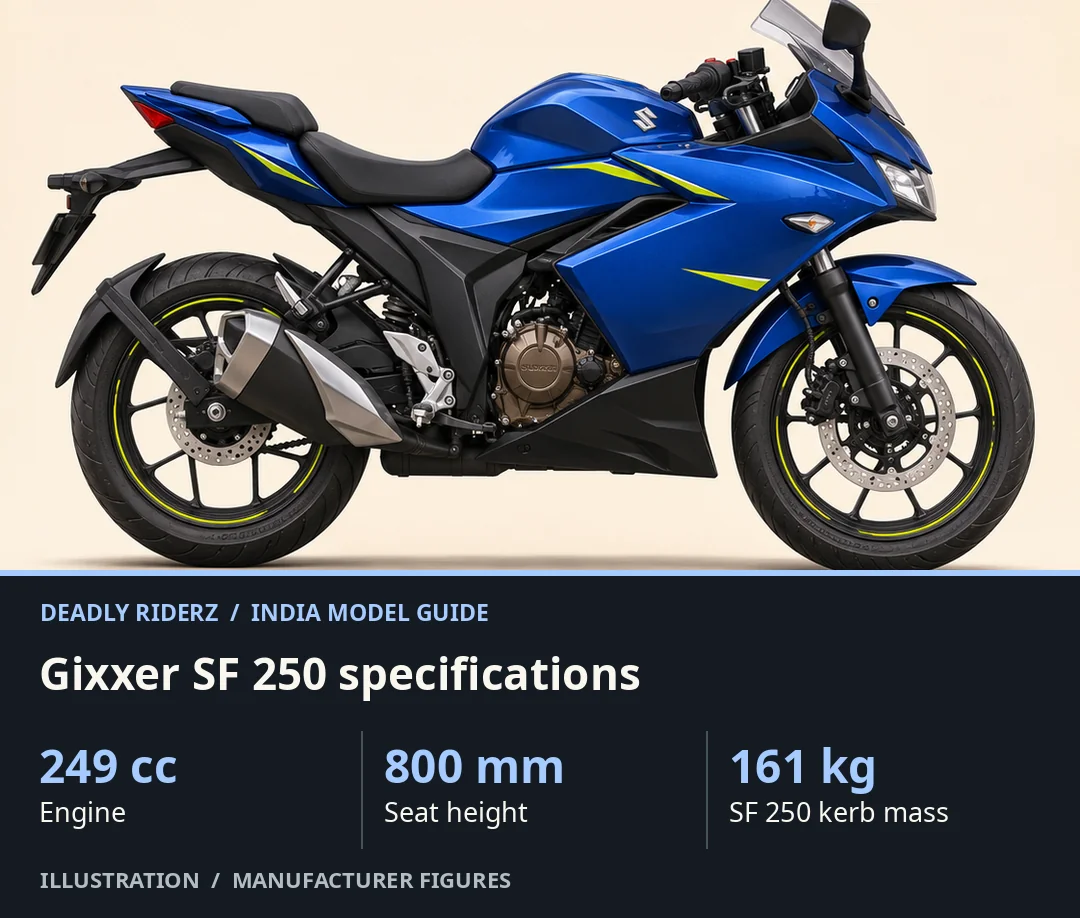
Same family, different front ends
Suzuki’s brochure lists a 249 cc oil-cooled single, six-speed gearbox and 12-litre fuel tank on both standard bikes. It gives the faired SF 250 a 740 mm overall width and the naked Gixxer 250 805 mm. Those numbers are measured dimensions. Your mirrors, hands and front bodywork pass through different paths when you turn past a wall or a parked vehicle. A narrow figure does not settle which bike you will find easier to move in your parking space.
Ride both on the same day if possible. Bring your usual gloves and try an ordinary U-turn in a safe area, a stop with your left foot down and a slow roll into an empty parking spot. Then take a road where you can maintain a steady, legal speed for a few minutes. These two settings tell you more about the difference than a quick acceleration run.
| Standard model | Kerb mass | Overall width |
|---|---|---|
| Gixxer SF 250 | 161 kg | 740 mm |
| Gixxer 250 | 156 kg | 805 mm |
Where a fairing helps
Some riders find even a small change in airflow worthwhile on repeated highway stretches. Use the test ride to see where the screen directs the air. If you have to crouch to find a calmer pocket, decide whether that is a posture you will actually hold. At an ordinary cruising position, evaluate pressure on the shoulders and noise around the helmet. The result changes with rider height, helmet and screen geometry. Even two riders with the same inseam can notice a different buffeting pattern.
The fairing also changes the conversation about ownership. Ask the dealer to price a representative painted panel for the exact colour you like and give an idea of parts availability. If your motorcycle lives in an exposed, tight parking area, think about the cost and time involved if it gets knocked over. If it spends most days in a protected space and covers regular weekend highway miles, that concern may carry less weight. Check insurance terms against the parts you would be buying as well.
Test the seat with your usual load
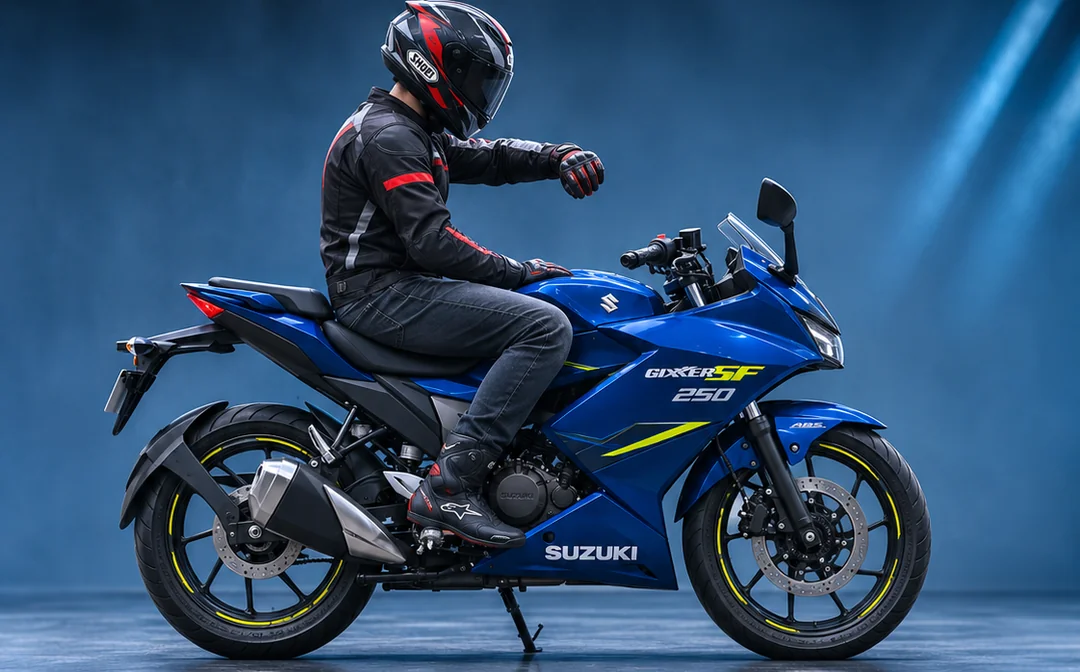
An 800 mm seat figure is shared by both versions. For the ride, see where you naturally settle against the tank and how easily you can slide back to change position. Check seat comfort again after the first ten minutes, when the novelty of the shorter route has worn off. If you normally wear a backpack, bring it. If a passenger accompanies you most weekends, ask them to check their footrest position and the space between you before you plan luggage.
A tail bag needs more than a flat patch of seat. It must have secure attachment points and clearance from the wheel, exhaust and controls without interfering with a passenger. Ask which luggage items the dealer actually fits to the SF 250. If long rides with a pillion and bags are a bigger priority, our Suzuki V-Strom SX touring setup guide covers a different approach to packaging.
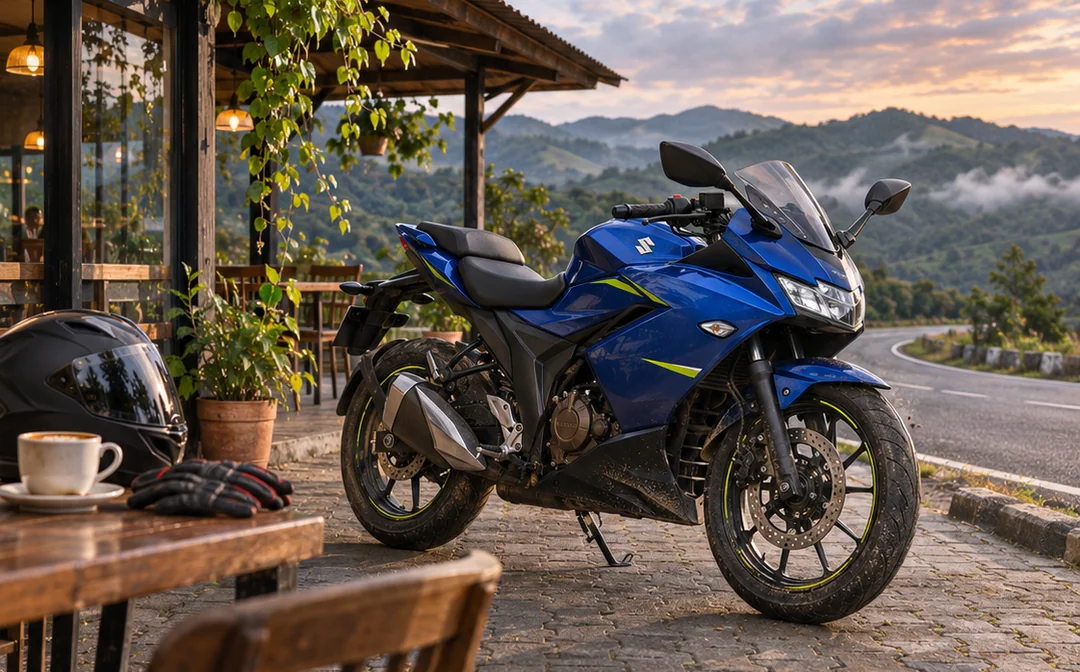
This earlier road test is useful for riding-position context. Check current trim and FFV specifications with Suzuki. Watch Autocar India’s Gixxer SF 250 road test.
The shaft of a mirror, the angle of a lever and the clearance around the tank can make a surprising difference on the same chassis. Note what felt good and what felt awkward as soon as you get off each bike. A short comparison sheet also helps you distinguish a preference for the bodywork from a preference for the control layout.
Read the quote carefully
Confirm the model name, year and variant on the quote. Suzuki’s current model page distinguishes the SF 250 and SF 250 FFV, so avoid borrowing fuel or equipment claims from one listing for the other. Have the dealer itemise registration, insurance and any accessories you actually want. A payment plan comparison only helps after those totals are comparable.
Choose the SF 250 if the airflow, riding position and bodywork make the kind of roads you ride more enjoyable. Start with the standard naked version if you prefer its controls and feel most of your riding will be in town. The important comparison is the one you can repeat on your daily route, with both bikes at ordinary speeds.


