

At a showroom, both bikes make a good first impression if you like a round headlamp, a simple tank line and an upright place to sit. The question arrives when you ask for a quote. Triumph’s launch material puts the Bonneville T40 at around ₹2.80 lakh ex-showroom. It sits against a broader array of Royal Enfield Classic 350 variants, where the actual price difference depends on the specific finish and equipment you choose. If you are considering both, compare what you actually get for your route.
Highlights
- Both are described as 349 cc singles in their Indian specifications, with different cooling and transmission layouts.
- Triumph lists a six-speed gearbox and Royal Enfield specifies five speeds.
- Compare on-road quotes for exact variants, then test parking, slow traffic and a faster section before deciding.
Look at what each company lists
Triumph’s October launch release describes the T40, the T40 Black and the separate T4. Keep the three identities straight when reading an offer. Royal Enfield’s Classic 350 specification sheet gives the Classic’s engine and transmission figures. The comparison starts with the specific 350s and the equipment you can verify. The names and engine sizes by themselves don’t tell you how the bikes feel in the situations where you use them.

| Published feature | Bonneville T40 | Classic 350 |
|---|---|---|
| Engine capacity | 349 cc | 349 cc |
| Gearbox | 6-speed | 5-speed |
Check your weekly pace
On a test ride, find an ordinary legal stretch where the bike can settle at your normal speed. Ask how often you shift and how easily you regain speed after slowing. The T40’s sixth gear is a reason to try its transmission on a suitable faster section. It tells you little by itself about how the ratio suits the pace you hold most often. In traffic, compare the throttle response and whether the clutch and lever feel comfortable with your own gloves.
Rushlane’s first ride dated 23 November describes the reviewer’s time around Kolad and discusses the T40’s equipment and road character. Read it as one rider’s experience in those conditions. Then look for the same behaviours on both bikes near your home. It is easy to love the more elaborate package on an open road and value something completely different on a tired ride back through town.
Put the rider and pillion in the comparison
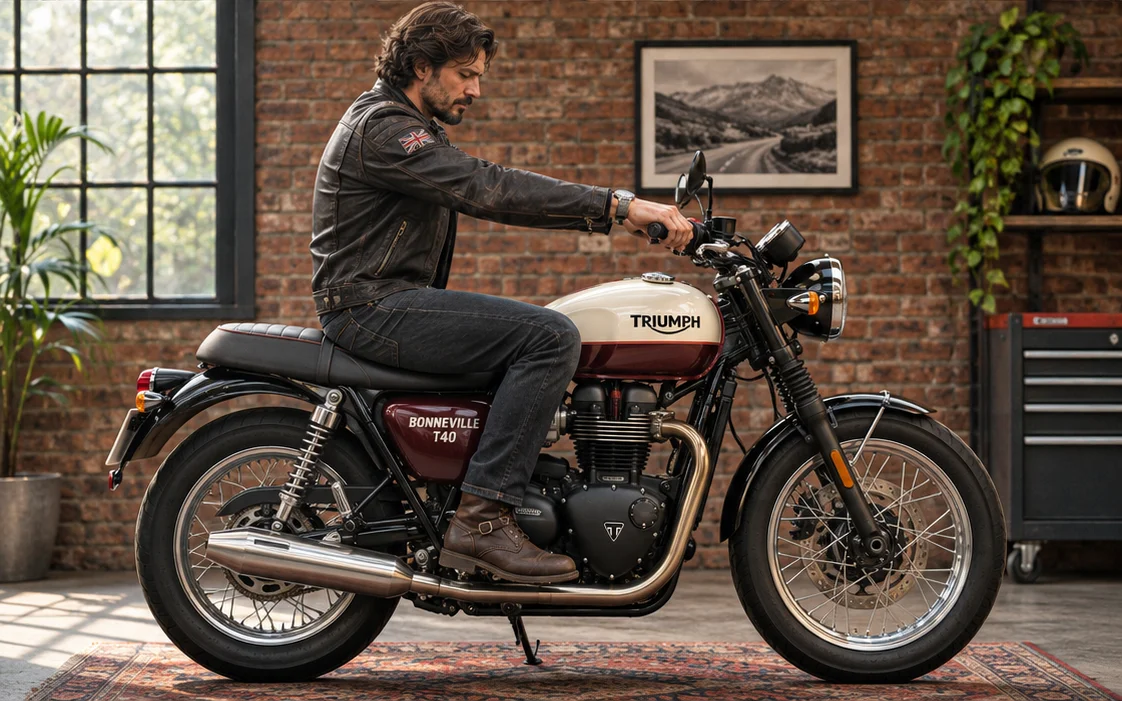
Ask to try each bike in your usual footwear. With dealership support on level ground, move it by hand, turn the bars and check how far you reach for the stand. If someone regularly sits behind you, ask them to try both bikes. Look at leg room, footrest access and which rails or handles are fitted for that version. Don’t rely on a small seat-height difference to settle the question. The way you both arrive and leave a fuel stop is a better measure.
If you normally carry a small office bag or soft luggage, bring it to the appointment. Ask which compatible mounting options work with the pillion space you just checked, and what it costs to fit them. An attractive brochure example can use optional parts. Put those costs into the comparison before treating one motorcycle’s sticker as the entire purchase decision.
What is worth paying for
Compare the displays outdoors and ask for a demonstration of controls that matter to you. Cruise control, where included, can be appealing on the right route. A rider who spends almost all week between junctions might make more use of a comfortable grip and an easy clutch. Ask the workshop for a routine service estimate and the next available appointment so you can put the purchase in context. For a separate example of how regular use affects total cost, see our Speed 400 fuel-budget guide.
Decide which equipment survives a normal week
If you ride part of your week on an open highway, note the section where you would want an easier cruising routine. If your trips are mostly between local junctions, try a slower route instead and pay attention to the work your wrist and left hand are doing. Ask to spend time at a standstill checking which controls are reachable in your normal gloves. Move the mirrors to your usual position and consider visibility when a pillion joins you.
Compare the cost of adding the things you need
A seat, a luggage rack and a pillion backrest are different purchases. Ask the dealer to show which parts are compatible and how much fitting costs. Inspect a motorcycle with the arrangement installed if possible. If one bike already has the items you value, include that in your calculation. The difference on a local invoice will normally matter more than a fixed price gap quoted online without trim information.
Make a choice you can explain
Get like-for-like on-road figures with insurance, registration and any optional parts shown separately. Write down one difference you felt on a normal road and one thing you valued at a stop. If the Bonneville’s features or engine behaviour change enough of your week to justify the price, the extra spend has a purpose. If the Classic already meets those needs, you can judge it on the experience and the actual quote rather than the difference in specification sheet length.
Cover illustration by Deadly Riderz.


