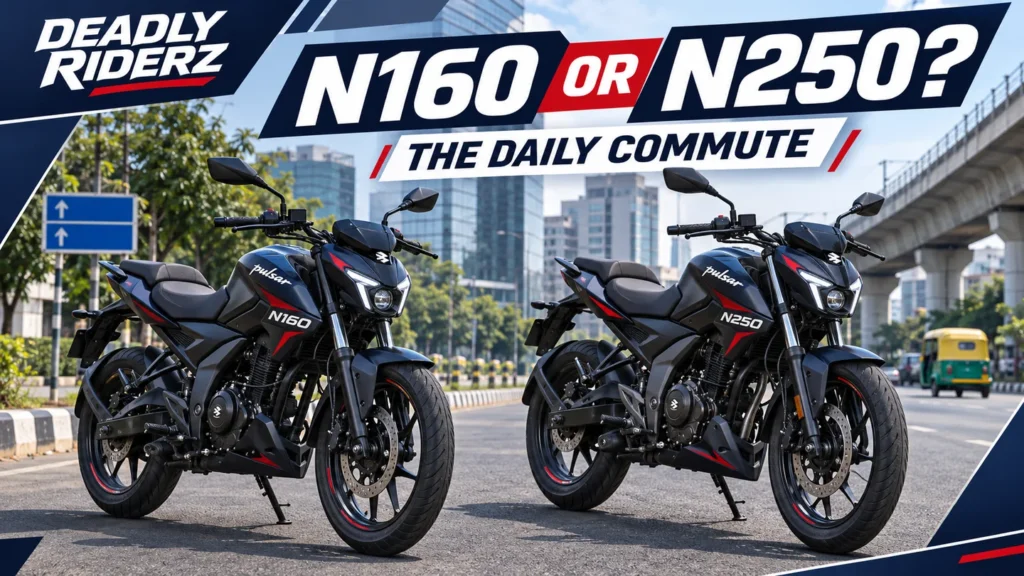

Think about the slowest five minutes of your commute, then the quickest five. If the route barely leaves city traffic, your buying decision turns on comfort, low-speed control and which variant is on the floor. If the route clears onto a faster road, the Pulsar N250’s stronger engine may give you a useful reason to spend more. Bajaj’s N160 and N250 look familiar beside each other, but a test over the actual kind of road you ride brings out how their different outputs fit your day.
Highlights
- Bajaj lists 16 PS and 14.65 Nm for the 164.82 cc N160 in the referenced specification.
- The 249.07 cc N250 is listed at 24.5 PS and 21.5 Nm, with a five-speed gearbox.
- Compare brakes and equipment by exact variant and itemise your on-road quotes before looking at the monthly payment.
Check the bikes behind the names
The Bajaj N160 specifications and N250 specifications are the starting point. The N160 family includes different seat and brake configurations. Bajaj’s July 2026 N160 manual for the single-disc variant describes a rear drum, while the current N250 specification lists front and rear discs. A brochure for one version cannot tell you what the next motorcycle on the showroom floor has. Ask for the full name and equipment list on the quotation before you compare.
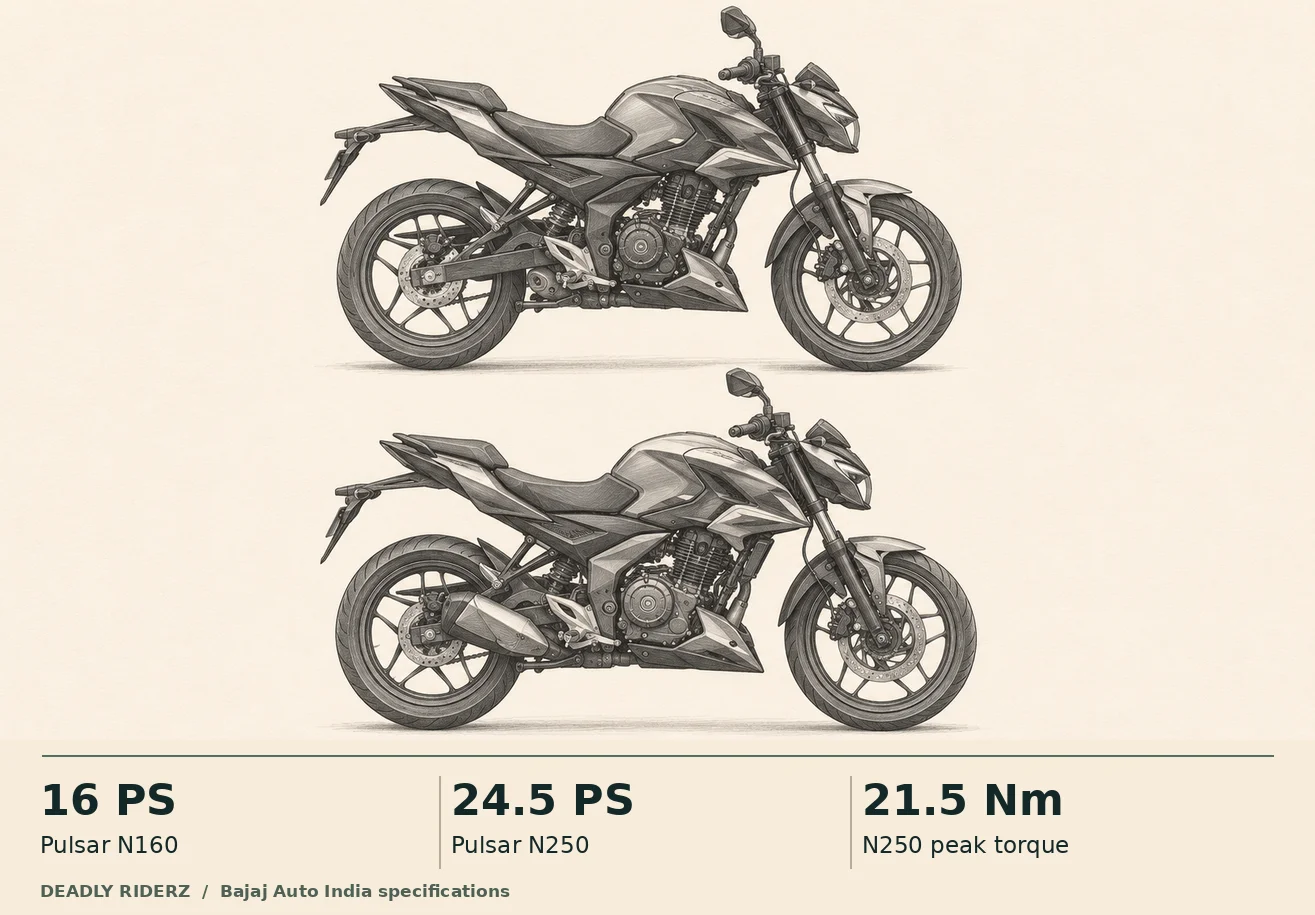
| Bajaj specifications | N160 | N250 |
|---|---|---|
| Engine | 164.82 cc | 249.07 cc |
| Peak power | 16 PS | 24.5 PS |
| Peak torque | 14.65 Nm | 21.5 Nm |
| Transmission | 5-speed | 5-speed |
Start the ride where the traffic is slow
Use a quiet, legal route with a couple of stops and a turn. Notice how much effort it takes to move off gently and how far forward you naturally sit. Look down the road instead of concentrating on the rev counter, then note afterwards whether you repeatedly reached for the clutch to settle the pace. Try both bikes with your own gloves before you say that a lighter or heavier lever is a deal breaker. Stationary reach and rolling operation tell you different things.
Once back in the parking area, try taking each bike off the stand and moving it backwards on a level surface under supervision. Keep the handlebars at different angles you might need in a narrow bay. A small inconvenience repeated twice a day grows more irritating than a one-off feeling on a faster test ride. If you use a steep basement entrance, describe it to the dealer. You should know how much room you have to stop and restart comfortably.
Give the N250 a real chance to show its value
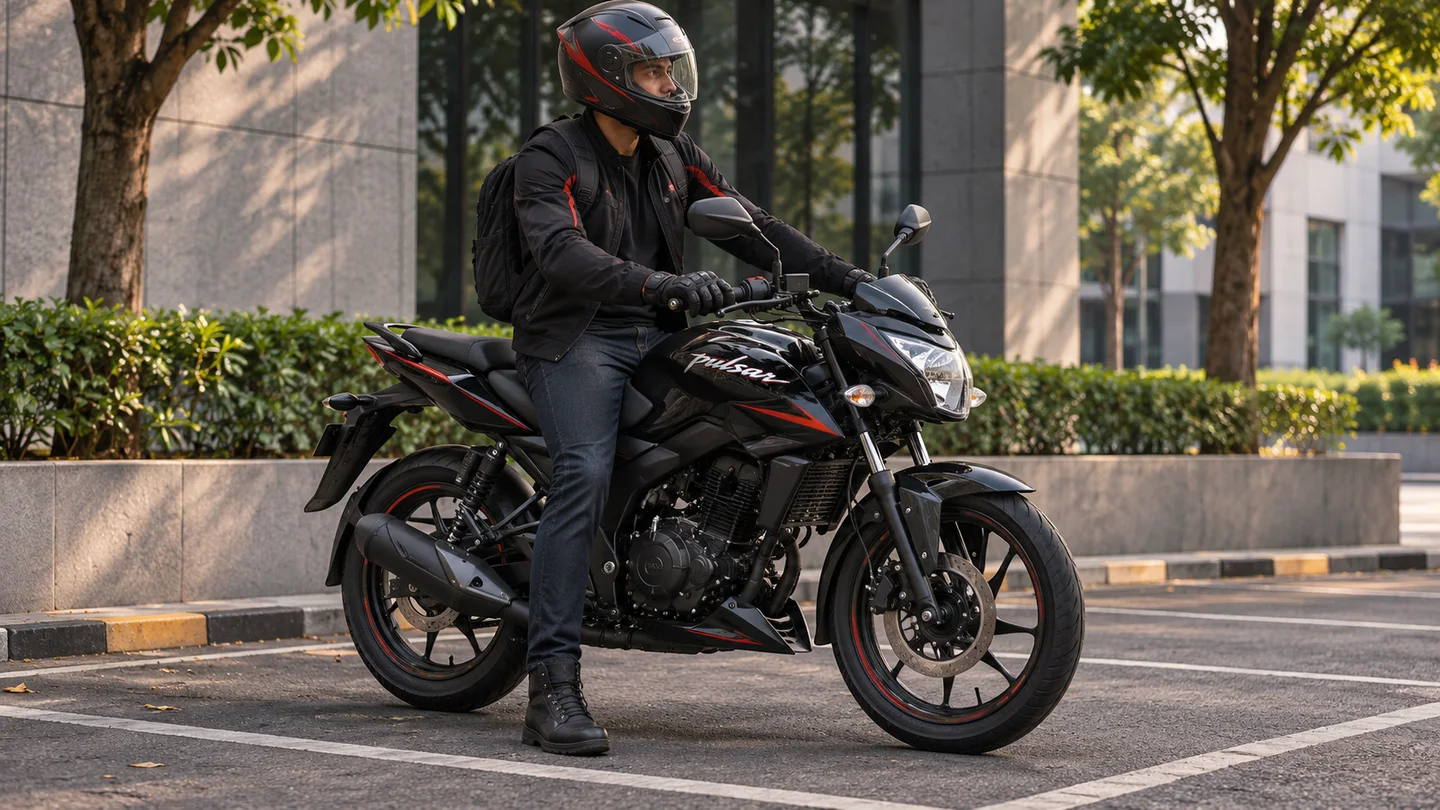
The N250 has 8.5 PS more peak power and 6.85 Nm more peak torque on the published figures. Those differences do not predict the exact way the throttle feels at the bottom of the rev range. Ask yourself whether a normal, legal roll-on at your expected pace feels easier, how readily you can join the flow of traffic, and what the engine sounds like at the speed you are comfortable holding. If you often ride with a pillion, bring them along for a controlled seating check and ask what the dealer’s demonstration policy permits.
Spend ten minutes on the everyday equipment, too. Ask how the display pairs with a phone, if provided, and whether the key information is clear in daylight. Recent buyers comparing a naked Pulsar with a faired model can also read about the RS200 TFT upgrade. Make comparisons one feature at a time rather than assuming a part is standard across the range.
Separate purchase cost from replacement cost
Ask for a price on a comparable rear tyre and the next scheduled service for each bike. Match the tyre specification to the actual trim. The numbers can be more useful than a general prediction that the bigger bike will cost more. If you travel mostly alone, estimate how many days in a typical month you use the faster part of the route. Against those days, set the actual difference in the on-road quote. Someone who would make regular use of the performance has a stronger case than someone paying for a trip they make once a year.
Bajaj’s N160 introduction shows the bike’s bodywork and cockpit. Confirm the brakes, seat and equipment on the actual trim in your quote. Watch on YouTube
Price the commute you expect to do
Ask both dealerships for the ex-showroom price, registration, insurance and accessories separately. A similar monthly finance payment can hide a different deposit or used-bike exchange assumption. Use an identical insurance basis and confirm what routine service will cost for the quoted trim. Treat any mileage estimate as a planning input until you have a credible owner or independent figure from a comparable route.
If nearly all of your time goes into narrow roads and city traffic, put the N160 first and see whether it already gets the job done comfortably. If you often cover faster roads with a passenger or a bag, try the N250 on that kind of road before placing an order. A good decision will tell you where the extra engine capacity gets used, and where you would otherwise spend the money.
Cover illustration by Deadly Riderz.


