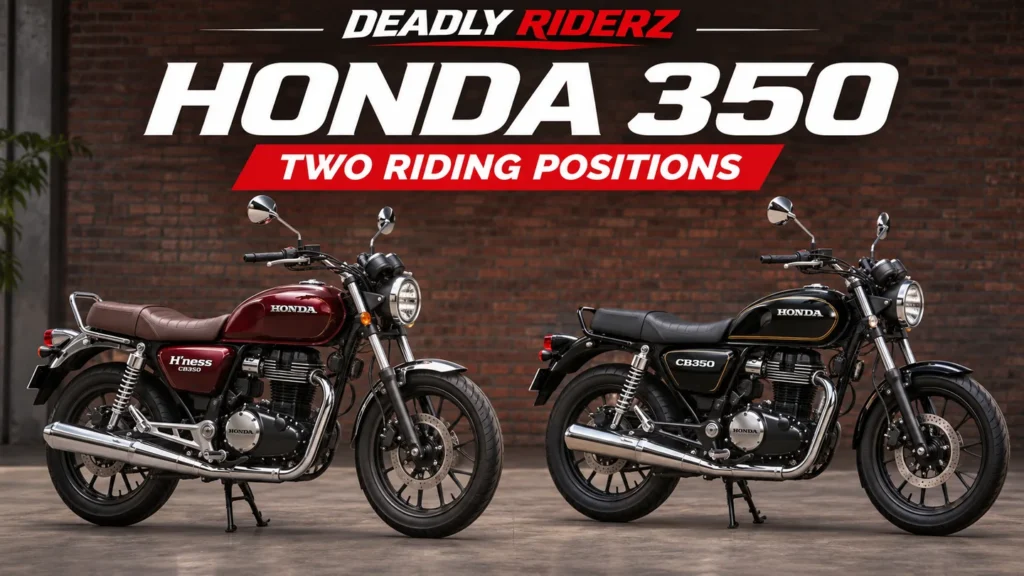

Take the person who regularly rides behind you to the BigWing dealership. Before anyone starts the engine, ask them to get on each of the two Hondas while the bike is supported. The 800 mm seat-height figure is identical in Honda’s brochures. The way a passenger climbs on, reaches the footrests and sits behind you can still favour one bike. That five-minute exercise answers more about your Saturday rides than the two motorcycles’ closely related engine figures.
Highlights
- Honda’s brochures list 800 mm seat height for both models and kerb weights of 181 kg for the H’ness and 187 kg for the CB350.
- Use the same boots and the same passenger on both bikes to compare foot reach, access and usable seat space.
- Get an itemised quote for the exact trim and any seat or backrest you try.
Start with the brochures
The Honda H’ness brochure and CB350 brochure list 348.36 cc, a five-speed transmission and a 1,441 mm wheelbase for both. The figures below describe the bikes as published by Honda. Ask the dealer to show you the specification for the exact trim being quoted and whether the showroom bike has a different seat or accessories. Riders reading Autocar India’s H’ness road test should know it covers an earlier model. Its impressions are historical context for planning a ride, not a measurement of current equipment.
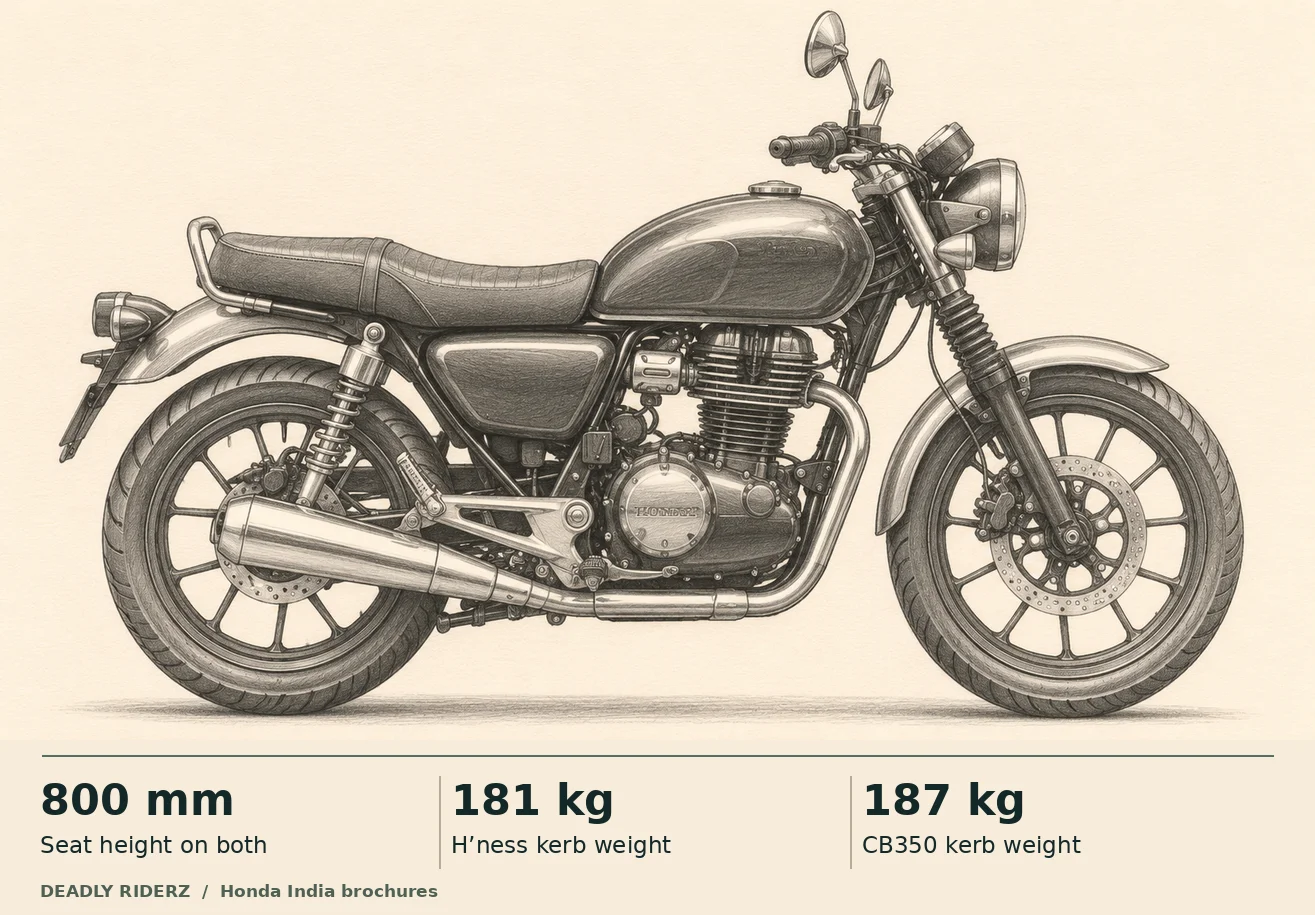
| Honda brochure figure | H’ness CB350 | CB350 |
|---|---|---|
| Displacement | 348.36 cc | 348.36 cc |
| Seat height | 800 mm | 800 mm |
| Kerb weight | 181 kg | 187 kg |
| Fuel tank | 15.0 L | 15.2 L |
Give the pillion a turn first
Ask your passenger where their boot naturally lands when they climb aboard. A grab rail they can find with gloves on is more useful than one they can reach only after shifting their body backwards. Look at the distance from seat to footrest and whether their boots stay clear of your own. If your pillion wears a backpack, bring it. It changes the room available at the back and can make an otherwise comfortable position feel cramped.
Now switch to the other Honda before you talk about colour or price. Ask your passenger to answer in their own words. “It feels fine” tells you less than “I can use the footrest to climb on without leaning into you.” If the showroom allows it, test how the passenger dismounts on the side you normally use. The most important difference can be in that action, rather than in how either bike looks with both of you on it.
Try parking with your everyday kit
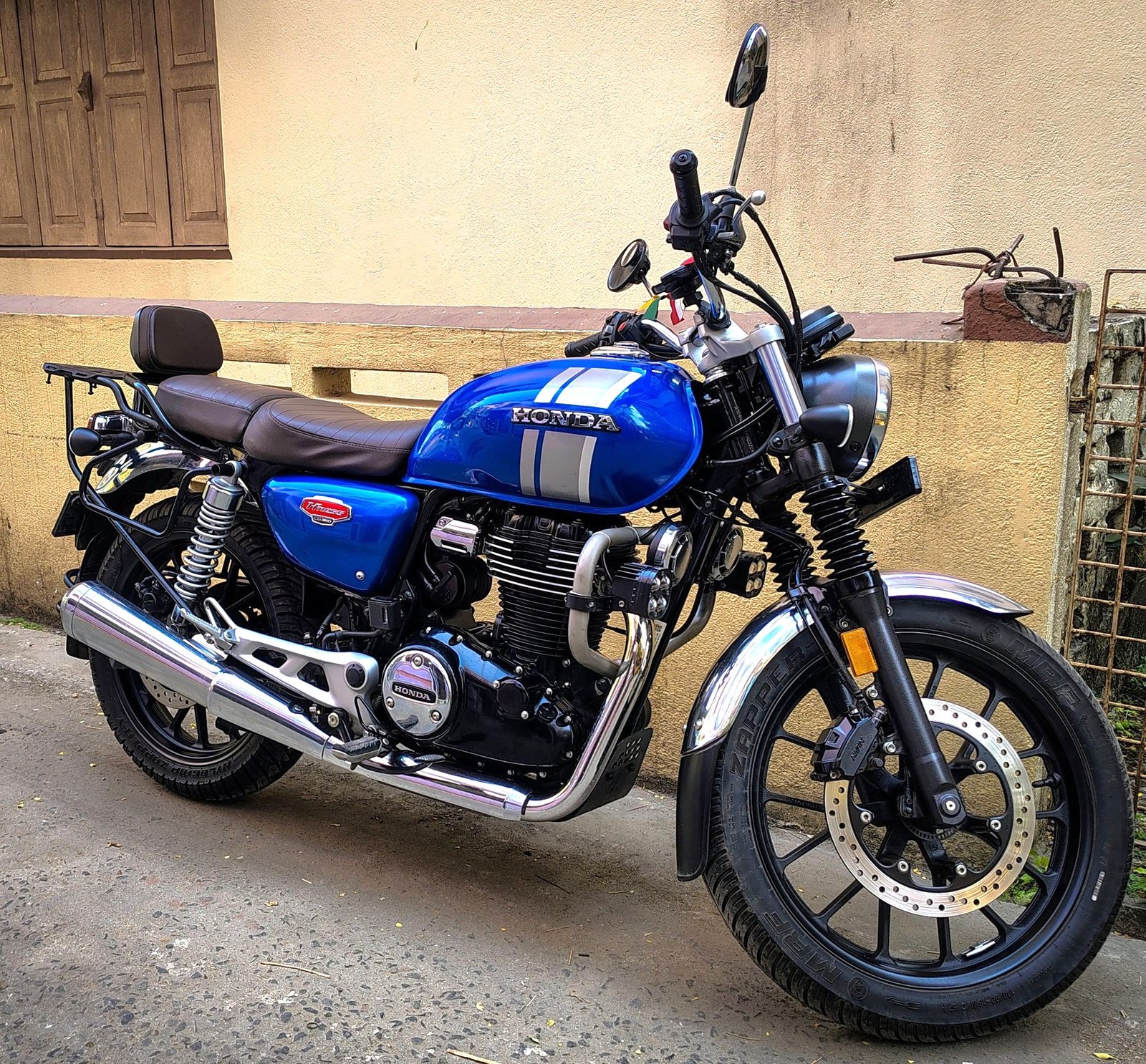
On level ground and with someone from the dealership nearby, walk each bike forward and back. See whether a mirror, grip or footrest ends up in your way. The six-kilogram brochure difference is useful context. So is the point at which you need to put more energy into reversing a fuelled motorcycle. If you park in a narrow residential bay, ask to try the nearest controlled equivalent before committing.
Check the clutch and the far grip from your normal position. Repeat with the front wheel turned and your preferred foot down. Shorter riders learn more from this than from asking whether they can put both feet flat. Our Hunter 350 fit check shows how to repeat the same checks across a shortlist. Ask for a realistic demonstration route if one is available, with the gear you expect to wear on ordinary rides.
Check the space you need for a day out
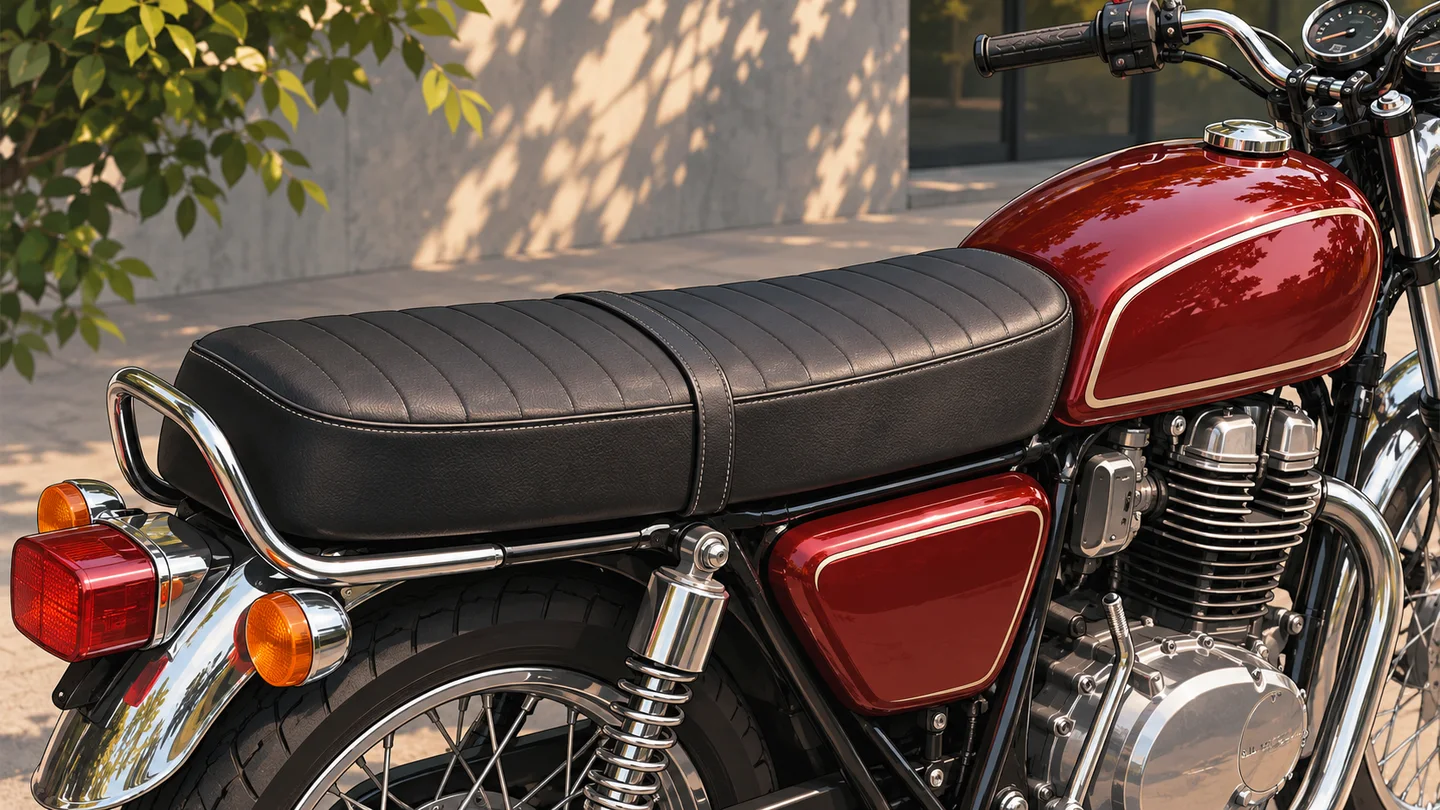
Bring the small bag you normally carry and see whether you can secure it using the manufacturer’s instructions without occupying a useful part of the passenger seat. Ask the parts desk which grab handles, carriers and seats are compatible with each model and whether the demonstration bike already includes any of them. Then have the passenger try the machine with the expected arrangement. If they can only sit comfortably when you leave the bag at home, compare the cost and practicality of a different way to carry it. Make a quick note about where you can put the bike down securely at a fuel station when both of you are wearing your normal riding gear.
Honda BigWing India’s H’ness film shows the model’s layout. Use the showroom test below to check the parts that affect your own fit. Watch on YouTube
Check the fit of the bike in the quote
Accessories deserve a written quotation of their own. If the backrest or seat you tried is optional, ask whether it changes the passenger’s space and what it costs fitted. Check the expected handover date, service location and the up-front price with like-for-like insurance. If you buy for two-up use, ask the service desk for the handbook instructions on load and pressure and how to identify the setup supplied with your bike.
If both options feel right, the tie-breaker is the role they will serve most often. Pick the one that makes a busy departure easiest if you commute together. For longer rides, let the passenger tell you which position they would willingly sit in for another hour. The showroom test has done its job when you can name the difference you are paying for.
Cover illustration by Deadly Riderz.


